
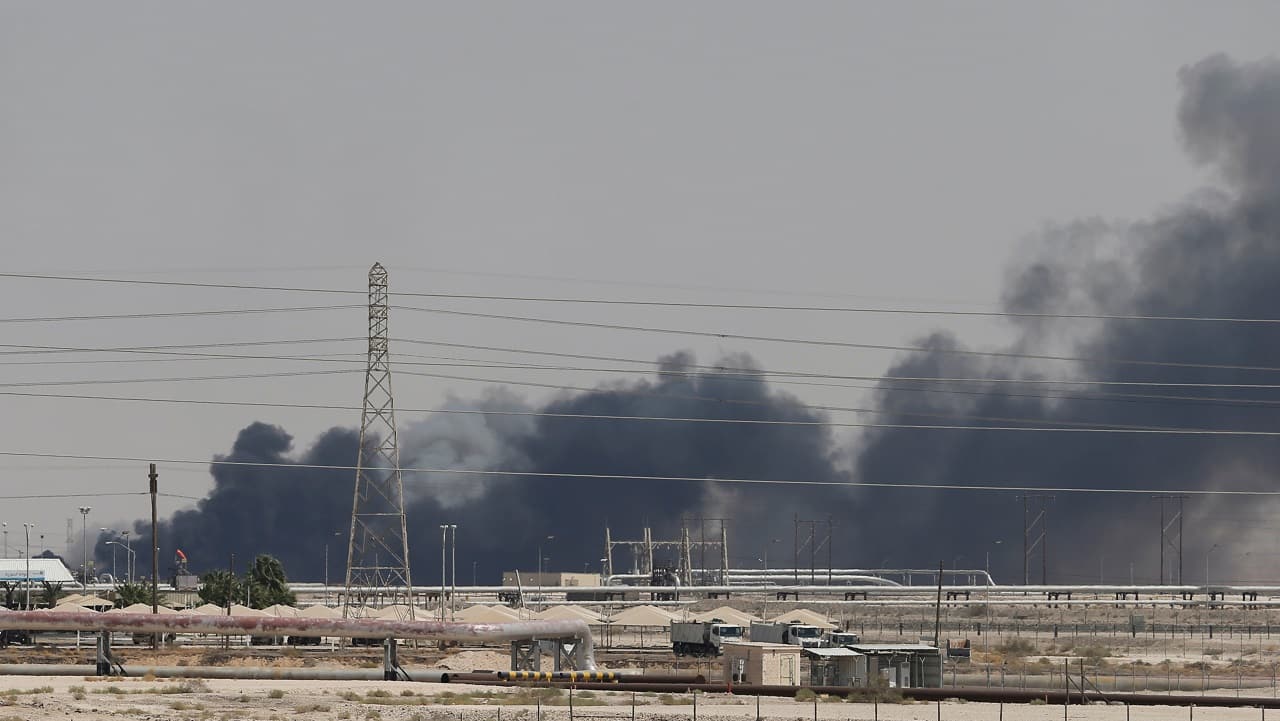
The US warned citizens in West Asia to stay alert due to threats from Iran-backed Houthis. The State Department said, "Americans currently in the Middle East should exercise heightened vigilance." Officials also cautioned about flight cancellations and travel disruptions as the conflict continues to spread across the entire region today.
The United States has warned its citizens across West Asia to exercise heightened vigilance amid an increased threat of armed attacks by Iran-backed Houthis and Iranian efforts to target US government officials in the region. The US State Department advisory also cautioned Americans about possible flight cancellations, airspace closures and wider travel disruptions as the conflict involving the US, Israel and Iran continues to heighten security concerns across the region. "Americans currently in the Middle East should exercise heightened vigilance due to the increased threat of armed attacks by Iranian-supported Houthis and Iranian efforts to target US government officials in the region," the State Department said.
The warning comes amid continued Houthi attacks on Saudi Arabia. The Saudi-led coalition said it intercepted and destroyed a cruise missile headed towards Riyadh on Saturday. The Iran-backed group has also targeted Saudi energy facilities, airports and other sites as the conflict has spread across the region. Middle East: Americans currently in the Middle East should exercise heightened vigilance due to the increased threat of armed attacks by Iranian-supported Houthis and Iranian efforts to target U.S. government officials in the region. Be aware of potential flight cancellations, airspace closures, and travel disruptions.
Read the latest country-specific alerts at https://t.co/fGFPeb6HW3 -- US Mission to UAE (@USAinUAE) November 7, 2026 US Flags Security Risks In Saudi Arabia, UAE The State Department's separate travel advisory for Saudi Arabia asks Americans to reconsider travel to the country, citing missile and drone threats, armed conflict, terrorism and other security risks. It also advises against travel to areas along the Yemen border. On October 23, the department ordered non-emergency US government employees and their family members to leave Saudi Arabia because of safety concerns. US government employees who remain in the country require special authorisation to use Saudi airports and visit certain areas.
They are also barred from travelling within 20 miles of the Yemen border. The advisory warns of heightened risks near military bases and energy facilities. It also cautions Americans against photographing or filming missile interceptions and impact sites, noting that Saudi authorities have detained US citizens for doing so. In the United Arab Emirates (UAE), US government employees require special authorisation to visit military bases and critical energy infrastructure. The UAE advisory warns that hostilities could spread and flags potential threats to public places, particularly locations associated with Jewish and Israeli communities.
The US Embassy in the UAE separately urged American citizens to exercise heightened vigilance over the increased threat of armed attacks by the Houthis and possible Iranian efforts to target US government officials. It also warned of potential flight cancellations, airspace closures and travel disruptions. The US diplomatic mission in Saudi Arabia had issued a similar warning earlier. Trump Announces Fresh Strikes On Iranian Air Defences The regional security warning comes amid further military developments in the conflict between Washington and Tehran. US President Donald Trump announced on Friday that the American military had carried out a new round of what he described as "limited strikes" against Iran's air defence system.
Calling the operation "minor", Trump told reporters that Iran had assembled "a little bit of an anti-aircraft device" and that US forces "knocked it out in about 15 minutes, maybe five". Iranian state media reported two explosions in the Suza area of Qeshm Island, in the Strait of Hormuz, a strategic waterway at the centre of the confrontation between Tehran and Washington. Separately, the US military said it was conducting what it described as "defensive" strikes on Monday, when explosions were heard on Qeshm and Hengam islands and around the mainland city of Bandar Abbas. The conflict began with US and Israeli attacks on Iran on February 28.
Tehran retaliated against Israel and Gulf countries hosting US military bases, while fighting also broke out between Israel and Hezbollah in Lebanon. US, Iran Remain In Contact As Nuclear Dispute Persists The security warning comes even as Washington and Tehran remain in contact through diplomatic channels to prevent renewed fighting. "We are talking to Iran. We have been," Trump told reporters on Friday, adding that his administration was "doing very well with Iran". Trump has maintained that Iran's nuclear programme must be addressed as part of any agreement to end the war. On Wednesday, he defended the decision to launch the military campaign, saying it had been necessary to prevent Tehran from obtaining a nuclear weapon.
He also said he would have done nothing differently, despite acknowledging the war's role in Republican losses in the US midterm elections. A senior Iranian official told Reuters on Thursday that Tehran had sent Washington a nuclear proposal through Qatar. The official said the US was reviewing the proposal but did not disclose its details. Iran has outlined seven conditions for negotiations, including lifting US sanctions, releasing frozen Iranian assets and paying war reparations. Iran's top security official, Mohsen Rezaei, said Tehran would neither reopen the Strait of Hormuz nor enter negotiations until its conditions were met.
Washington, meanwhile, wants nuclear issues included in the initial negotiations. Differences over the terms and sequencing of discussions remain a hurdle to reaching an agreement. Late on Friday, US Central Command, which oversees American military operations, said in a post on X that it was offering rewards of up to $20 million, along with possible relocation, for information about Iran's nuclear programme. The offer covers information about the programme's facilities, equipment and associated personnel, including scientists, as well as the movement of any of these. The post linked to the US State Department's Rewards for Justice programme.
Qatar Says Mediation With US, Iran Continues Qatar is continuing its mediation efforts between Washington and Tehran to prevent tensions from escalating further, Prime Minister Sheikh Mohammed bin Abdulrahman Al-Thani said on Saturday, according to Al Jazeera TV. Al-Thani said Washington had not lost its willingness to reach a deal and remained open to a diplomatic solution even after the US midterm elections. He added that significant progress had been made and expressed confidence that an agreement could be reached. "We cannot wait to reach a perfect agreement; we hope to reach a good agreement," he said.