
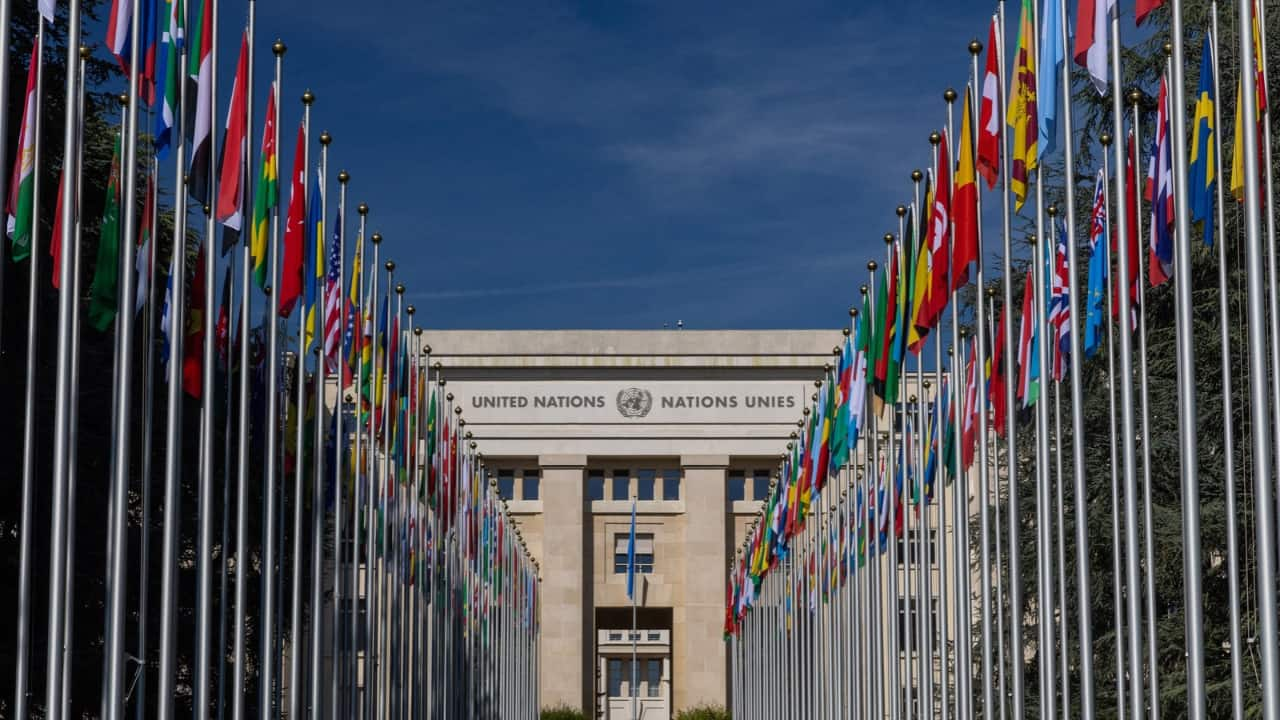
The United States is set to become the first country to shun the UN’s human rights review. Washington will miss Tuesday’s session, forcing a delay. A US State Department spokesperson said, "This irredeemable body makes a mockery of human rights." The administration previously skipped its scheduled review in November 2025.
The United States is set to become the first country to completely shun the UN's regular review of its human rights record since the process was established two decades ago, after the Trump administration refused to participate for a second consecutive year. Washington is expected to miss Tuesday's session of the UN Human Rights Council's Universal Periodic Review (UPR), a process through which all 193 UN member states have their human rights records examined by other countries. The absence of American representatives means the review cannot proceed as scheduled and is likely to be postponed until January, according to a draft UN document and diplomats cited in a report.
The Trump administration withdrew the US from the Geneva-based Human Rights Council last year, accusing it of anti-American and anti-Israel bias. Washington has also questioned the credibility of the body, arguing that participation in the review would imply endorsement of its work. "This irredeemable body makes a mockery of human rights through consistent failures to uphold its own 'values' as it pushes anti-American rhetoric," a US State Department spokesperson said. The spokesperson also said the US gave no credibility to the agency, alleging that it had repeatedly failed to condemn serious human rights violations.
What is the UN's Universal Periodic Review? The Universal Periodic Review is a mechanism under which the human rights records of all 193 UN member states are examined, generally every four to five years. During the process, national delegations present their countries' records, respond to questions from other governments and receive recommendations on improving their human rights policies. The recommendations are non-binding. The US had already skipped its scheduled review in November 2025. The session was postponed to November 10, 2026, in the hope that Washington might reconsider its decision.
The council's rules require the country's participation for the review to proceed. Without US representatives, the session cannot go ahead as scheduled. Fourteen other countries are scheduled to participate in the review process in Geneva this month. In Trump's first term, the US submitted a report as part of the UPR process. Rights groups raise concerns over US policies The US decision comes amid criticism of the Trump administration's policies on immigration, civil liberties and the use of force. Rights groups have raised concerns over aggressive deportations and racial discrimination. Critics have also questioned US targeted killings of alleged drug-runners in the Caribbean and Pacific.
The administration has defended its actions, saying deportations are carried out under US immigration law and that its policies are intended to protect American workers and national security. Although the 47-member Human Rights Council has not directly criticised Washington's human rights record, UN-appointed independent experts have raised concerns over issues including migrant deportations. UN documents show that countries had planned to raise questions about abortion and the death penalty during the US review. American and international non-governmental organisations also submitted nearly 200 reports covering issues ranging from migration to racial discrimination.
Jamil Dakwar, director of the American Civil Liberties Union's human rights programme, said the administration's decision signalled that it was unwilling to be held accountable for its human rights record. "We've seen attacks on fundamental human rights and civil liberties unprecedented in generations," Dakwar told reporters in Geneva. The ACLU and other civil society groups have urged UN High Commissioner for Human Rights Volker Türk to present an update on the human rights situation in the US early next year, even if Washington does not participate in the review. Noor Abdalla, the wife of pro-Palestinian student activist Mahmoud Khalil, who was held in immigration detention last year, is among campaigners pressing for such a briefing.
"When the most powerful government in the world is not held accountable, they think that they can do whatever they want," Abdalla told reporters. US absence could weaken UN review process Critics warn that Washington's refusal to participate could undermine the credibility of the review mechanism and encourage other countries to avoid scrutiny of their own human rights records. Eric Tistounet, a visiting professor at the Geneva Graduate Institute and the council's first secretary, said the US decision could damage confidence in the process. "If the predominant global power -- which has always claimed to adhere to the human rights norms -- doesn't show up and doesn't even justify why, then you are in big trouble," he said.