
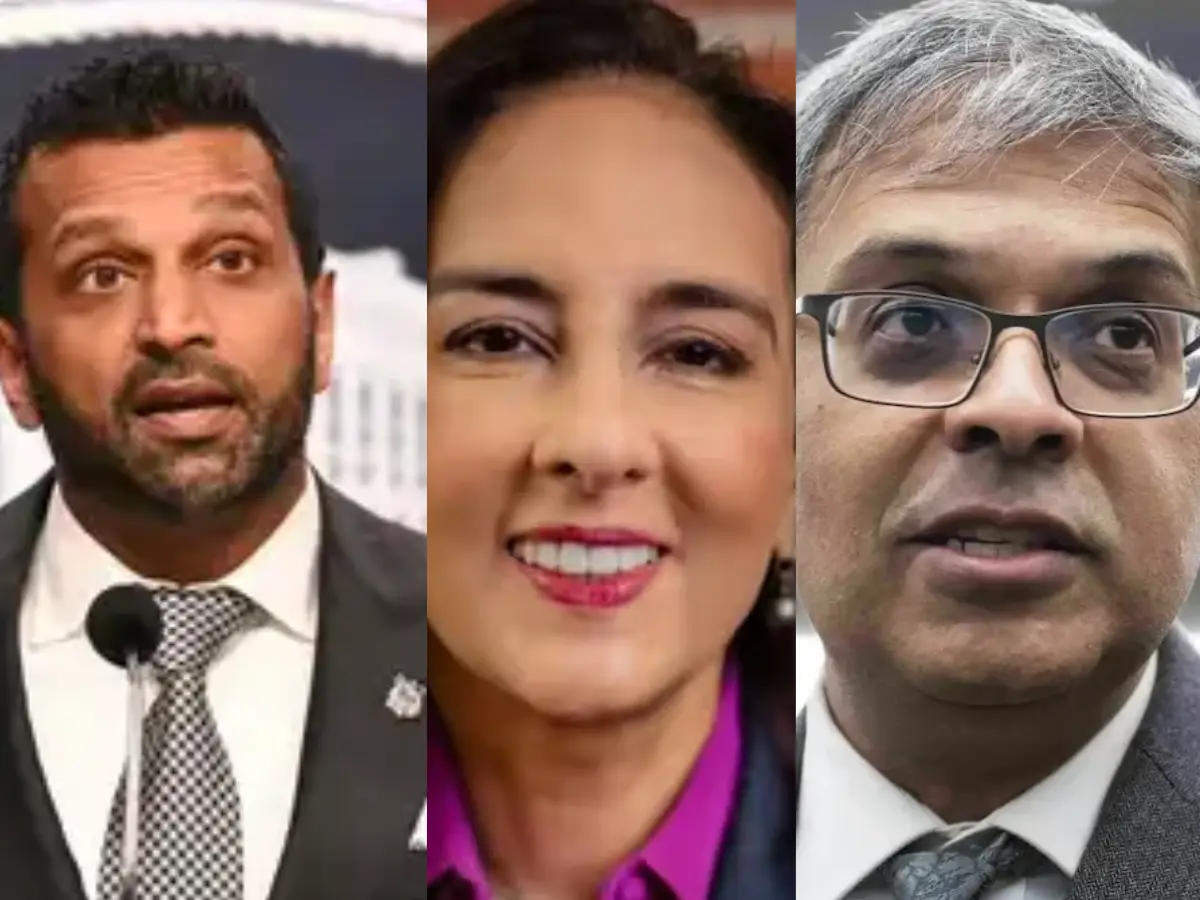
More than 9.5 million Americans cast early ballots for the 2026 US midterms by October 19, 2026. Indian-American officials like Kash Patel, Jay Bhattacharya, and Harmeet Dhillon face intense scrutiny amid political divisions. Patel said he feels "forsaken and vilified by Indian Americans" as internal friction grows during this election season.
More than 9.5 million Americans have already cast early ballots for the 2026 US midterms, with Indian Americans emerging as a key political constituency. However, immigration policies and internal political divisions are creating challenges for Indian-American figures
The 2026 US midterm election schedule concludes on Nov 3. Early voting for the midterm elections is underway and as of October 19, 2026, tracker data from NBC News revealed that more than 9.5 million early ballots have already been cast nationwide. This total consists of roughly 6.8 million mail-in ballots and 2.8 million in-person vote.
.
While Indian-American politicians, administration aides, and voters are emerging as a pivotal force, but they face severe internal friction. Data from the late-2026 Indian American Attitudes Survey (IAAS) indicates that his administration's strict new immigration policies are causing a sharp political reversal. Kash Patel at the FBI, Dr. Jay Bhattacharya at the National Institutes of Health (NIH), and Harmeet Dhillon at the Department of Justice (DOJ) find themselves navigating intense institutional and public battles.
Kash Patel is navigating tough times after being confirmed as the first Indian American and Hindu to lead the FBI. Though he took the office promising rigorous constitutional oversight and an aggressive mandate to "drain the swamp." Patel faces heavy internal friction. Current and former agents have publicly scrutinized his decision-making and personal travel. Furthermore, Patel has expressed frustration with his own diaspora, stating in interviews that he feels "forsaken and vilified by Indian Americans" who refuse to back him due to partisan political differences.
. Dr. Jay Bhattacharya -- Director of the NIH and Acting CDC Director was sworn in on April 1, 2025, to oversee the nation's $48 billion medical research portfolio, the Stanford-trained epidemiologist was appointed to deliver on the administration's "Make America Healthy Again" agenda under HHS Secretary Robert F. Kennedy Jr.
Bhattacharya's duties expanded dramatically when he was also tapped to serve as the acting director of the CDC, concentrating an unprecedented amount of public health power into his hands. He continues to balance implementing sweeping structural changes while answering critics of his pandemic-era policies (such as the anti-lockdown Great Barrington Declaration).
Congressional critics are leveraging health agency oversight to intensely scrutinize biosecurity standards, Fauci-era institutional handovers, and taxpayer-funded virus research. A critical Congress stands to threaten the NIH's massive budget if his programmatic shifts stray too far from traditional scientific consensus.
Harmeet Dhillon is the Assistant Attorney General for the Civil Rights Division and was appointed in April 2025. He vowed to fundamentally change the mandate of the DOJ's Civil Rights Division to match the president's MAGA priorities. Dhillon has moved aggressively, overseeing a massive workforce turnover by pushing out more than 300 veteran career attorneys and replacing them with roughly 130 ideological allies. Her deployment of voting monitors -- who have clashed with local officials in places like Wyoming over access to voting equipment -- has drawn significant controversy.
Dhillon faces the sharpest immediate target from congressional opposition.