
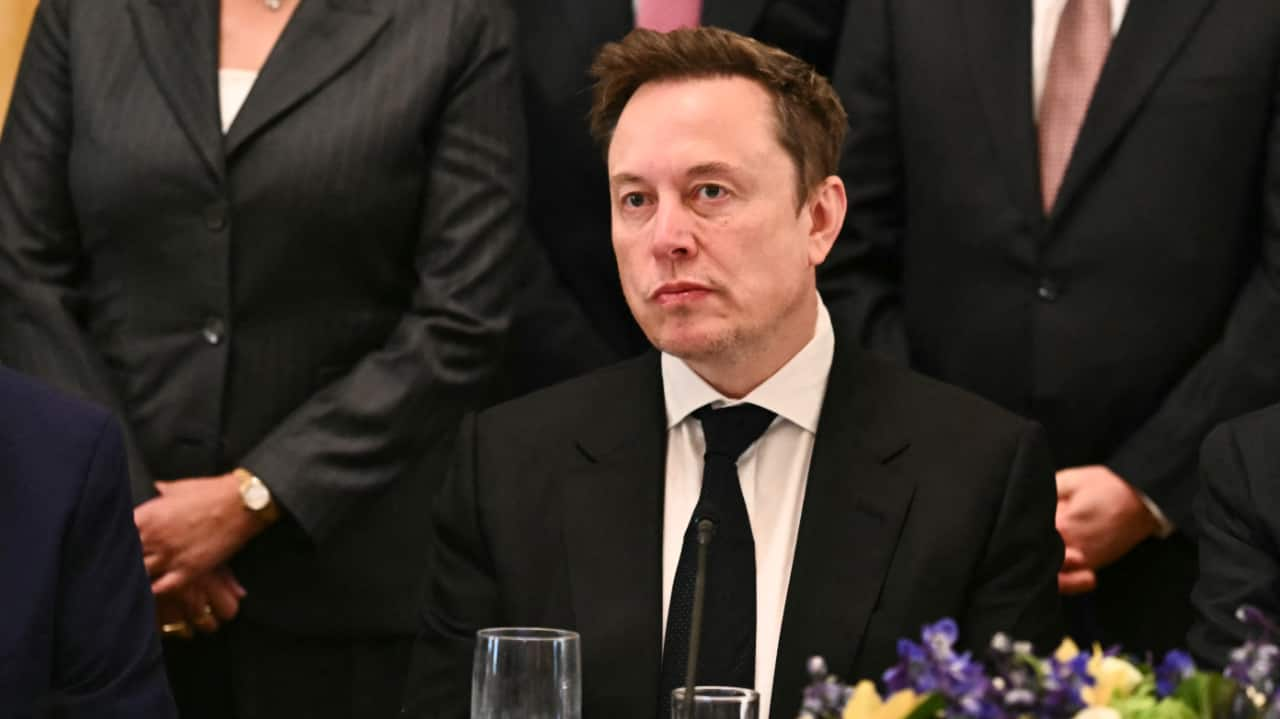
Elon Musk topped the list of the 20 biggest donors for the 2026 US midterm elections with $445.6 million in contributions. Political ad spending hit a record $11.6 billion on October 30. Wealthy individuals and groups gave $2 billion, showing how much money now flows into these important political races.
Billionaires, technology executives and political organisations have contributed around $2 billion to the 2026 US midterm elections, with Elon Musk topping the list of the 20 biggest donors with $445.6 million in contributions to Republican-aligned causes, according to an analysis by The New York Times. The ranking, based on campaign contribution filings through mid-October, highlights the concentration of political funding among a relatively small group of wealthy individuals, corporate interests and organisations. The NYT analysis said the combined contributions were equivalent to about 15% of projected political advertising expenditure during the election cycle, citing AdImpact estimates available for its analysis.
This is a comparison between overall donor contributions and projected advertising expenditure, not an indication that the donors themselves spent the money on advertisements. Separately, AdImpact data reported by The Wall Street Journal showed that political advertising spending for the 2025-26 election cycle surpassed $11.6 billion on October 30, setting a new record. The figure includes advertisements already aired and those booked across races, exceeding the previous record set during the 2024 presidential election cycle. Elon Musk tops list of biggest US midterm donors Musk, the chief executive of Tesla and SpaceX, topped the NYT ranking with contributions of $445.6 million to Republican-aligned political causes.
The newspaper's analysis said Musk had spent more than $200 million on efforts to help elect Texas Attorney General Ken Paxton to the Senate, including building a field operation. Musk's contributions were nearly three times those of the next-largest contributors, industrialists Richard and Elizabeth Uihlein, who gave $150 million to Republican causes, according to the ranking. Other major Republican-aligned contributors on the list include political organisation One Nation, with $137.9 million, venture capitalists Marc Andreessen and Ben Horowitz, along with their firm Andreessen Horowitz, with $116.4 million, and hedge fund investor Jeff Yass, with $110.4 million.
The ranking also includes Republican donor Miriam Adelson, who contributed $67.6 million, and hedge fund billionaire Paul Singer, whose contributions totalled $53.6 million. On the Democratic side, the George and Alexander Soros family contributed $103.4 million, while former New York City mayor Michael Bloomberg gave $84.8 million. LinkedIn co-founder Reid Hoffman contributed $41.8 million, the NYT analysis found. Crypto donors back political groups amid US policy debate The cryptocurrency industry has emerged as a significant source of campaign funding, with companies and executives contributing to political groups involved in debates over digital asset regulation, according to the NYT report.
Ripple Labs and its co-founder Chris Larsen contributed a combined $73.1 million, according to the ranking. Ripple is also among the principal financial backers of Fairshake, a pro-cryptocurrency super PAC, while Larsen has separately contributed to Democratic causes. Cryptocurrency exchange Coinbase gave $55.3 million, while the Winklevoss brothers, Cameron and Tyler, contributed another $53.2 million, primarily to Republican-aligned causes, according to the report. The contributions came as cryptocurrency companies and investors continued to back political groups involved in debates over digital asset regulation.
The industry also faced a setback in September when a bill it supported failed to advance, the NYT reported. Ripple, Coinbase and venture capital firm Andreessen Horowitz are among Fairshake's principal financial backers. The group has spent about $46 million seeking to prevent Democratic Senator Sherrod Brown from returning to the Senate in Ohio, according to the newspaper. The Winklevoss brothers have backed Republican-aligned political spending through their Digital Freedom Fund super PAC, the report said. Artificial intelligence has emerged as another area of interest for technology donors.
Andreessen Horowitz has backed Leading the Future, a super PAC advocating legislation favourable to the AI industry. OpenAI co-founder Greg Brockman and his wife, Anna, were also major backers of the group but have since distanced themselves from it, according to the NYT. Technology-sector political spending is not exclusively Republican. Hoffman has directed $16.5 million towards supporting Democratic Senate candidate James Talarico, who is challenging Paxton in Texas, the newspaper reported. Texas, Ohio and Michigan among costliest Senate races A substantial share of the money flowing into the midterms is being directed towards closely contested Senate races, particularly in Texas, Ohio and Michigan, according to the election spending figures cited in the reporting.
The Texas Senate contest between Democrat James Talarico and Republican Ken Paxton has attracted more than $534 million in spending by candidate campaigns and outside groups. Talarico has raised $146 million, compared with approximately $22 million for Paxton, according to the figures cited in the report. Separately, outside groups have spent nearly $300 million supporting Paxton, against about $80 million for Talarico. Of the outside spending supporting Paxton, $37 million has come from MAGA Inc, a super PAC aligned with President Donald Trump. Ohio's Senate race between Democrat Sherrod Brown and Republican Jon Husted has attracted more than $435 million in spending.
The figures cited in the reporting put spending supporting Husted at about $248 million, compared with approximately $187 million supporting Brown. Michigan's contest between Republican Mike Rogers and Democrat Abdul El-Sayed has seen an estimated $333 million in spending. Rogers has raised about $23 million, while El-Sayed has brought in approximately $54 million. Separately, outside groups have spent around $169 million supporting Rogers and $94 million backing El-Sayed. The aggregate spending totals and the separate candidate fundraising and outside-spending figures are distinct measures. They should not be added together, and their reporting periods and categories require verification against the underlying data.
Republican national committee reports higher receipts than Democratic counterpart Separate from contributions to individual candidates and outside political groups, the Republican National Committee has reported higher receipts than the Democratic National Committee, according to Federal Election Commission filings. The Republican National Committee had received approximately $341 million and spent around $303 million as of October 14. The Democratic National Committee had received nearly $252.3 million and spent about $252.8 million, according to the filings cited in the report. These figures cover the national committees and do not represent total fundraising across all candidates and political organisations affiliated with either party.
An analysis by Politico, examining donations from January 2025 through October 2026, found that Republicans had become more reliant on large donors as their small-dollar donor base weakened. Much of the money contributed by individual donors had gone directly to President Donald Trump rather than congressional candidates, the publication reported.