
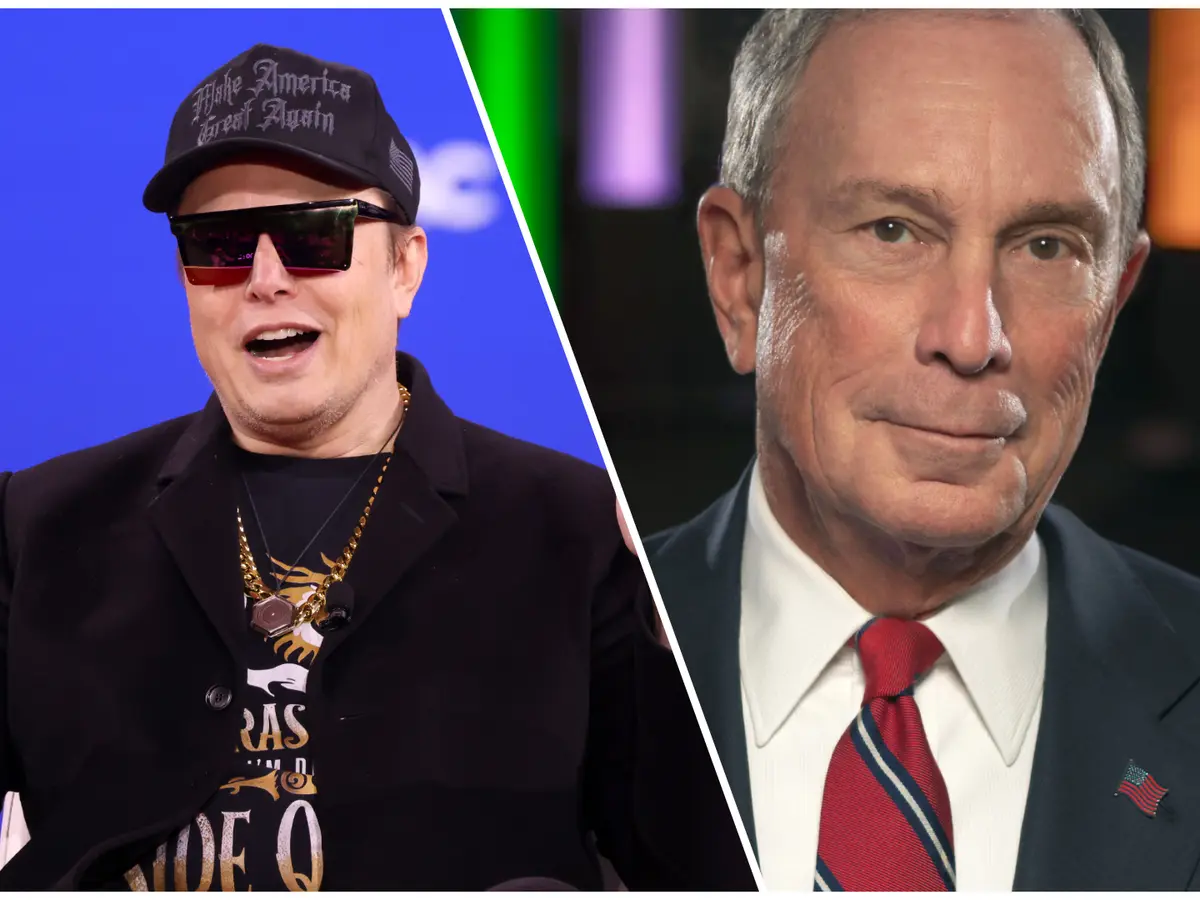
The 2026 US midterms are seeing record spending as donors pour billions into the elections. Michael Bloomberg spent $80 million to help Democrats, while Elon Musk gave $369 million to support Republicans. With candidates and PACs raising $12.5 billion, corporate cash and super PACs are driving this massive financial push.
Bloomberg's $80 million late push for Democrats meets Musk's record $369 million for Republicans, even as Trump pledged more money. Top donors, super PACs and record corporate cash are driving the 2026 US midterms towards unprecedented spending. It's all about the money
Michael Bloomberg spent $80 million in September and October to help Democrats regain control of the House of Representatives. US President Donald Trump, meanwhile, said he would spend more than $400 million on Republican efforts. Trump-aligned MAGA Inc. and the affiliated No Going Back PAC have spent at least $226 million so far in this midterm cycle. This is just a tip of the iceberg. Cash is flowing in record numbers into the elections. Here is a detailed look:
Michael Bloomberg's spending breakdown
According to reports in the New York Times and elsewhere, at least $50 million of Bloomberg's funds is going to House races, including $24 million to Everytown for Gun Safety, which he co-founded, and $16 million to House Majority PAC favouring the Democrats. He had also put $11 million behind a super PAC supporting Micah Lasher in New York's 12th District and $2.5 million toward Pennsylvania Governor Josh Shapiro's re-election.
Election fundraising in numbers
The Federal Election Commission reported that congressional candidates raised $2.8 billion, party committees $1.4 billion and PACs $8.3 billion between 1 January 2025 and 30 June 2026, about $12.5 billion combined. Independent expenditures reached $643.4 million in the same period.
Top individual donors
Elon Musk has contributed $369 million, making him the largest individual political donor in modern American history, according to a Washington Post analysis of FEC records through 15 October. His disclosed giving included $158 million to Senate Leadership Fund and $89 million to his America PAC.
Elizabeth and Richard Uihlein gave $138 million and Jeff and Janine Yass $110 million to Republican causes, while George Soros gave $102 million to Democratic-aligned candidates or groups.
Ben Horowitz and Marc Andreessen contributed about $92.2 million, Miriam Adelson $67.6 million and the Winklevoss twins about $55.3 million.
Greg and Anna Brockman gave $50 million, split between MAGA Inc. and the AI super PAC Leading the Future. Paul Singer gave $53.5 million.
The 50 largest donors contributed nearly $2.4 billion: about $1.54 billion from Republican-aligned donors, $590 million from Democratic-aligned donors and $259 million from bipartisan or special-interest donors.
Super PACs and outside groups: Pooling cash to influence elections
Republican-backing Senate Leadership Fund raised a record $272.9 million from July to September. Congressional Leadership Fund raised a record $94.4 million, entering October with $155.2 million in cash on hand. With its allied non-profit American Action Network, it has raised $370 million this cycle.
On the Democratic side, Senate Majority PAC raised a record $151 million in the quarter and ended September with $111.8 million in cash.
Crypto super PAC Fairshake had received about $137.9 million through 31 August and spent about $93.9 million. Win for America, the online betting advocacy super PAC, received $72 million, and Koch Inc. gave $20 million to Americans for Prosperity Action in June.
Which industries are trying to sway elections?
Various corporate companies or their bosses donated a record $646 million in the 18 months through June, up 40 per cent on the 2024 cycle, according to Public Citizen.
Crypto, online betting and tech firms pushing AI and data centres contributed $344 million, or 53% of disclosed corporate contributions.
Crypto companies gave $206 million and online betting firms $76 million, and Leading the Future's $50 million brought the AI sector's total to $62 million, as reported by FEC.