
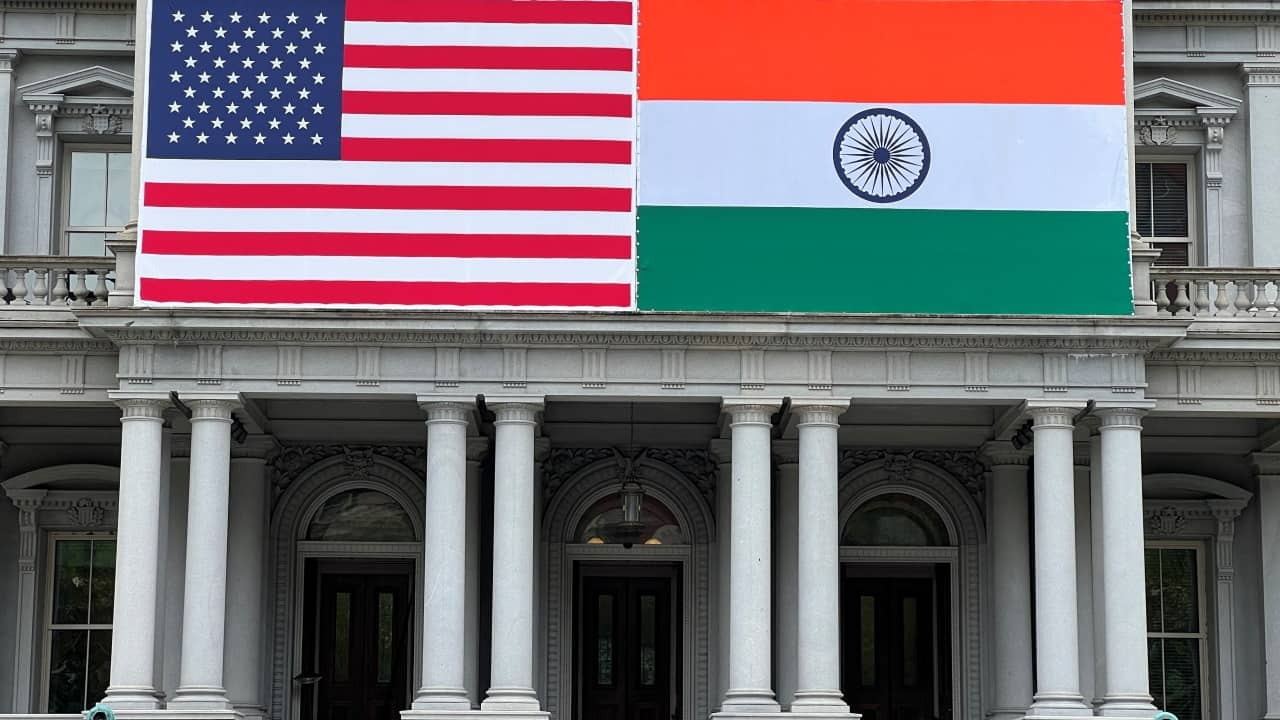
The United States will vote in its midterm elections on November 3, with all 435 House seats and 35 Senate seats up for election. The results will shape President Donald Trump’s policies on trade and visas. For India, this outcome matters as it could influence the strategic partnership with Washington.
The United States will vote in its midterm elections on November 3, with all 435 seats in the House of Representatives and 35 Senate seats up for election. The results will determine which party controls Congress for the final two years of President Donald Trump's term, potentially shaping his ability to push through policies on trade, immigration, foreign affairs and government spending. For India, the outcome matters beyond Washington's domestic politics. Congressional control could influence the scrutiny of Trump's trade policies, H-1B visa restrictions and the broader strategic partnership between New Delhi and Washington.
Here's how the elections work and what is at stake for India. What are US midterm elections and why do they matter? The US federal government has three branches: the executive, headed by the President; the legislature, comprising the House and Senate; and the judiciary, led by the Supreme Court and the federal courts. Unlike India's parliamentary system, the US President is elected separately from Congress. The President can therefore remain in office even if the opposition wins control of one or both chambers. The House has 435 voting members elected for two-year terms, while the Senate has 100 members, with each state represented by two senators serving six-year terms.
Every two years, all House seats and roughly one-third of Senate seats are contested. Both chambers must approve federal legislation before it can be sent to the President. The Senate also confirms key presidential appointments and has a role in approving treaties. Republicans currently hold a 53-47 advantage in the Senate, including two independent senators who caucus with Democrats. Democrats need a net gain of four seats to secure a majority. Control of the House will also be closely contested. A Democratic takeover of either chamber would give the party greater powers to scrutinise the administration, hold hearings and investigate its decisions.
However, it would not automatically reverse Trump's policies or transfer control of foreign policy to Congress. Why does the outcome matter for India? 1. Trade and tariffs Trade is one of the most immediate areas of concern for India. Trump's tariff policies have created uncertainty for Indian exporters, particularly in sectors such as textiles, pharmaceuticals, engineering goods and manufacturing. A Democratic-controlled Congress could increase scrutiny of the administration's tariff decisions and trade negotiations. However, the President retains significant delegated authority to impose or adjust tariffs, meaning a change in congressional control would not automatically bring down duties.
2. H-1B visas and India's IT industry The H-1B programme is important to Indian technology professionals and IT services companies that send skilled workers to the US. In September 2025, the Trump administration introduced a $100,000 payment requirement for certain new H-1B petitions involving workers outside the US. However, federal courts blocked enforcement of the fee in 2026, and it remains subject to legal proceedings. Congressional hearings and legislation could influence the wider debate over skilled immigration, although a Democratic victory alone would not reverse the administration's immigration policies.
3. Technology and defence cooperation India and the US have also expanded cooperation in semiconductors, artificial intelligence, critical minerals, defence and emerging technologies. The TRUST initiative, launched by Prime Minister Narendra Modi and Trump in February 2025, aims to deepen collaboration across these sectors and strengthen supply chains. A change in congressional leadership could affect funding priorities, oversight and the pace of related initiatives. However, the strategic partnership has support across several areas of government and cannot be reduced to the preferences of one political party.
Will a Democratic victory change US policy towards India? Not necessarily. A change in congressional control would primarily alter the checks on Trump's administration rather than replace the President's foreign policy agenda. Both Republicans and Democrats have supported protecting American industries and supply chains, so a change in the balance of power does not guarantee a reversal of protectionist trade measures. For India, the key question is whether the new Congress makes Trump's trade, immigration and foreign policy decisions harder to implement, or allows the administration greater room to pursue its existing agenda.
The results will offer an indication of the political constraints Washington may face until the 2028 presidential election.