
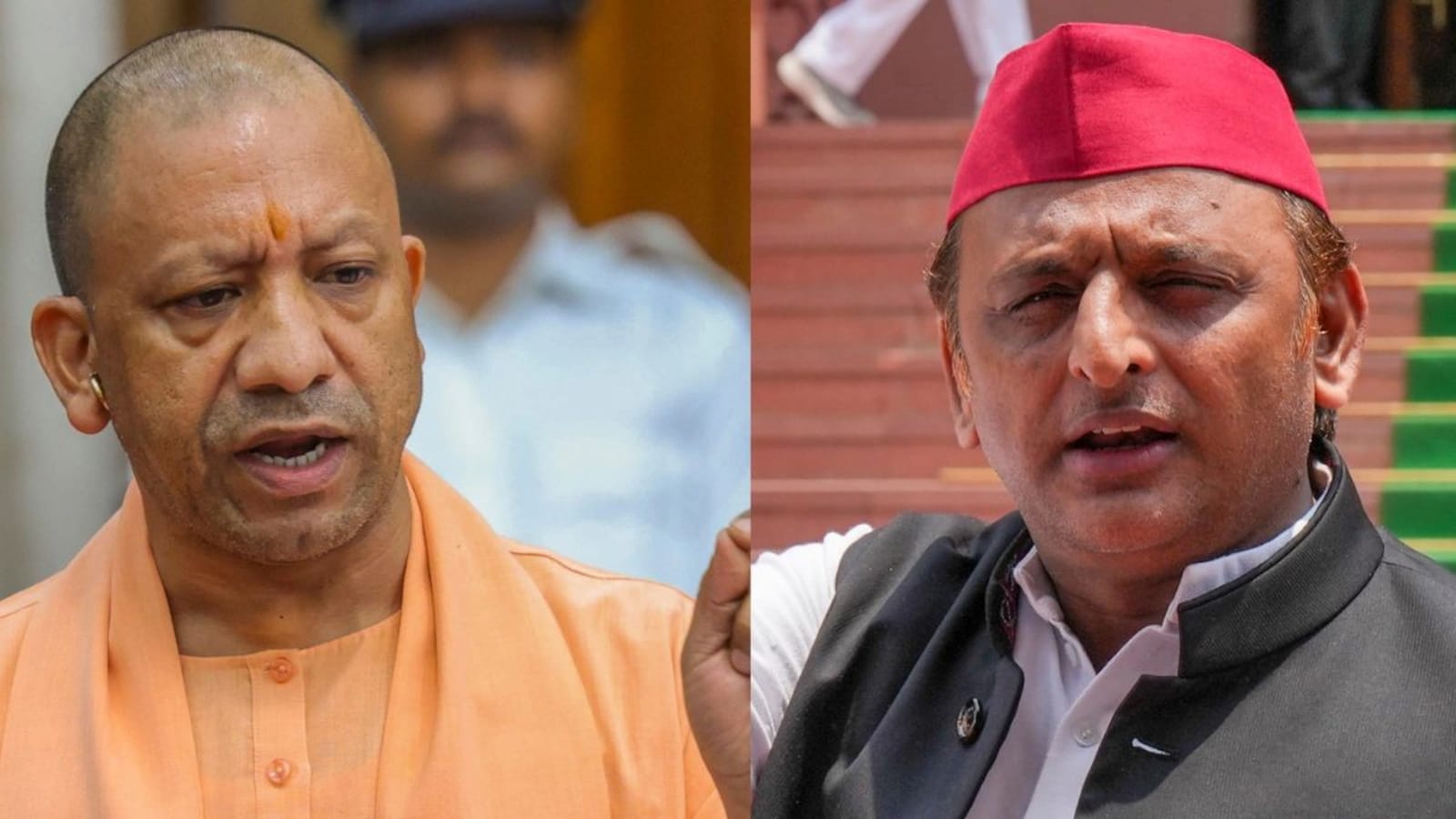
The BJP faces scrutiny after setbacks in the Uttar Pradesh Legislative Council elections. Poor candidate selection and internal dissent hurt the party in key seats like Varanasi. Deputy Chief Minister Keshav Prasad Maurya said, "the BJP would review its performance and examine how the SP managed to win seats."
The BJP's setbacks in several constituencies in the Uttar Pradesh Legislative Council (MLC) elections have brought its candidate selection, internal dissent and local organisational dynamics under scrutiny. While the Samajwadi Party (SP) has made gains in key constituencies, its performance across western Uttar Pradesh offers a mixed picture, with the BJP retaining its dominance in the region.
From Agra to Varanasi and Lucknow, the BJP's candidate choices have emerged as a possible factor behind its disappointing performance. In some constituencies, the party appears to have overlooked local opposition to its nominees, while in others, its candidates faced strong challengers with established support bases.
The results have prompted Deputy Chief Minister Keshav Prasad Maurya to say that the BJP would review its performance and examine how the SP managed to win seats where the ruling party had not anticipated a defeat (read Varanasi).
Why The BJP Suffered Setbacks
Agra Teachers' constituency: A candidate who switched sides
The Agra Teachers' constituency offers a striking example of how candidate selection can backfire. Akash Agarwal, who contested on an SP ticket, had initially approached the BJP for a ticket. However, a section of the BJP organisation reportedly favoured Hari Kishore Tiwari instead. Agarwal subsequently joined the SP and defeated Tiwari.
Read | BJP Gains In Maharashtra MLC Polls, But Alliance Strength Tested To Its Limit
Varanasi Graduates' constituency: Repeating a losing formula
The BJP's choice of Kedar Nath Singh for the Varanasi Graduates' constituency has also come under scrutiny. Singh had lost the 2020 election to SP leader Ashutosh Sinha. The decision to field him again, despite his previous defeat, has raised questions about whether the party adequately assessed the constituency's political dynamics before finalising its nominee.
The SP's ability to challenge the BJP in Varanasi, the constituency of Prime Minister Narendra Modi, makes the outcome particularly noteworthy.
Varanasi Teachers' constituency: SP's network pays off
In the Varanasi Teachers' constituency, BJP candidate Pramod Mishra faced Lal Bihari Yadav, an established figure in teachers' politics who contested on an SP ticket. Yadav's experience and established political base appear to have given the SP an advantage over the BJP nominee. The BJP's struggles in both Varanasi constituencies suggest that its difficulties extended beyond a single candidate or seat.
Lucknow Graduates' constituency: Dissent ignored?
The BJP's decision to field Avneesh Singh Patel in the Lucknow Graduates' constituency reportedly faced opposition from the outset.
According to accounts of the candidate-selection process, the party had sufficient time to reconsider its choice but did not respond to the dissent within its ranks. If local opposition contributed to the result, the setback could point to a wider organisational problem: the gap between decisions taken by the party leadership and the views of local workers and voters.
Read | Opinion | MLC Polls: NDA Edges Ahead, Congress Slips, But The Real Story Is Behind The Numbers
Jhansi-Allahabad constituency: Selection under scrutiny
The BJP's choice of Ashok Rathore in the Jhansi-Allahabad constituency has also been questioned following the party's setback.
Taken together, the results suggest that candidate selection may have played a role in the BJP's performance. However, the extent to which individual choices, internal dissent and broader voter sentiment influenced the outcomes would need to be assessed through a detailed review.
Cause Of Worry For The SP?
While the BJP has reasons to review its candidate-selection strategy, the MLC results also contain a warning for the SP, particularly in western Uttar Pradesh.
The BJP retained both the Meerut-Saharanpur Graduates' and Teachers' constituencies, as well as its dominance in the Bareilly-Moradabad region.
These results underline the challenge facing the SP in western Uttar Pradesh, where the party has historically struggled to establish the kind of consistent electoral dominance it seeks.
The region, with substantial Muslim population and deeply polarised politics, is crucial to SP's 2027 plans.
The BJP's continued strength in these constituencies suggests that the SP's victories elsewhere have not necessarily translated into a broader shift in the region's political balance.
The MLC elections offer important political signals, but their results cannot be directly extrapolated to the 2027 Assembly polls.
Teachers' and graduates' constituencies have distinct electorates and local political dynamics. Candidate profiles, professional networks and organisational reach can play a particularly significant role in these contests.
With the 2027 Assembly elections approaching, the MLC elections are a good primer for both sides to chalk out their strategies for the big battle early next year.