
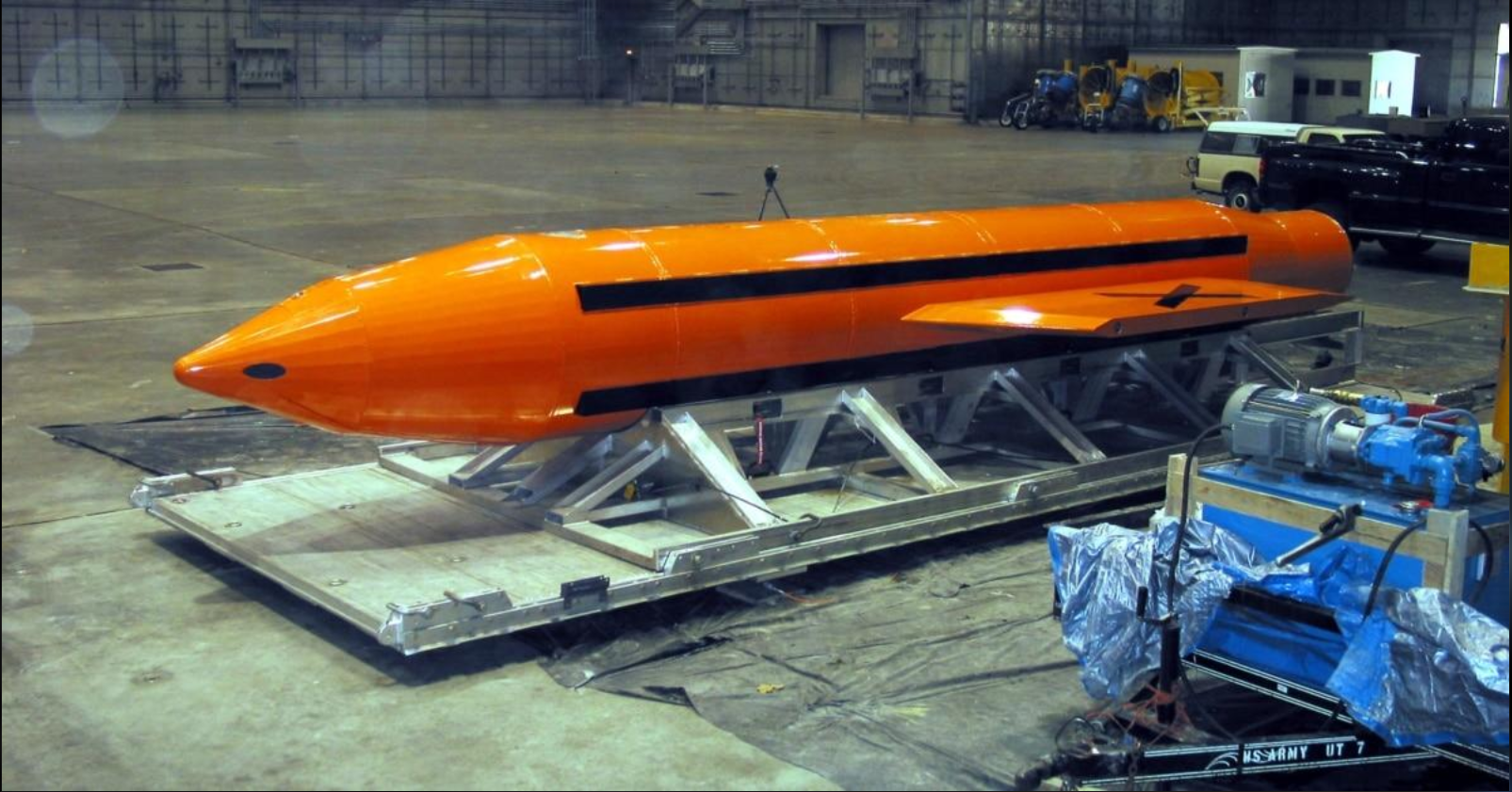
The US military prepared strike plans involving the GBU-43/B MOAB bomb against Iranian nuclear and energy sites. Officials said, "President Trump keeps all options on the table to ensure that Iran can never have a nuclear weapon." This massive non-nuclear weapon could target facilities like the one at Pickaxe Mountain.
The US military has prepared fresh strike plans that include potentially deploying its most powerful non-nuclear bomb against Iranian energy infrastructure and nuclear facilities if President Donald Trump orders a resumption of combat operations, CNN reported, citing multiple US officials familiar with the planning. The proposed operations include the possible use of the GBU-43/B Massive Ordnance Air Blast (MOAB), widely known as the 'mother of all bombs', against targets including the suspected underground nuclear facility at Pickaxe Mountain. The plans reportedly cover potential military action either before or after the upcoming US midterm elections, despite Trump's recent indication that he would hold off on further strikes until after the polls. According to CNN, Trump directed the military to prepare additional strike packages covering "a lot of energy infrastructure", with the MOAB among the weapons under consideration. Another source confirmed that plans targeting Iranian nuclear facilities, including Pickaxe Mountain, explicitly include the bomb. However, the existence of these options does not mean Trump has authorised an attack. Responding to CNN, a White House official declined to discuss sensitive military planning, adding: "President Trump keeps all options on the table to ensure that Iran can never have a nuclear weapon." What is the 'mother of all bombs'? The GBU-43/B MOAB is the largest non-nuclear bomb in the US arsenal. Weighing approximately 21,600 pounds (9,800 kilograms), the GPS-guided conventional weapon is designed to produce an enormous explosion across a wide area. Unlike specialised bunker-buster bombs, which penetrate underground before detonating, the MOAB explodes above the surface, projecting its destructive force outward. According to CNN, its blast can affect an area equivalent to approximately nine city blocks. Developed during the early 2000s, the weapon was intended to target large concentrations of enemy personnel, military equipment and fortified positions. It was also conceived as a psychological weapon capable of intimidating opposing forces. Can it destroy Iran's underground nuclear facilities? Despite its destructive capacity, US officials have questioned whether the MOAB could penetrate deeply enough to destroy Iran's heavily fortified nuclear installations. Pickaxe Mountain is believed to contain facilities protected by substantial layers of granite, making it difficult for a surface-blast weapon to reach underground targets. "The MOAB is a massive information operation type weapon that is great for huge area clearance but not much else," a source familiar with the planning told CNN. "It is definitely not designed as a deep penetration warhead." Its enormous blast radius could also raise concerns about civilian casualties, particularly if deployed against energy infrastructure near populated areas. Nevertheless, military planners reportedly believe the weapon could exert psychological pressure on Tehran, even if it fails to deliver a decisive military outcome. Trump faces pressure to end Iran war The reported planning comes as Trump faces mounting pressure to conclude the conflict, which has continued for more than six months without a diplomatic breakthrough. According to CNN, administration officials have examined options that could demonstrate military strength while allowing Washington to pursue an exit from the war. One source described certain proposals as a "fireworks show" intended to provide Trump with a symbolic victory. The US military is also reportedly preparing for possible Iranian retaliation should further strikes be authorised. The MOAB was first used in combat in April 2017, during Trump's first presidency, against an Islamic State tunnel complex in Afghanistan. Afghan officials said the strike killed 36 militants. No decision to deploy the weapon against Iran has been reported.