
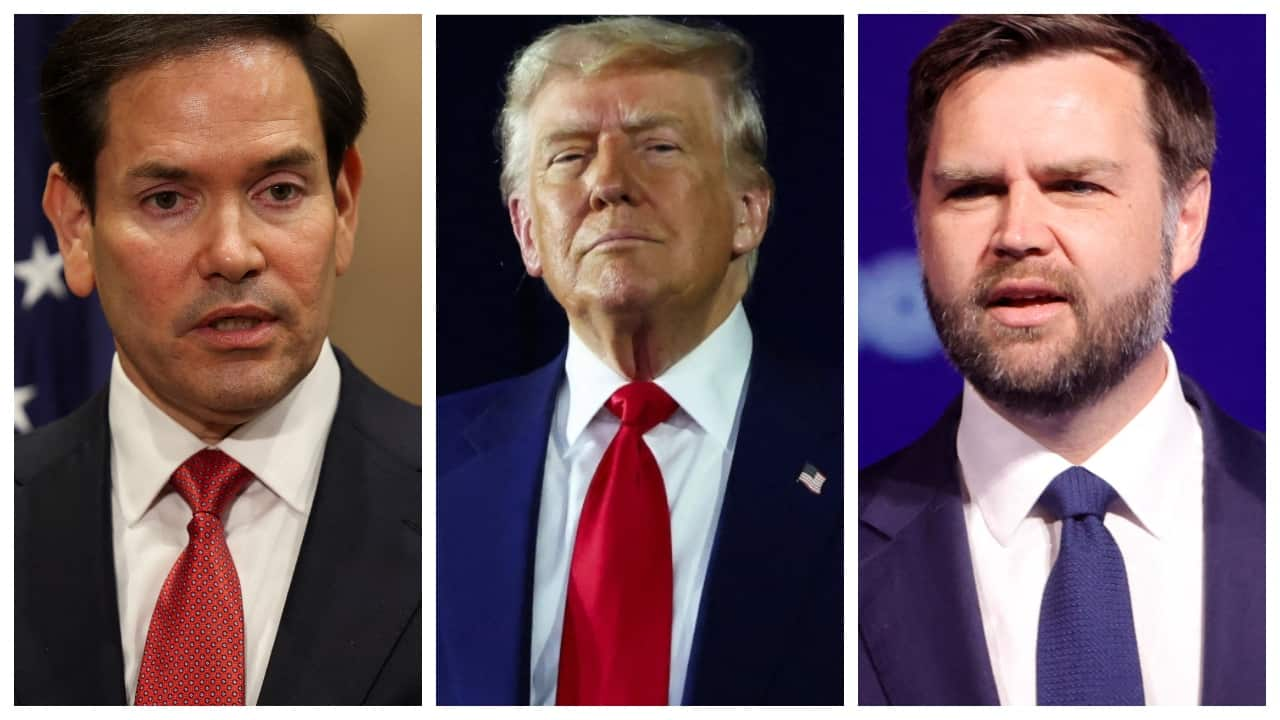
President Donald Trump is unhappy with Vice-President JD Vance for criticizing the Iran war. Trump told reporters earlier this month, "if I had to do it again, I'd have to do it again." Meanwhile, Trump praised Secretary of State Marco Rubio, who could become a strong contender for 2028.
US President Donald Trump has grown increasingly frustrated with Vice-President JD Vance over his criticism of the war against Iran, while privately praising Secretary of State Marco Rubio for defending the military campaign, The New York Times reported. According to the newspaper, Trump has complained to aides and allies that Vance should have explicitly backed his decision to launch the war and said it was the right move. In contrast, Trump has praised Rubio, suggesting that the secretary of state could emerge as a strong presidential candidate. The White House did not respond to a request for comment, while Vance's office declined to comment.
The reported differences come after Republicans suffered a major setback in the November 3 midterm elections, with Democrats winning control of both chambers of Congress. The outcome has increased political pressure on the Trump administration, with the opposition now in a stronger position to investigate and scrutinise its decisions during the final two years of his term. Vance has identified the Iran war and Washington's relationship with Israel as significant factors behind the Republican defeat. In a lengthy post on X, he argued that the losses were not primarily due to Republican voters staying away from polling stations.
Instead, he said, several voters who supported the Trump-Vance ticket in the 2024 presidential election had switched sides. Citing internal polling, Vance highlighted four major sources of voter dissatisfaction: the war, rising living costs, concerns over the administration's commitment to its "America First" agenda and the US relationship with Israel. "The reason we lost is the war," Vance wrote, in one of his clearest acknowledgements of the conflict's political impact on the Republican Party. Trump subsequently appeared to agree with Vance's assessment of the electoral consequences but defended his decision to launch military strikes against Iran.
"That's probably true. But at the same time, if I had to do it again, I'd have to do it again because long term, it's the only answer. You can't let Iran have nuclear," Trump told reporters earlier this month. Vance, however, rejected suggestions of a rift with the president, saying on Monday that there was "no daylight" between them. He maintained that his remarks were focused on the political fallout of the conflict rather than Trump's decision to launch it. Vance and Rubio emerge as potential 2028 contenders The reported tensions have also brought renewed attention to the potential Republican presidential race in 2028, with both Vance and Rubio viewed as possible contenders.
Neither has formally announced a bid. According to The New York Times, Vance's allies said the vice-president remained undecided about entering the race. They also expressed concern that any decision by Trump to resume strikes or launch further major military operations against Iran could damage Vance's chances of securing the Republican nomination. A recent Reuters poll found that 45 per cent of Republican voters surveyed considered Rubio an "excellent" presidential candidate, compared with 43 per cent for Vance. Rubio has consistently defended Trump's military campaign, describing the strikes as necessary for US national security.
His public support for the operation appears to have strengthened his standing with the president. Iran war becomes political challenge for Trump The United States launched strikes against Iran on February 28, triggering a wider conflict involving Israel and escalating tensions across the Middle East. Preventing Tehran from acquiring a nuclear weapon has been Trump's principal justification for the military campaign. The conflict has since become a major political challenge for the administration, particularly as its economic and geopolitical consequences have drawn criticism from voters. Meanwhile, the possibility of renewed hostilities remains a concern, with tensions continuing around the Strait of Hormuz.
Conflicting views among Trump's advisers over the next steps against Tehran have added to the uncertainty. US Central Command chief Admiral Brad Cooper is currently visiting Israel amid discussions over the possibility of renewed military action. Israeli Prime Minister Benjamin Netanyahu is also scheduled to hold a security meeting on Iran.