
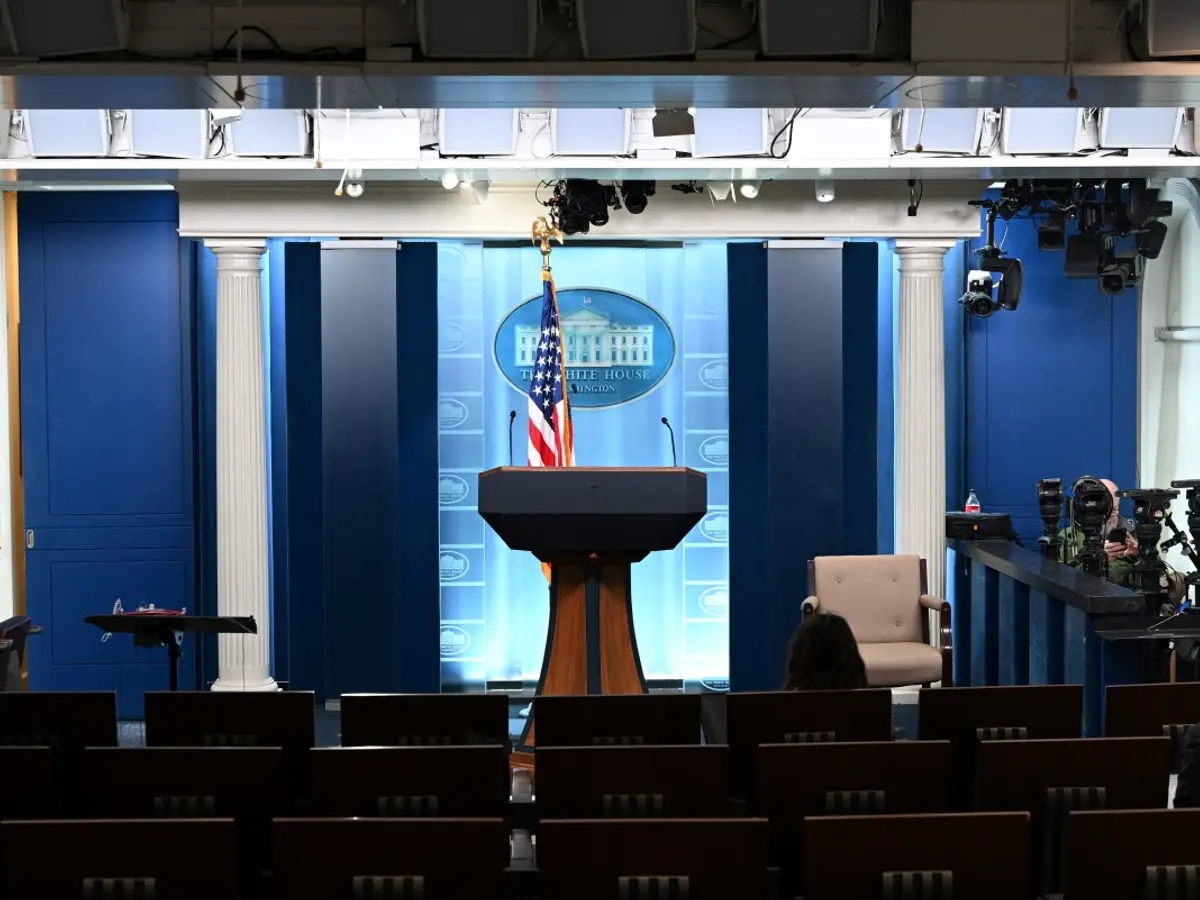
Donald Trump is considering moving the White House press corps to restore a historic indoor swimming pool. During an August meeting, he urged his press secretary to relocate reporters from the briefing room. Trump shared images on Truth Social on September 27, showing the pool he wants to bring back.
Trump is considering moving White House journalists to restore an historic pool, as tensions escalate over press access and media coverage
US President Donald Trump has repeatedly discussed removing journalists from the White House press briefing room and restoring a historic indoor swimming pool, a proposal that has gained support among some of his advisers amid escalating tensions between the administration and the news media. During a meeting in the Oval Office in late August, Trump reportedly urged Karoline Leavitt, who was then serving as White House press secretary, to move reporters out of the James S. Brady Press Briefing Room. In front of several senior aides, he described the move as her 'last legacy'.
However, the proposal did not advance during Leavitt's tenure. According to three people familiar with the discussions, Trump had raised the idea with her repeatedly over several months. Leavitt officially stepped down from her position on August 27. Trump has also expressed interest in restoring the indoor swimming pool installed by President Franklin D. Roosevelt in 1933 as therapy for his polio-afflicted legs. President Richard Nixon later covered the pool to create space for journalists.
Reporters with White House credentials currently work from a small office area connected to the briefing room. Although moving journalists outside the White House might appear to be a relatively limited change compared with Trump's broader campaign against the media, the proposal carries considerable symbolic significance. The press's physical proximity to the centre of US executive power has long reflected the role of independent journalism in a constitutional democracy.
The move could also be difficult for future administrations to reverse. Trump has floated the idea since his first term, and a growing number of people around him are reportedly receptive to it. Some advisers believe journalists could be relocated to the Eisenhower Executive Office Building across the street, marking another escalation in the administration's relationship with the press. On September 27, Trump shared two images on Truth Social depicting the existing briefing room and a proposed swimming pool restoration. He captioned the first image "Fake News" and the second "FDR Pool." The Wall Street Journal reported last month that Trump had repeatedly discussed relocating the White House press corps, although advisers had previously resisted the idea or waited for him to abandon it.
The president's inner circle has changed since his first term, with his core team becoming smaller than the already closely knit group that entered the White House last year. During earlier discussions, most senior aides believed keeping journalists nearby was more beneficial to the administration. However, Trump's frustration with media coverage has intensified, while some increasingly influential advisers have encouraged more aggressive measures against journalists and news organisations.
White House communications director Steven Cheung defended the administration's position, saying, "America is rightly distrustful of the fake news media because they fabricate stories based off lies and sources who are not even privy to any type of information," said Steven Cheung, the White House communications director. "All options remain on the table, and we will make an announcement when appropriate."
The idea of moving journalists out of the West Wing dates back to Trump's first presidential transition in 2016. Stephen K. Bannon, who was preparing to become Trump's chief strategist, proposed relocating the press corps to a townhouse near Lafayette Square. Senior officials rejected the proposal, while the Eisenhower Executive Office Building was considered as an alternative. In January 2017, incoming chief of staff Reince Priebus publicly acknowledged that the administration was considering moving press briefings to the Eisenhower building.
The proposal resurfaced during West Wing renovations in the summer of 2017. According to a former administration official, the discussion was driven more by the opportunity created by the construction work than by a formal relocation plan. With the area already being renovated, some considered whether reporters needed to return at all. However, outgoing press secretary Sean Spicer and his successor, Sarah Huckabee Sanders, reportedly questioned the logistical difficulties. The idea was subsequently dropped.
Trump's media ban faces legal challenges
In September, Trump surprised some advisers by announcing on social media that CNN, MS NOW and Politico would be banned from the White House over coverage he described as "fiction and lies." The administration subsequently revoked the credentials of more than 70 journalists. The Wall Street Journal reported that Natalie Harp, an aide who manages much of the media coverage and messages from supporters reaching Trump's desk, had shown him clips of MS NOW anchors criticising his administration shortly before he announced the ban.
Harp did not respond to a request for comment. White House officials have disputed the suggestion that Harp prompted the decision. They said the group providing Trump with media updates is broader than one aide and that the president's decision followed months of frustration with coverage. Cheung also praised Harp. The restrictions faced a legal setback when Judge Timothy J. Kelly, whom Trump appointed during his first term, temporarily blocked the media ban after finding that officials had failed to follow standard procedures.
The White House continued barring the affected outlets from its grounds for a short period. Last week, Kelly ruled that the administration had violated the outlets' First Amendment rights and ordered their press passes restored. The administration is appealing the ruling.