
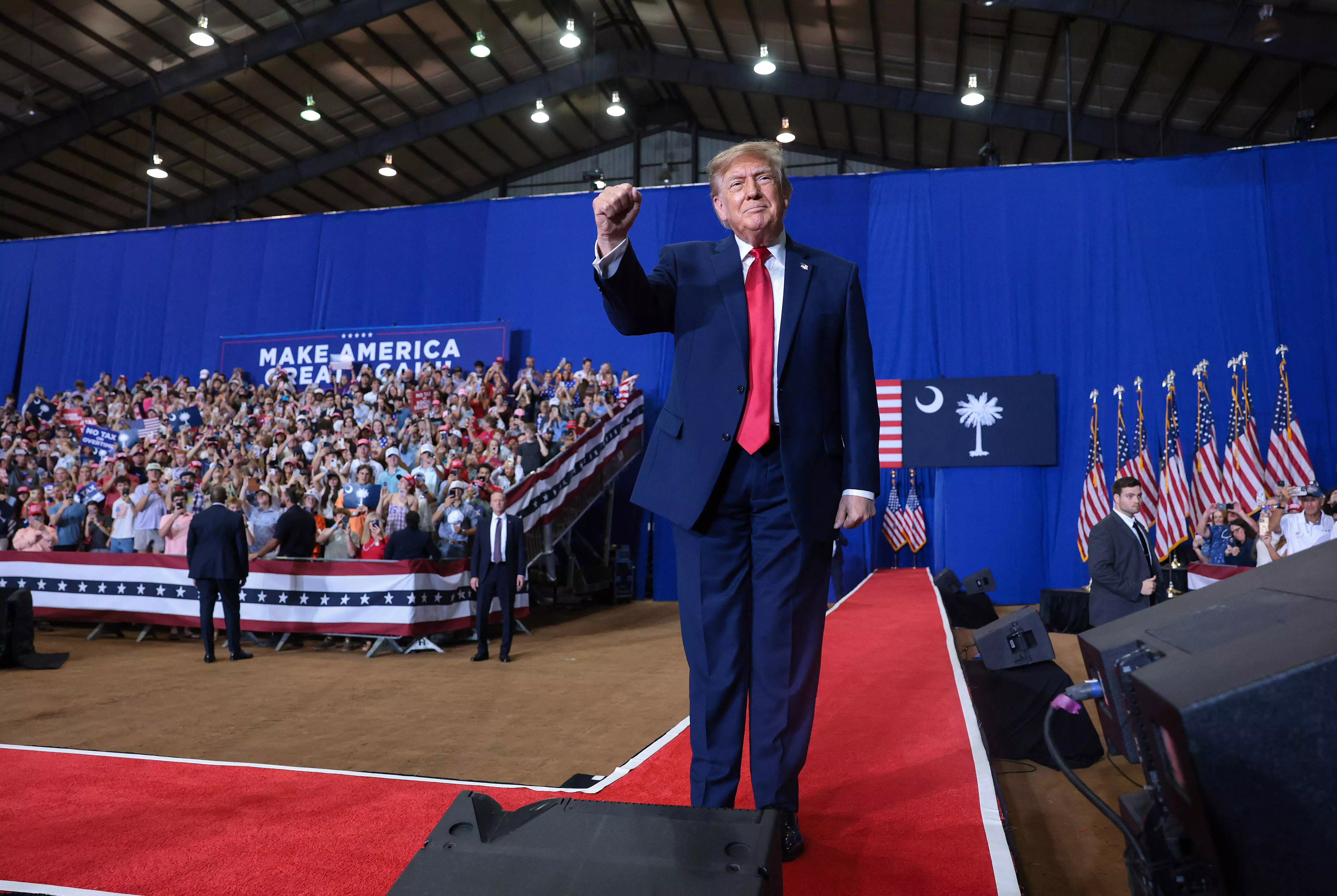
US President Donald Trump said on Wednesday that preventing Iran from developing nuclear weapons is one of his administration's greatest achievements. He claimed that without his intervention, Iran would have already used such weapons. Meanwhile, Iranian Foreign Minister Abbas Araghchi argued that the nuclear issue is just an excuse.
Washington DC: US President Donald Trump on Wednesday (local time) said that preventing Iran from developing nuclear weapons ranks among his administration's most significant achievements.
Emphasising the decisive action required to address the threat, Trump told reporters that if his administration had not intervened, Iran would have "already used" nuclear weapons.
"I think it's one of the greatest things that we've done -- we've stopped Iran from having a nuclear weapon. It's one of the best things that we've done. It took a lot of courage to do it because no other President was willing to do it -- and if we didn't do it, Iran would right now have already used massive nuclear weapons," he said.
His remarks came a day after Iranian Foreign Minister Abbas Araghchi asserted that Washington's long-standing dispute over Tehran's nuclear programme was merely an "excuse". He claimed that Iran had honoured the conditions of previous international agreements, only for the US to abandon them without justification.
In an interview with Iraq's Al-Ikhbariya network, Araghchi said Washington's opposition stemmed from Iran's refusal to accept American dominance in the Middle East.
"The nuclear issue is an excuse; what the Americans oppose and do not accept is Iranian ideology. They completely reject the Iranian perspective, which emphasises confronting American dominance and not surrendering to its power. This is the same thinking that has led to the formation and emergence of the resistance in our region," Araghchi said, according to remarks carried by IRIB.
"We reached an agreement with the world on the nuclear issue and the whole world welcomed that agreement; but the American side withdrew from it without providing any evidence and abandoned the agreement," Araghchi said. "The same thing happened again in Islamabad."
Despite ongoing diplomatic friction and military posturing, Araghchi argued that Washington understood the significant costs of initiating a direct military conflict with Iran. He cited the country's defence preparedness as a key deterrent against potential American aggression.
"Americans know very well that they cannot achieve any of their goals through war," Araghchi warned. "In my opinion, the main deterrent against the US starting a new war is precisely this complete readiness of Iran."
The developments come amid heightened tensions between Tehran and Washington over the implementation of a 14-point Memorandum of Understanding (MoU) signed in June. The agreement aimed to end hostilities between the two sides and pave the way for further negotiations, particularly on Iran's nuclear programme.
The collapse of the agreement renewed the conflict in West Asia, with the US striking Iranian military and civilian assets, while Iran targeted American bases across the Gulf in retaliatory attacks.