
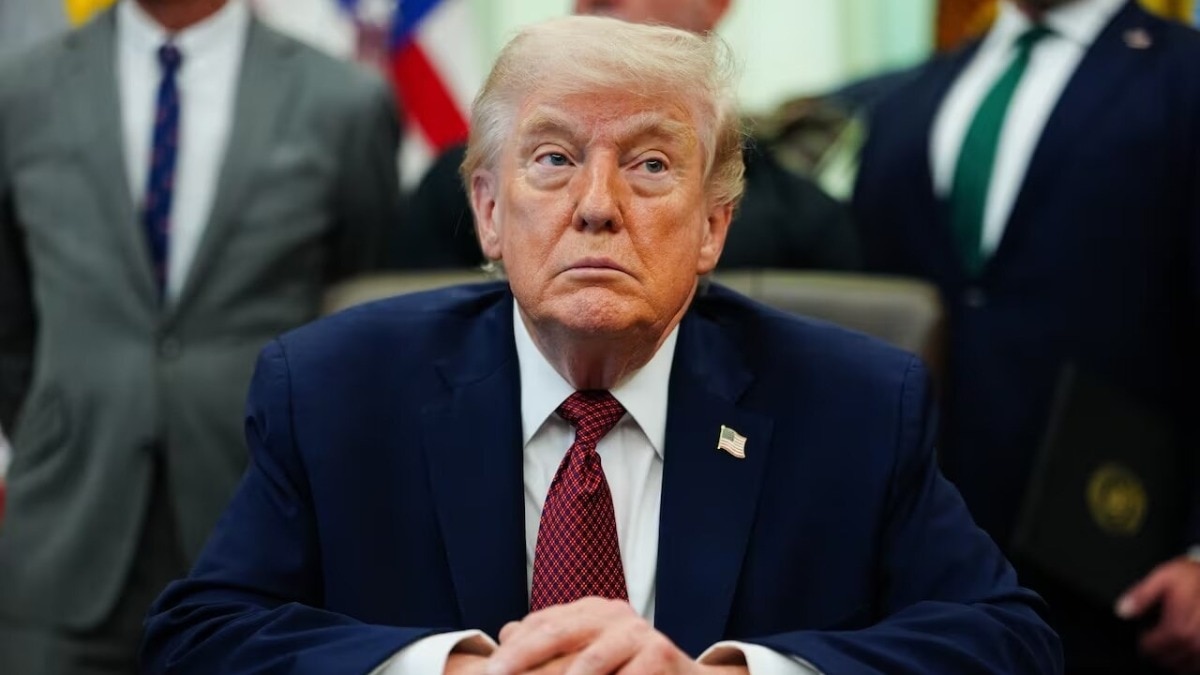
Donald Trump broke his silence on Sunday regarding the nationwide ground stop that disrupted air travel. He urged Congress to fund air traffic control upgrades, claiming, "If Congress approves the desperately needed money for Air Traffic Control, we can get it built quickly and efficiently." Many passengers got stranded since Friday.
Donald Trump addressed the nationwide ground stop and urged Congress to fund air traffic control upgrades. The disruption intensified calls to replace ageing aviation infrastructure.
US President Donald Trump on Sunday broke his silence on the nationwide ground stop that disrupted air travel across the United States over the weekend, using the incident to demand more funding from Congress to overhaul the country's ageing air traffic control system.
Trump said his administration had begun upgrading the system but argued that the work needed to be carried out on a much larger scale rather than through piecemeal funding. He urged Congress to approve additional money, claiming the upgrades could be completed quickly and efficiently with adequate financial support.
The Republican president had remained conspicuously silent on the ground stop since it began on Friday afternoon. While frustrated passengers were left stranded at airports and his administration worked with airlines to restore normal operations, Trump had continued posting on social media about unrelated issues.
In a post on his social media platform on Sunday, Trump said much of the country's existing air traffic control infrastructure was around 50 years old and needed urgent replacement.
"If Congress approves the desperately needed money for Air Traffic Control, we can get it built quickly and efficiently," Trump wrote. He added that the US would have the "BEST SYSTEM anywhere in the World".
TRUMP BLAMES BIDEN ADMINISTRATION
In a separate social media post, Trump blamed his Democratic predecessor, Joe Biden, for the condition of the Federal Aviation Administration (FAA) and the country's air traffic control infrastructure.
He accused the Biden administration of making an already ageing and broken system worse during its tenure.
However, Biden had signed a major infrastructure bill into law during the first year of his presidency. The legislation allocated USD 25 billion to the FAA for airport improvements, upgrades to air traffic control towers, redevelopment of airport terminals and strengthening the foundation of the country's air traffic control system, according to the FAA.
Last year, the Republican-controlled Congress also approved USD 12.5 billion for the FAA as part of Trump's sweeping tax-cut package. However, Transportation Secretary Sean Duffy has repeatedly described that allocation as an initial payment towards a much broader overhaul of the ageing infrastructure.
WHAT CAUSED THE NATIONWIDE GROUND STOP?
Duffy emerged as the administration's main spokesperson on the disruption, appearing on Sunday news programmes to explain the technical problem and press Congress for billions of dollars in additional funding.
In a post on X, Duffy said contractor L3Harris Technologies Inc. had secured two routers from FAA facilities in Texas and Arkansas and was carrying out "deep diagnostics" on the equipment.
According to Duffy, the problem began when L3Harris was replacing a section of old copper wire with new fibre wire. The work somehow caused the system to overload, triggering a chain of disruptions.
After the wire was replaced at a site in El Dorado, Arkansas, and the router was switched on, a problem emerged at an FAA facility in Amarillo, Texas. The issue then escalated, eventually resulting in the nationwide ground stop.
"We didn't think that should or would happen," Duffy told ABC's This Week, referring to the disruption caused by the replacement work.
FLIGHTS EXPECTED TO RETURN TO FULL CAPACITY
Speaking to CBS' Face the Nation, he said there were still delays but expected flights to be operating at full capacity by the end of Sunday and into Monday.
Duffy also explained that a ground stop affects the positioning of aircraft and flight crews, meaning airlines need time to restore their regular operations even after the immediate technical problem is addressed.
"So it takes a little bit of time for the airliners to get back ... at full capacity and operation, but we're well on our way," he said.
The administration has maintained that the immediate disruption was being addressed, while Duffy continued to argue that a larger investment was necessary to modernise the country's ageing air traffic control infrastructure.