
Three major summits in Manila, Shenzhen and Miami will test global cooperation as 2026 ends. Leaders face deep divisions from the US-China rivalry and ongoing conflicts. While the East Asia Summit, APEC and G20 bring many nations together, their real success depends on whether world leaders actually show up.
The challenge for the EAS, APEC and G20 is to restore cooperation increasingly subordinated to great-power competition
As 2026 draws to a close, three major summits will bring together world leaders in overlapping yet distinct fora: The East Asia Summit (EAS) in Manila, the APEC Economic Leaders' Meeting in Shenzhen and the G20 Summit in Miami. Their significance will lie not merely in the declarations they produce, but in which leaders attend, the ones who stay away, and what bilateral or trilateral encounters take place on the sidelines.
These summits occur amid deepening international divisions: The US-China rivalry, conflicts in Ukraine and West Asia, economic disruption and weakening multilateral institutions. Their challenge is to restore cooperation increasingly subordinated to great-power competition.
The East Asia Summit comes first. The Philippines concludes its ASEAN chairmanship amid sharp confrontation with China in the South China Sea. Manila has emerged as ASEAN's most outspoken challenger of Chinese maritime assertiveness. Meanwhile, Myanmar remains unresolved, exposing ASEAN's limited capacity to manage its internal crises.
The EAS brings together ASEAN and eight dialogue partners, including the US, China, Russia and India. Its strategic importance contrasts with its limited ability to generate cohesion. ASEAN centrality remains its organising principle, but ASEAN's influence over major powers rarely extends beyond its convening role.
US President Donald Trump's anticipated attendance would be significant, although his motivation may be more to support the Philippines than ASEAN. China normally participates through its Premier rather than President Xi Jinping, while Russia has recently been represented by Foreign Minister Sergey Lavrov. Their continued engagement nevertheless acknowledges the EAS as a useful diplomatic forum.
Prime Minister Narendra Modi's participation would reaffirm India's commitment to ASEAN centrality, particularly during the ASEAN-India Year of Maritime Cooperation.
A potentially important development is a Quad Summit on the EAS sidelines, bringing together Trump, Modi, Japanese Prime Minister Sanae Takaichi and Australian Prime Minister Anthony Albanese. Although all four could meet again at the G20, convening the Quad in the Indo-Pacific would carry greater symbolism. It could revive leadership-level momentum while reinforcing the cooperation already continuing at working levels. China's criticism of a possible Quad resurgence suggests that this could also sharpen exchanges at the EAS.
The APEC Summit in Shenzhen will shift attention towards economic competition. China will present itself as a champion of regional integration, open markets and technological cooperation, seeking to counter concerns about industrial overcapacity, economic coercion and excessive supply-chain dependence.
Hosting APEC in Shenzhen symbolises Chinese technological and economic ambitions. Beijing will promote cooperation on artificial intelligence, digital commerce, technology standards and supply-chain resilience. Yet APEC's consensus-based framework faces contradictions when its two largest economies increasingly weaponise trade and technology.
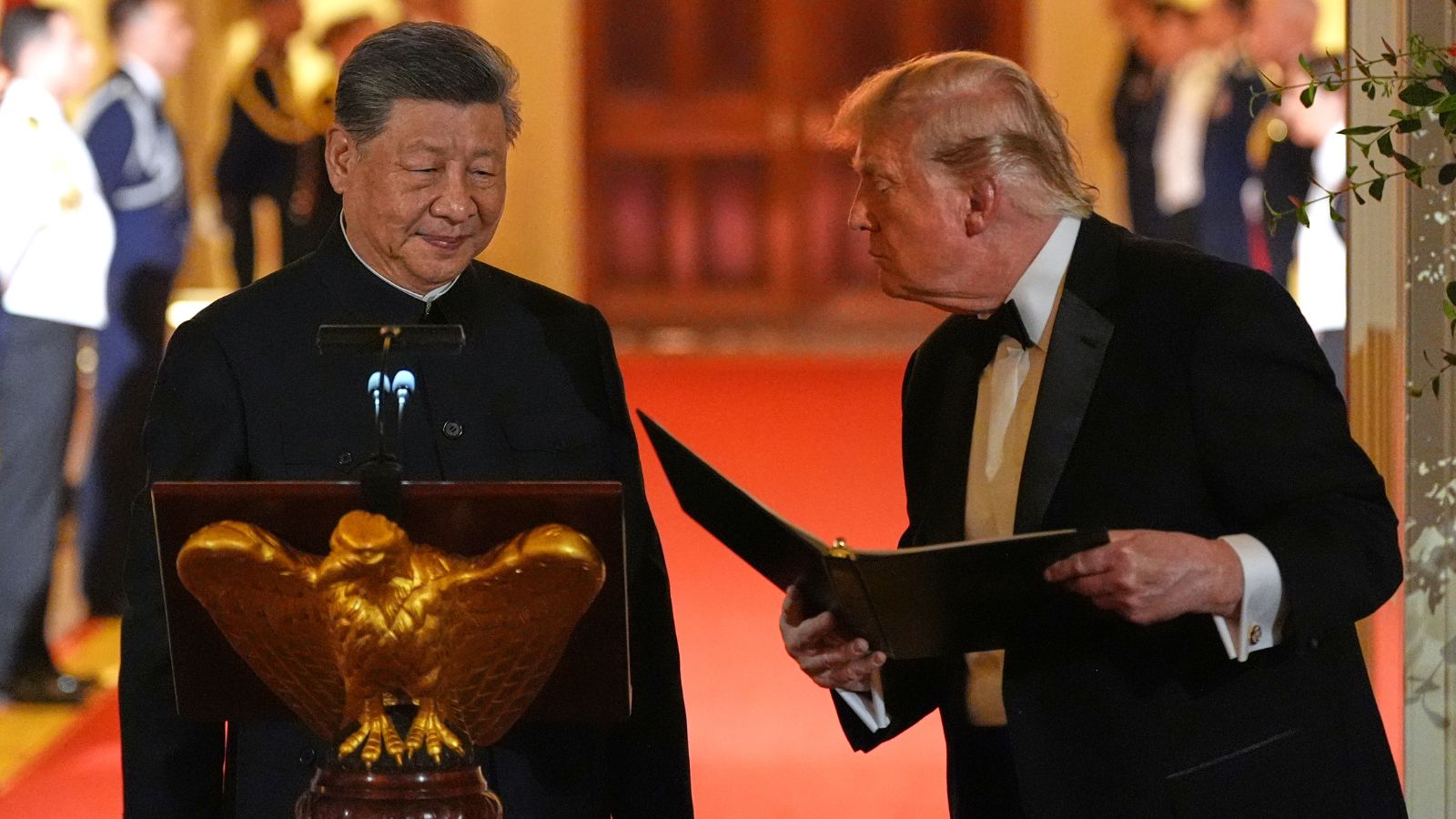
A possible Trump-Xi bilateral meeting could overshadow APEC's formal proceedings. Agreements on tariffs, technology restrictions or trade imbalances would have consequences extending far beyond the summit. Renewed confrontation would deepen regional uncertainty.
Russia's representation remains uncertain, although the Chinese venue increases the possibility of Putin attending. Speculation about a Trump-Xi-Putin trilateral encounter could consequently become another defining feature of Shenzhen.
The G20 Summit in Miami will bring wider participation from Europe, West Asia and other regions. Its principal challenge may be managing not merely the global economy but the G20 itself.
The Trump administration seeks to narrow the agenda towards deregulation, energy costs, innovation and growth, moving away from the development, climate and debt priorities advanced under the Indonesian, Indian, Brazilian and South African presidencies. South Africa's exclusion, alongside invitations to non-members such as Poland, raises questions about whether a rotating chair can reshape participation according to national preferences.
Xi's attendance appears likely, while Putin's remains uncertain. A Trump-Putin meeting could advance negotiations over Ukraine, but excluding Kyiv or European leaders from substantive discussions would raise questions of legitimacy. European governments fear that a Washington-Moscow accommodation could undermine their security interests.
you may like
For India, the EAS and G20 provide complementary opportunities, since it is not an APEC member. EAS offers a platform to reinforce Act East, maritime cooperation and the MAHASAGAR vision. G20 provides an opportunity to defend development priorities, energy security and the interests of emerging economies. The opportunities for bilateral meetings around these summits add significant value. Contrast this with Modi's absence from the UN General Assembly, the NAM and Commonwealth summits, and the value India places on the EAS and G20 becomes evident.
Together, these summits expose a fundamental contradiction. Multilateral institutions remain indispensable as convening platforms, yet their capacity to shape outcomes is diminishing. The collective legacy of the EAS, APEC and G20 may ultimately depend less on negotiated declarations than on whether bilateral and trilateral power bargains reinforce multilateral cooperation or reduce these institutions to convenient theatres for great-power diplomacy.