
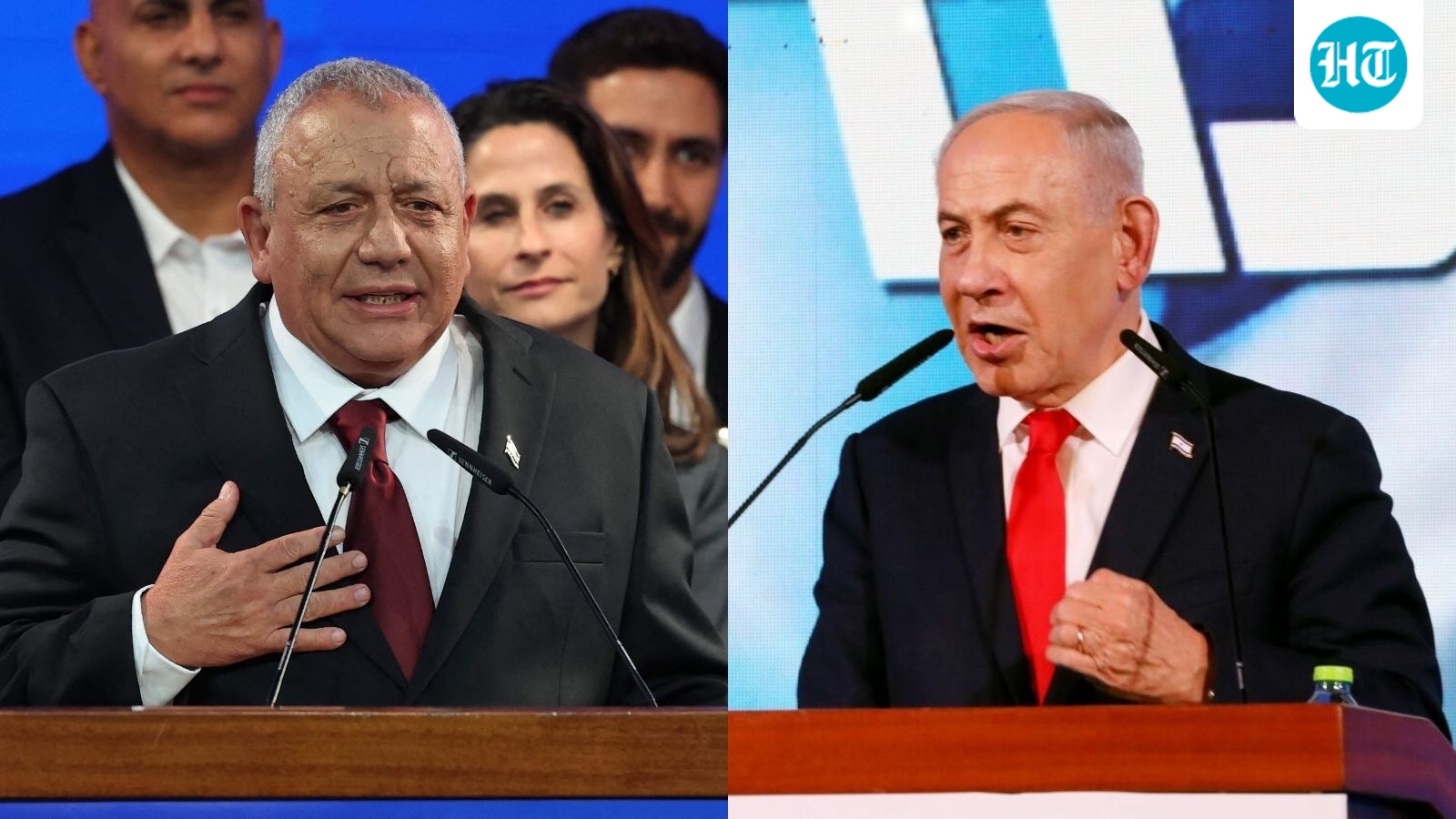
Tuesday's election in Israel left neither Benjamin Netanyahu nor Gadi Eisenkot with the 61 seats needed to govern. Exit polls showed both blocs struggling to reach a majority in the 120-seat parliament. As the country waits for the final count, Netanyahu stays in office as caretaker until a government forms.
Tuesday's election in Israel left neither the bloc led by Prime Minister Benjamin Netanyahu nor that of his main challenger, former military chief Gadi Eisenkot, with the 61 seats needed to govern. The country now faces a final count and a process that could take weeks before it has a new government.
Exit polls by Israel's three main television broadcasters gave Netanyahu's bloc between 50 and 52 seats in the 120-seat parliament, the Knesset, and Eisenkot's between 49 and 53. Arab-led parties, which belong to neither bloc, were projected to win 17 to 19. No party in Israel has ever won a majority on its own.
Turnout was 77.7%, the highest in more than two decades, according to Israel's Central Elections Committee. Netanyahu, 77, Israel's longest-serving prime minister, stays in office as caretaker until a new government takes over.
Israelis vote for parties, not candidates. Knesset seats are shared out by proportional representation among national party lists, so a party's share of seats follows its share of the national vote.
A party needs at least 3.25% of the national vote to win any seats. About a dozen parties were thought to have a chance of clearing that bar, according to Reuters, which is why the final tally and the allocation of seats take time. AFP reported that some smaller right-wing parties fell short of it.
Partial counts released through Wednesday show each party's share of the vote, but they do not show how many seats it will win. Seat totals depend on the full national tally.
The Knesset has 120 seats, so a government needs at least 61 to command a majority. As no party has ever won that many alone, every Israeli government has been a coalition of parties. Netanyahu's outgoing coalition held 68 seats at its peak.
Parties line up in blocs, groups that back one leader for prime minister. Kan 11 and Channel 13 put Netanyahu's bloc and Eisenkot's at 51 seats each, while Channel 12 gave Netanyahu's bloc 52 and the opposition 49, Reuters reported. The projections moved through the night, and one broadcaster first had Eisenkot ahead before giving Netanyahu a slight edge.
In the polls showing a 51-51 tie, the Arab-led parties take the remaining 18 seats. Each bloc would then need 10 more seats, which could come only from the Arab-led parties or from the other bloc. Reuters reported that the Arab-led parties, outside the two main blocs, could hold the balance of power.
Exit polls are surveys and can differ from the final count. The final tally is expected by Friday, October 30, and the official results will be published on November 4, a week after the vote.
Once the results are in, President Isaac Herzog, whose post is largely ceremonial, consults party leaders on whom they want as prime minister. He then asks the candidate he believes has the best chance of forming a government to try. That is usually the leader of the largest party, AP reported, though AFP noted that it need not be.
Exit polls suggest Likud, Netanyahu's party, will be the largest, with Eisenkot's Yashar second, according to Bloomberg. Both leaders have staked a claim to lead, but neither has claimed victory, Reuters reported.
The nominee has 28 days to put together a coalition, with a possible 14-day extension, according to AFP, giving a maximum of 42 days. Smaller parties often hold outsized power in these talks, since their seats can supply the margin a larger party needs. The leaders of bigger parties typically win them over with cabinet posts, budgets or specific policies.
After past elections, coalition negotiations have run to weeks or months, Reuters noted. If the nominee fails, others can be given a chance to form a government.
A government takes office only after it wins a vote in the Knesset. Parties can abstain in that vote, and this is how a minority government, one without 61 seats of its own, can be seated. Arab-led parties, for instance, could back a government from outside the coalition, or abstain.
A minority government then has to depend on support or cooperation from parties outside it to pass legislation.
If no candidate can put together a government, Israel holds another election, possibly early next year, AP reported. Until then the current cabinet stays on as a caretaker government, which keeps public services running but lacks the authority to make major policy changes. Israel held five elections between April 2019 and November 2022 because of similar stalemates.
Rival leaders can also agree to share power. In 2020, after three elections in less than a year, Netanyahu and Benny Gantz, a retired general, formed a national unity government in which the prime ministership was to rotate between them, AFP noted. The arrangement broke down after a year and led to another election.
The final tally is due by October 30 and the official results on November 4. Herzog's consultations with party leaders follow. His nominee then has up to 42 days, and a government takes office only after it wins a vote in the Knesset.