
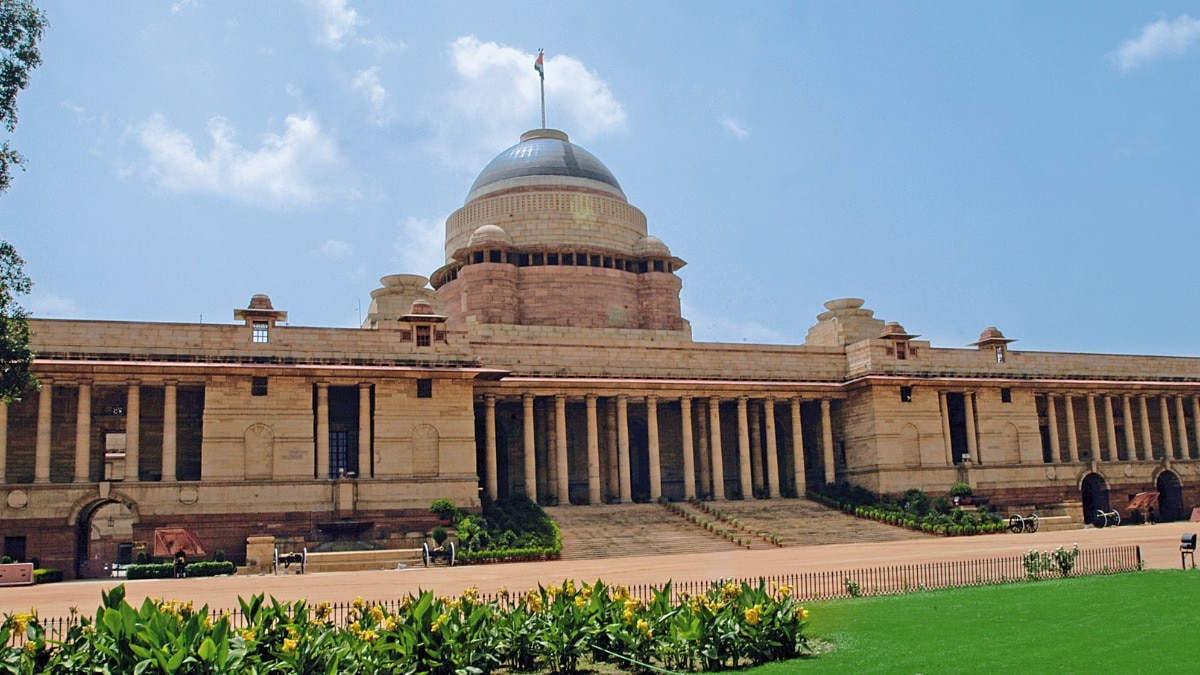
Rashtrapati Bhavan transferred two governors and appointed four new ones on October 12. The government picked loyal BJP figures for these roles across six states instead of retired officials. This move helps the party restructure its internal team. Leaders like Dushyant Gautam got these posts as the BJP prepares for future elections.
The October 12 late-evening reshuffle of governors may read like routine housekeeping. Yet it is anything but that. In one order, Rashtrapati Bhavan transferred two serving governors and appointed four new ones, sending political figures into constitutional offices across six states: Kerala, Tamil Nadu, Karnataka, Uttarakhand, Sikkim and Odisha.
Every reshuffle in the Narendra Modi era is read on three counts: who the appointees are, where they are sent, and why now. On all three, this one seems more revealing than perhaps most reshuffles of the past.
The Modi government has reached into the BJP's organisational bench rather than the usual pool of retired bureaucrats, judges and military officers, and it has done so in the middle of the most-thorough restructuring the party has attempted in a decade. The reshuffle says something about Centre-State relations; it says more about the BJP itself.
The sequence runs top-down. On January 20, Nitin Nabin, a 45-year-old, five-time MLA from Bihar, took over from J.P. Nadda as BJP national president. In May, he began replacing state unit chiefs; on August 17, he announced a national team in which only two of eight general secretaries survived. On September 23, Nabin named in-charges for every state.
The Raj Bhavans are where several of those left behind have landed. Dushyant Gautam, dropped from the BJP's core organisational team in August, is now the governor of Sikkim. New Karnataka governor Sudha Yadav is a member of the BJP parliamentary board. Om Prakash Mathur (Kerala governor) and former MP Dhal Singh Bisen (Uttarakhand governor) belong to the cohort the BJP is moving out of its working structures with dignity.
What comes next is larger. BJP sources say three further moves are being sequenced: the parliamentary board and central election committee, unchanged since August 2022, are to be reconstituted with younger chief ministers of BJP-ruled states brought in. A reshuffle of the Union cabinet -- untouched since June 2024 -- is expected soon, and at least three BJP chief ministers may be changed. Meanwhile, the governors' list is a housekeeping step in a reorganisation aimed at the 2027 elections in Uttar Pradesh, Punjab, Gujarat, Uttarakhand, Goa, Manipur and Himachal Pradesh, and beyond them at General Election 2029.
The new governors
The Kerala posting is the most personal. Mathur, 74, and Prime Minister Narendra Modi have known each other since the late 1970s, when both were RSS pracharaks. Mathur ran Gujarat for the party through Modi's years as chief minister and also Modi's Vadodara Lok Sabha poll campaign in 2014. His move from a quiet Sikkim Raj Bhavan to Thiruvananthapuram is significant.
Kerala's Left Front government, which spent a decade of strong differences with Raj Bhavan over a multitude of issues, is gone. Mathur arrives on the scene with no inherited feud with the new Congress-led government, but he will be seen as the Centre's man opposite the BJP's principal national rival.
Rajendra Vishwanath Arlekar's move to Tamil Nadu regularises an existing arrangement. As Kerala governor since January 2025, he held additional charge of Tamil Nadu March onwards, after R.N. Ravi was shifted to West Bengal. Arlekar becomes a substantive governor in a state whose previous Dravida Munnetra Kazhagam (DMK) government fought the Raj Bhavan up to the Supreme Court over assent to bills, and whose new TVK (Tamilaga Vettri Kazhagam) dispensation led by C. Joseph Vijay has governed since May with Congress and Left support.
Sudha Yadav, BJP sources say, is Modi's pick. Her husband, BSF deputy commandant Sukhbir Singh Yadav, was killed in Kargil in May 1999. Months later, the party fielded her from the Mahendragarh Lok Sabha seat in Haryana, which she won handsomely. She lost in 2004 and 2009, stayed on as a BJP national secretary, and in August 2022 was inducted into the parliamentary board from Haryana as one of the surprise choices. Yadav's move to governor duties in Karnataka sends a woman with substantive BJP pedigree into a Congress-ruled state.
Bisen, the Lok Sabha MP from Madhya Pradesh's Balaghat from 2019 to 2024, goes to BJP-ruled Uttarakhand, the least political of the six postings, replacing Lieutenant General (retd) Gurmit Singh, whose term had run out.
Gautam, a general secretary in Nadda's team and central to the party's Dalit outreach, was dropped on August 17 along with Tejasvi Surya, Amit Malviya and Arun Singh. Eight weeks later, he enters a Raj Bhavan.
Braj Mohan Ram, a three-term MP from the reserved Palamu Lok Sabha seat in Jharkhand, goes to BJP-ruled Odisha, replacing Hari Babu Kambhampati. His elevation serves as Dalit outreach in Jharkhand and a counter to the ruling Jharkhand Mukti Morcha's decision to send Baidyanath Ram, another Dalit leader from the Palamu-Latehar belt and a former BJP man, to the Rajya Sabha.
One thread runs through all six appointments: the BJP's institutional memory rather than the non-partisan sheen of retired civil servants, soldiers and jurists. The Congress did the same for decades; what is distinctive is the consistency. The Modi government is no longer hedging between loyalists and technocrats. It is choosing people it banks on, and in the states that matter, people the prime minister trusts personally.
The Modi way
Since the Modi government entered its third term in June 2024, Rashtrapati Bhavan has issued five multi-state gubernatorial orders, bringing 18 fresh faces into the gubernatorial ranks and moving roughly a dozen governors between states.
October 12 extends the two-track rule -- send politicians to the plains and professionals to the frontier, with one exception. All along, the 'ordinary' states got party veterans, such as Haribhau Bagde, Santosh Gangwar and Ramen Deka. The sensitive postings went to the services: former home secretary Ajay Kumar Bhalla to Manipur, former army chief V.K. Singh to Mizoram, Lt Gen. Syed Ata Hasnain to Bihar, former ambassador Taranjit Singh Sandhu to Delhi.
October 12 is the first multi-state order of the government without a single bureaucrat or soldier. In fact, it treats Sikkim, a border state, as a political posting rather than a security-sensitive one. October 12 also extends the Raj Bhavan as a landing ground for the sidelined: Gangwar, denied a poll ticket in 2024, got the Jharkhand appointment within two months; Bisen and Gautam follow now.
The BJP does not drop its veterans; it relocates them. It also extends the rotation of a small trusted pool. For instance, Arlekar is on his fourth state in five years. And it extends the election clock: the March appointments came weeks before the West Bengal, Tamil Nadu, Kerala and Assam elections. The October 12 move precedes the 2027 elections in Uttarakhand, but leaves Uttar Pradesh, which votes in the same round, untouched.
The October 12 reshuffle breaks with coalition accommodation too: the one seat the Modi government 3.0 has given an ally was Goa, to the Telugu Desam Party's Ashok Gajapathi Raju. And it breaks the gender record: until Yadav, this government had not appointed a woman governor in 28 months. In that sense, October 12 is less a departure than a purification of the pattern, and the first order in which Modi's personal history with the appointees is the most-visible selection criterion.
Three Opposition-ruled states
Each Opposition-ruled state offers a different test. In Kerala, Mathur inherits a decade of institutional scars -- from vice-chancellor appointments to withheld bills -- but without the old adversary. Whether he turns his organisational instincts on a Congress government with a two-thirds mandate will define the posting.
Tamil Nadu is the Raj Bhavan that reshaped the law: the Supreme Court's April 2025 judgment set timelines for assent, and the presidential reference undid it in November, with governors still required to act within a reasonable period. Arlekar operates in that mapped but unfenced space opposite a five-month-old TVK government.
In Karnataka, the D.K. Shivakumar government inherits a Lok Bhavan that fought previous chief minister Siddaramaiah over the sanction to prosecute him. Now the state has a governor who was in the BJP's topmost panel until the appointment. The test in all three states is whether powers are exercised consistently, for reasons grounded in law, and without avoidable delay.
BJP board next
The most consequential line in the order may be the one it does not contain. Yadav's departure opens seats on the 11-member BJP parliamentary board and 15-member central election committee. Two inductions are described as imminent: Yogi Adityanath and Devendra Fadnavis, the party's two most-powerful chief ministers, neither of whom got a board seat in 2022, when serving chief ministers were pointedly kept out.
A third change is on the cards: a Sikh face from Punjab, which votes in early 2027, to replace Iqbal Singh Lalpura, the former IPS officer who in 2022 became the first Sikh on the board. The reshuffle removes Yadav and Gautam from the organisational chart with honour and clears the way for a board remade in the image of the party's current power structure.
So who stays?
The communiqu says nothing about the three governors making way -- Thaawar Chand Gehlot, Kambhampati and Gurmit Singh. Gehlot's exit carries the most intrigue. The former Union minister and Dalit leader, who knew Karnataka as its BJP in-charge from 2006 to 2014, had completed a full term. When Jagdeep Dhankhar resigned as vice-president in July 2025, Gehlot was seen as the likely nominee. Those familiar with the deliberations say he was on the shortlist until the board settled on C.P. Radhakrishnan. Having missed the second-highest office in the land, Gehlot, 78, now leaves the one he held.
Just as telling is the Raj Bhavan the order did not touch. Anandiben Patel has been Uttar Pradesh governor since July 2019; her term ran out in July 2024 and this July, she completed seven years. A change was widely anticipated ahead of the 2027 Uttar Pradesh elections. That it did not come signals two things: her successor is being held back for a later tranche or the prime minister prefers the woman who succeeded him as Gujarat chief minister in Lucknow through the upcoming polls.
Patel is not alone. Acharya Devvrat has been Gujarat governor since July 2019 and a governor since 2015. Mangubhai C. Patel, a minister in Modi's Gujarat cabinet, completed five years as Madhya Pradesh governor on July 7, and a petition in the Madhya Pradesh High Court now asks that the chief justice hold the charge until a successor is named.
Every other governor of the 2021 batch has been moved or retired. The ones who survived every round are the Gujarat loyalists. The strongest reading keeps two stories separate. The confirmed facts are a new set of interlocutors in six states and a vacancy at the top of the BJP.
The political interpretation -- of a prime minister placing those he trusts in Raj Bhavans while a young BJP president remakes everything beneath him -- is supported by the pattern but not yet by any public act. What these governors do once sworn in, whom the party names to its board, how far the Union cabinet reshuffle reaches and which chief ministers survive it will settle the stories that emerge out of all of this.