
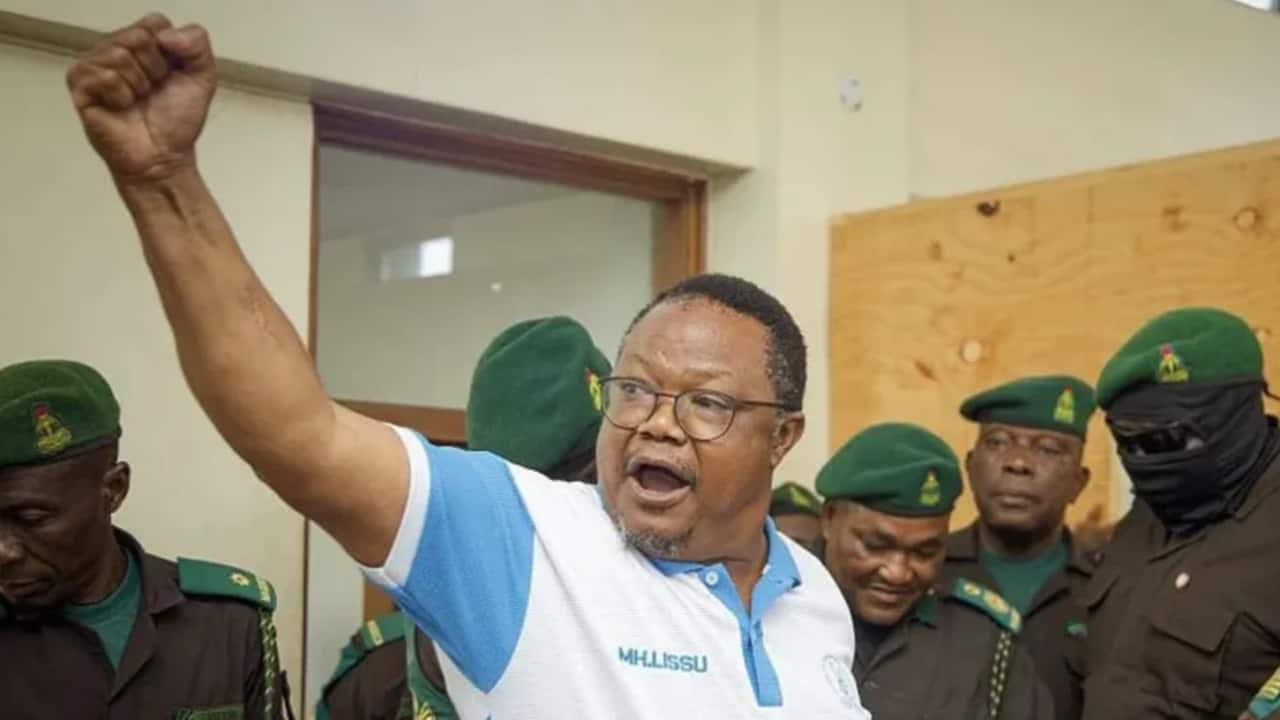
Tanzania’s opposition leader Tundu Lissu got a four-year prison sentence on Friday for incitement. A High Court panel acquitted him of treason but found him guilty of the lesser charge. Lissu called the trial political persecution, saying, "The offence of incitement is one that you, honourable judges, have manufactured."
Tanzania's main opposition leader Tundu Lissu was sentenced to four years in prison on Friday after being convicted of incitement, but was acquitted of treason in a trial that drew international criticism over alleged political repression. A three-judge panel at the High Court in Dar es Salaam ruled that prosecutors had failed to prove the treason charge, which carries the death penalty, but found the 58-year-old opposition politician guilty of the lesser offence of incitement. The court invoked Section 319 of Tanzania's Criminal Procedure Act, which allows judges to convict an accused person of a lesser offence even if it was not separately included in the original charge.
Incitement had been included as an alternative offence under Section 390 of the Penal Code, the court said. Lissu, who leads the opposition Chadema party, has been detained since April 2025, when he was arrested ahead of the country's general election. The case stemmed from his campaign for electoral reforms under the slogan "No Reforms, No Election". Prosecutors accused him of making statements intended to disrupt the October 2025 election and incite rebellion. Lissu denied the allegations, maintaining that his remarks were part of a legitimate political campaign. Tundu Lissu calls trial political persecution Lissu criticised the court's decision, saying the incitement charge had been manufactured to secure his conviction.
"The offence of incitement is one that you, honourable judges, have manufactured. You have created an offence that did not exist, and you have done so on political directives," he told the judges. He also described the trial as political persecution and accused the judiciary of acting on instructions from President Samia Suluhu Hassan's government. Lissu said he wanted to apply for bail, as incitement is a bailable offence, unlike treason. He can appeal the verdict before Tanzania's Court of Appeal, the country's highest court. Tanzania election violence and crackdown on opposition Lissu's trial comes amid mounting concerns over political freedoms in Tanzania following the October 2025 general election.
President Samia Suluhu Hassan won the election with 98% of the vote, after Lissu and another major opposition challenger were excluded from the contest. The opposition dismissed the result as a mockery of democracy. The election was followed by widespread protests and a violent security crackdown. A commission appointed by Hassan reported that at least 518 people were killed in the unrest, attributing the violence to protesters. Opposition groups and rights organisations have alleged that security forces killed far more people, with some estimates running into thousands. The government has denied allegations that security forces used excessive force.
Lissu's arrest, alleged abductions of government critics and Chadema's exclusion from the election were among the factors that fuelled the protests. The government has repeatedly denied targeting political opponents. International criticism over Tundu Lissu's trial The case has drawn criticism from British and European Union lawmakers, who described the prosecution as politically motivated and called for Lissu's release. In a letter to Hassan, lawmakers warned that using capital punishment against a political opponent risked turning the justice system into an instrument of political repression.
US Ambassador to Tanzania William Trachman also expressed concern over the proceedings. "I am closely following the outcome of Tundu Lissu's trial proceedings, and the broader implications for the rule of law," he wrote on X. Police had heightened security in Dar es Salaam ahead of Friday's verdict. Earlier, authorities had warned against groups allegedly mobilising to travel to the city to stage a coup. Who is Tundu Lissu? Lissu, 58, is one of Tanzania's most prominent critics of the ruling Chama Cha Mapinduzi (CCM) party, which has dominated the country's politics since independence. He first became a member of parliament in 2010.
In September 2017, he survived an assassination attempt when gunmen fired multiple shots at his vehicle outside his home in Dodoma. He was shot 16 times and underwent nearly 20 surgeries. The attack forced him to spend years outside Tanzania. He returned to contest the 2020 presidential election against then-President John Magufuli, but the opposition alleged widespread irregularities in the vote. Lissu returned to Tanzania in 2023 after Hassan lifted a ban on opposition political rallies. He became Chadema's national chairman in January 2025 and stepped up his campaign for electoral reforms ahead of the general election.