
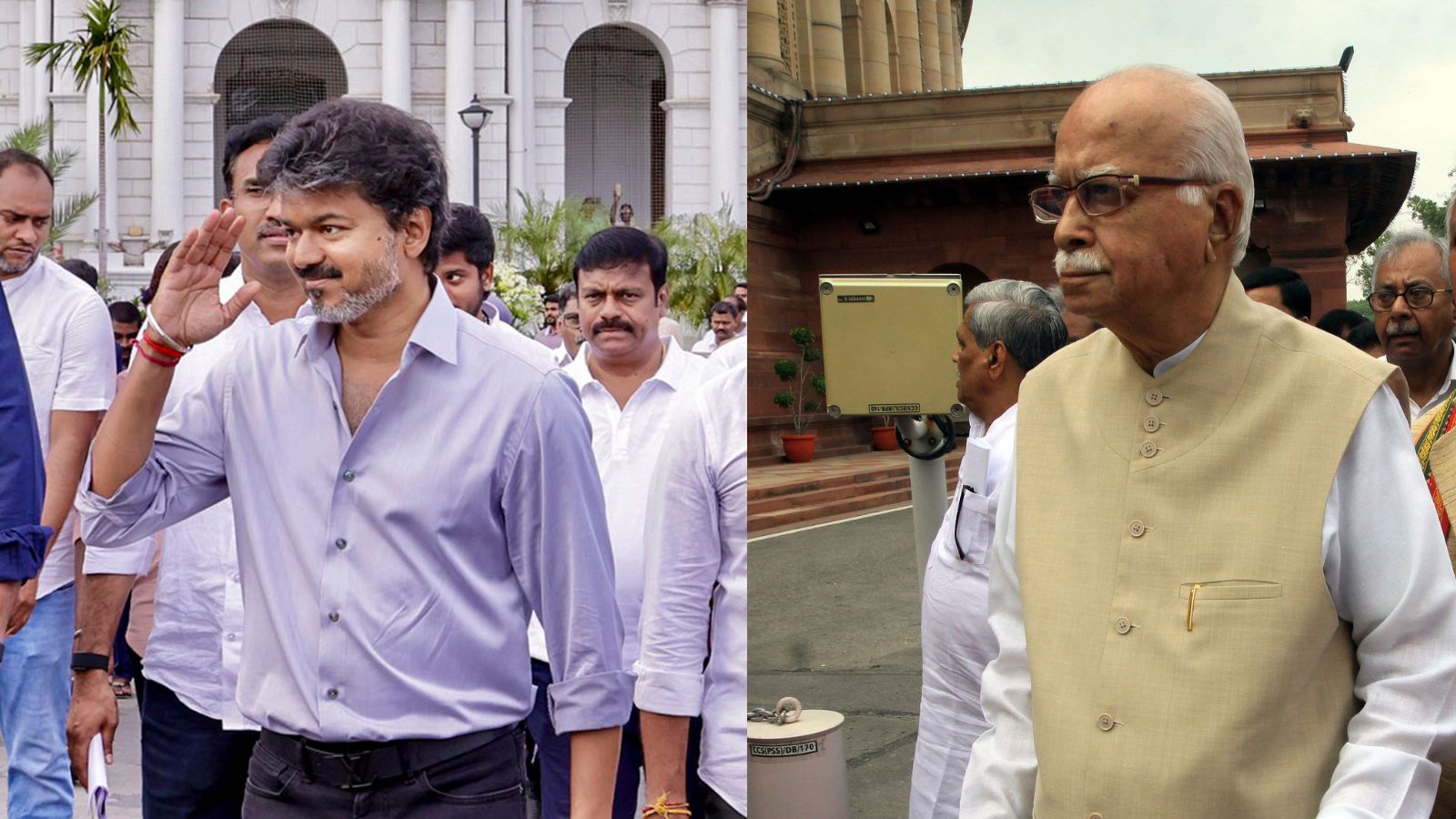
Tamil Nadu’s Vijay faces criticism over parole granted to five convicts from the 1998 Coimbatore serial blasts. State BJP spokesperson Narayanan Thirupathy said, “Personal grounds cannot override the gravity of a terror attack that remains one of the darkest chapters in the state’s history.” These convicts recently got parole approval.
The five convicts lodged in Coimbatore Central Prison – Mohammed Ansari, Mohammed Ali, Monappa alias Mohammed Hassan, Mohammed Ajam, and Nawab Khan, all between the ages of 46 and 55 – petitioned for parole citing personal circumstances and health conditions, according to prison officials.
A senior official claimed their petitions had been cleared earlier this year, but their release on parole was put on hold during the Assembly elections. Now, their fresh petitions have been approved.
On February 14, 1998, ahead of an election meeting in Coimbatore that Advani was to address, the town that was communally charged saw coordinated explosions across the city, leaving 58 people dead and more than 200 injured. Advani escaped as he had not yet arrived at the meeting.
The Justice P R Gokulakrishnan Commission set up by the then DMK government to probe the bombings traced them to the killing of 18 Muslims in police firing and communal violence in late 1997, and blamed police for failing to ward off the explosions. Coimbatore continues to be a rare BJP stronghold in Tamil Nadu, a state that has remained out of the party’s reach.
The police arrested 168 people following the blasts, of whom one died and another turned approver. Of the 166 who were tried, 158 were convicted in 2007, of whom 43 were given life terms. The radical outfit Al-Umma was accused of organising the bombings, with its founder S A Basha and general secretary Mohammed Ansari convicted of conspiracy.
Reacting to the parole to the accused, state BJP chief spokesperson Narayanan Thirupathy posted on X: “Personal grounds cannot override the gravity of a terror attack that remains one of the darkest chapters in the state’s history.”
Thirupathy also mentioned the Supreme Court’s October 4, 2023, decision refusing bail to some life convicts in the serial blasts case, while their appeals against conviction and sentence were pending.
However, there have been court concessions before. In January 2023, nine convicts in the case received interim leave on health grounds, with extensions considered periodically by the High Court. Later that year, the Madras High Court granted three months’ ordinary leave to another life convict, Abdul Hakeem, after his wife approached the court citing a brain tumour and symptoms of cancer.
In fact, among those who repeatedly received bail, before he died at the age of 84 in December 2024, was prime accused Basha. Supreme Court lawyer Prabhu Balasubramanian, who knew Basha, earlier told The Indian Express how the Al Umma founder’s regret in his final days was the time lost with his family, particularly grandchildren. Balasubramanian claims that this is why Basha, who was given life too, never appealed against his sentence. “I just want to be with my family, even if only for a few days every year,” Basha told him, adding that he feared that an appeal against his sentencing would make that difficult.
While the lawyers for the five accused refused to comment, other legal experts said parole is the normal right of a prisoner, and it should not be viewed as lowering the severity of the sentence of an accused.