
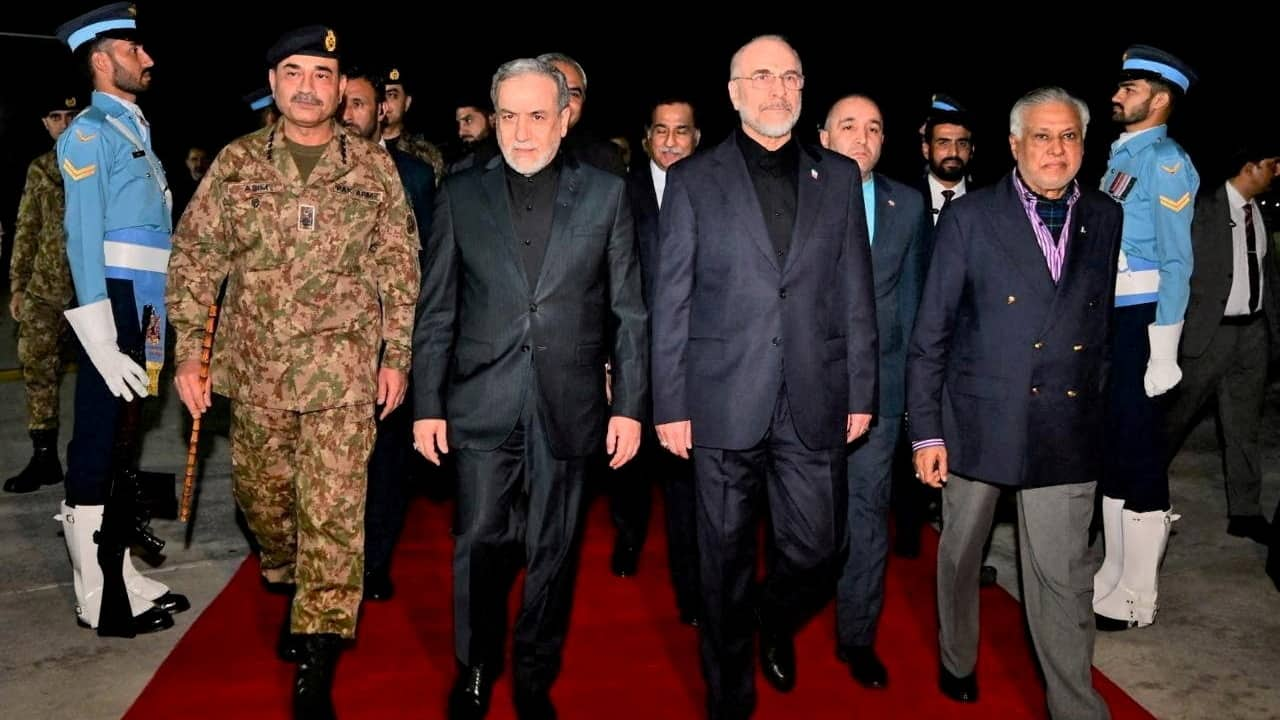
Iranian Parliament Speaker Mohammad-Baqer Qalibaf warned the United States on November 15 that Tehran is ready for either talks or war. He said, "We do not care whether the US chooses the path of negotiations or war." Iran set seven conditions for a deal while reporting new military activity nearby.
Iranian Parliament Speaker Mohammad-Baqer Qalibaf on Sunday, November 15, warned the United States against further military action, saying Tehran was prepared for either negotiations or renewed conflict but would only consider an agreement if Washington accepted its seven conditions. "We do not care whether the US chooses the path of negotiations or war," Qalibaf told lawmakers during an open parliamentary session, according to Iran's semi-official Mehr News Agency. He said Iran would not remain indefinitely in a state of "neither war nor peace" and warned that its armed forces, rather than Washington, would determine the geographical scope of any future conflict.
What are Iran's seven conditions? Qalibaf's remarks follow disagreements between Tehran and Washington over the terms for ending their conflict and reopening the Strait of Hormuz. Iran has demanded an end to the US naval blockade, sanctions relief, the release of frozen assets and an end to hostilities across the region, including Lebanon, as part of its proposed framework for negotiations. On November 12, Qalibaf said Washington had yet to provide a formal response to Tehran's proposals, according to Iran's Tasnim News Agency. The US has rejected several Iranian demands. Secretary of State Marco Rubio described some of the proposed conditions as unacceptable earlier this month, Reuters reported.
Iran claims drone strike on US radar in Bahrain The diplomatic confrontation comes alongside renewed military activity in the Gulf. Iran's Islamic Revolutionary Guard Corps (IRGC) claimed on Sunday that it had targeted a US air-defence radar installation at Bahrain's Al-Riffa helicopter base using six drones. The claim, carried by Iranian state broadcaster IRIB, followed two security alerts issued by Bahrain's Interior Ministry warning residents of potential threats. Neither US nor Bahraini authorities had independently confirmed damage from the reported attack. Separately, The Wall Street Journal reported on November 15, citing US intelligence officials, that Iran retained an estimated 1,500 to 2,500 missiles despite months of American and Israeli strikes on its weapons infrastructure.
Officials described the estimate as low-confidence because of difficulties tracking Tehran's remaining stockpiles and production capacity. Three tankers reportedly hit mines in Strait of Hormuz The confrontation has also extended to shipping through the Strait of Hormuz. Iranian naval authorities said on Saturday that three oil tankers had caught fire after striking mines in and around the waterway. According to Reuters, Iran's Revolutionary Guards Navy claimed two vessels had attempted to pass through a restricted route with their tracking systems switched off. Iran's regular navy reported a separate incident east of the strait.
Reuters said it could not independently verify the incidents. Iranian authorities did not identify the vessels. The waterway remains central to the dispute between Tehran and Washington, with the US maintaining a naval blockade of Iranian ports while Iran restricts passage through the strait. Reuters reported on November 14 that President Donald Trump had told advisers he might hold off on further attacks unless Iran or Iran-backed forces carried out new provocations.