
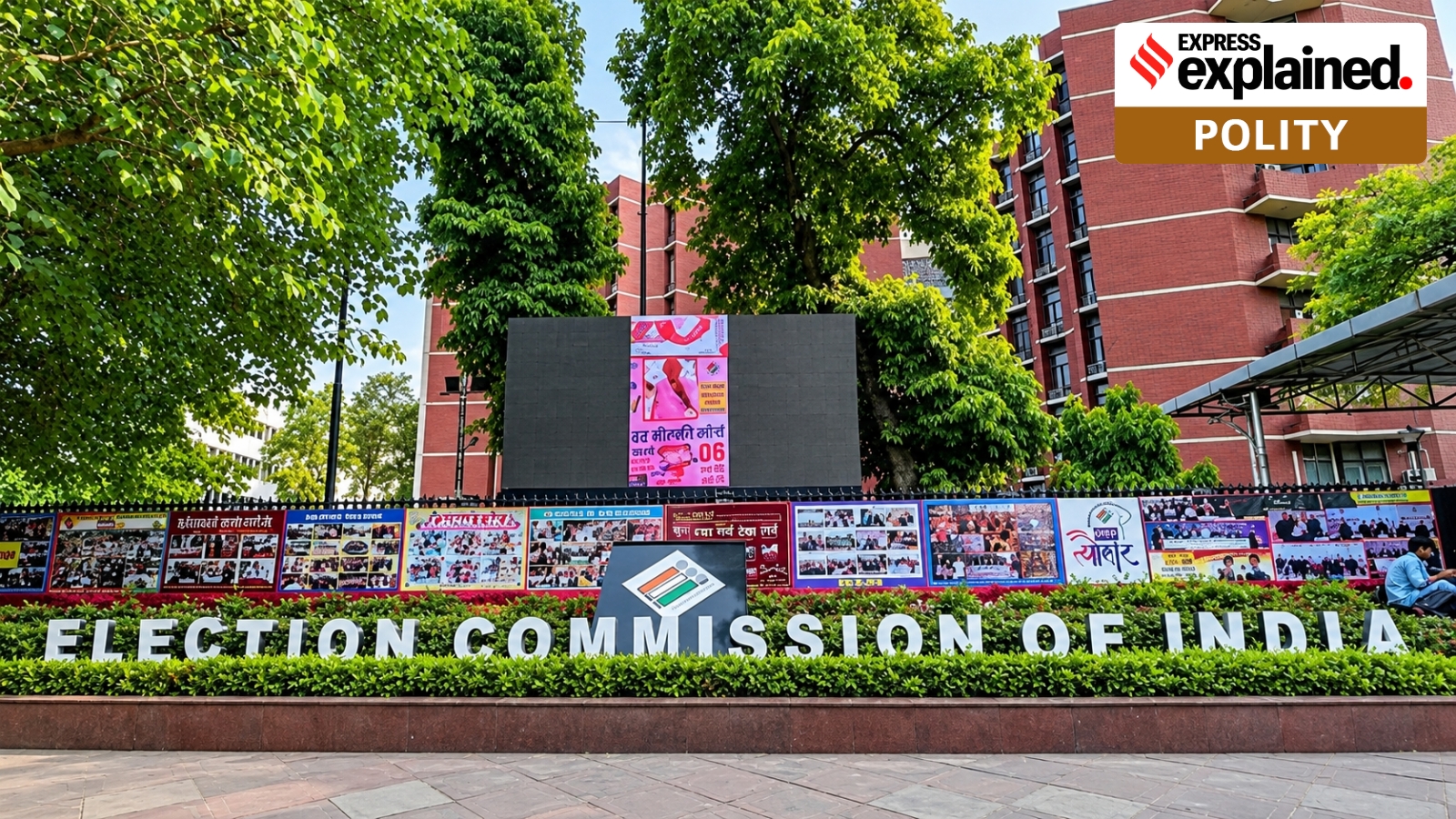
The Election Commission announced the Special Summary Revision schedule on Thursday, October 15, for 17 states and Union Territories. This annual update adds new voters and removes those who shifted or passed away. The EC skipped this process in 2026 after it started the Special Intensive Revision last year instead.
Amid protests against the Special Intensive Revision (SIR) of electoral rolls it started last year, the Election Commission (EC) on Thursday (October 15) announced the schedule for the Special Summary Revision (SSR) for 17 states and Union Territories (UTs), including the five states where Assembly elections are due in early 2027.
The EC had skipped the SSR, which is the annual update of rolls, in 2026. We explain the SSR process, what the EC said in its announcement, and how the SSR differs from the SIR.
What is the Special Summary Revision?
Article 324 of the Constitution gives the EC the authority to prepare the electoral rolls for elections to Parliament and Assemblies. The manner in which the rolls are to be prepared and revised is prescribed in the Representation of the People Act, 1950, and the Registration of Electors Rules, 1960, that flow from the law.
Electoral rolls are made for each Assembly constituency, with an Electoral Registration Officer (ERO) being the statutory authority for the task. As per Section 21(2) of the 1950 Act, the electoral rolls are to be revised "before each general election to the House of the People or to the Legislative Assembly of a State" and "in any year in the prescribed manner by reference to the qualifying date if such revision has been directed by the Election Commission".
Flowing from this, the EC had been conducting an SSR, in which the existing electoral roll is updated with additions of newly eligible electors and deletions of those who have passed away or shifted, before each Lok Sabha and Assembly election and also annually with January 1 as the qualifying date. This means that all those who turn 18 as of January 1 are eligible to be enrolled in the electoral roll of the SSR.
After it announced the decision to conduct the SIR, in which electoral rolls were prepared afresh with all existing electors required to establish their eligibility again, on June 24, 2025, the EC had not conducted the SSR 2026.
What is the EC's SSR announcement now?
On Thursday, the EC announced the schedule of the SSR with the qualifying date of January 1, 2027 in the states/UTs where the SIR has been completed in 2025 and 2026, and the state of Assam, where it had decided not to conduct the SIR.
As per the schedule, the rationalisation of polling stations is to be completed by November 2, the publication of the draft rolls is on November 12, the period for filing claims and objections is from November 12 to December 11, and the claims and objections have to be disposed of by December 28. The final electoral rolls in the 17 states/UTs will be published on January 4, 2027.
The 17 states/UTs where the SSR will be held are Andaman and Nicobar Islands, Assam, Bihar, Chhattisgarh, Goa, Gujarat, Kerala, Lakshadweep, Madhya Pradesh, Manipur, Puducherry, Punjab, Rajasthan, Tamil Nadu, Uttar Pradesh, Uttarakhand, and West Bengal. For the remaining states, where the SIR is still on, the EC said it would announce the schedule for revision at a later date.
All those who have turned 18 or who want to shift their enrolment can fill Form 6 (for new voters) or Form 8 (for shifting or correction) during the revision process.
How is SSR different from SIR?
The EC had broken from its practice of conducting the SSR annually when it decided in 2025 to conduct an intensive revision of rolls after a gap of 20 years. The methodology adopted by the EC for the SIR was also different from past intensive revisions, as all existing electors were required to fill forms and submit documents to establish their eligibility, including citizenship. As a result, over 13 crore names were deleted in the draft stages of the SIR across states.
While the SIR required every elector to fill an enumeration form to make it to the draft roll, in the SSR all existing electors will automatically make it to the draft roll. The electoral officials are empowered to delete deceased or duplicate voters, but they will have to follow the statutory process, including issuing notices and holding hearings.
After the draft is published, electors have a month to make claims and objections, seeking addition or deletion to the rolls. In the SIR, after the draft roll was published, the EC had rolled out centrally generated notices to those flagged by its software for "logical discrepancies" in the documents submitted by them. They were then required to provide additional documents and attend hearings to ensure that they are not deleted from the final roll. In the SSR, no such exercise is planned.