
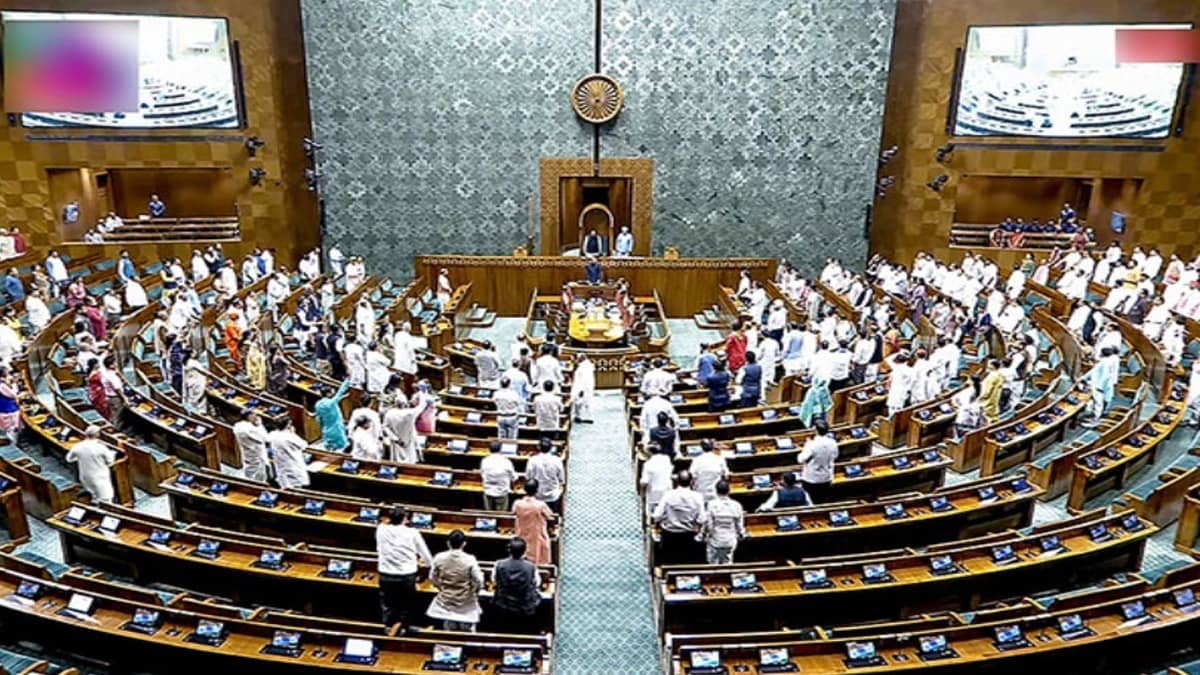
The Centre is likely to convene a special Parliament session later this month to push the Women's Reservation and Delimitation Bills. The government is holding discussions to secure the support needed for these bills after failing to get the required two-thirds majority for the constitutional amendment during April’s special sitting.
The Centre is reportedly considering a special Parliament session later this month to revive the Women's Reservation and Delimitation Bills after a constitutional amendment failed to secure the required two-thirds majority in April. The government is exploring support from parties, including the DMK.
New Delhi: The Centre is likely to convene a special session of Parliament later this month to push the Women's Reservation and Delimitation Bills, with government sources indicating that it is confident of securing the numbers required to pass the legislation.
According to reports, the government is exploring the possibility of bringing the bills back to Parliament after failing to secure the required two-thirds majority for the constitutional amendment linked to women's reservation and delimitation during the special sitting in April.
The development comes amid heightened political tensions between the ruling establishment and the Opposition over the Special Intensive Revision (SIR) of electoral rolls and protests against Chief Election Commissioner Gyanesh Kumar.
The government is reportedly confident of its numbers in Parliament and is holding discussions to secure the support needed for the proposed legislation. The Centre is also in talks with the Dravida Munnetra Kazhagam (DMK) to explore support for the bills following the party's split with the Congress after the Tamil Nadu elections.
The DMK's position remains significant because delimitation has been a contentious issue, particularly among southern states, which have raised concerns about their political representation in Parliament.
The proposed legislation faced a setback during the special sitting of Parliament in April, when the Constitution (131st Amendment) Bill, 2026, failed to secure the required special majority in the Lok Sabha. The bill was linked to the implementation of women's reservation through a delimitation exercise.
The government had proposed a framework to operationalise 33 per cent reservation for women in the Lok Sabha and state legislative assemblies before the 2029 general elections. However, the constitutional amendment did not receive the two-thirds majority required for passage.
The proposed legislation linked the implementation of women's reservation with the redrawing of parliamentary and assembly constituencies. The accompanying proposals included a Delimitation Bill to establish a commission for readjusting constituency boundaries and legislation to align laws governing Union Territories with the proposed framework.
With the constitutional amendment failing to pass, the related bills were not taken forward during the April sitting.
The Women's Reservation law, formally known as the Nari Shakti Vandan Adhiniyam, provides for one-third reservation for women in the Lok Sabha and state legislative assemblies. Its implementation has been linked to the completion of a delimitation exercise.
The Centre's earlier proposal sought to use the 2011 Census figures as the basis for the exercise, enabling constituency boundaries and representation to be revised before the 2029 Lok Sabha elections.
The delimitation proposal also envisaged an increase in the strength of the Lok Sabha. The plan triggered political opposition, with parties raising concerns about the potential impact of constituency redistribution on the representation of states, particularly in southern India.
Opposition parties have maintained that they support women's reservation but have objected to linking its implementation with delimitation and the proposed changes to parliamentary representation.
The Centre's reported discussions with the DMK could become an important part of its efforts to secure the required parliamentary numbers. The party had opposed the delimitation proposal, citing concerns over its implications for Tamil Nadu and other southern states.
The political situation has since changed following the DMK's break with the Congress, although the development does not by itself establish that the party will support the proposed legislation.
The government will need to secure the constitutionally mandated special majority for the amendment to pass. The outcome will depend on the positions taken by parties in both Houses of Parliament.
As of October 16, the reports indicated that a special session was likely later this month, but the final dates and the government's formal announcement remained awaited.