
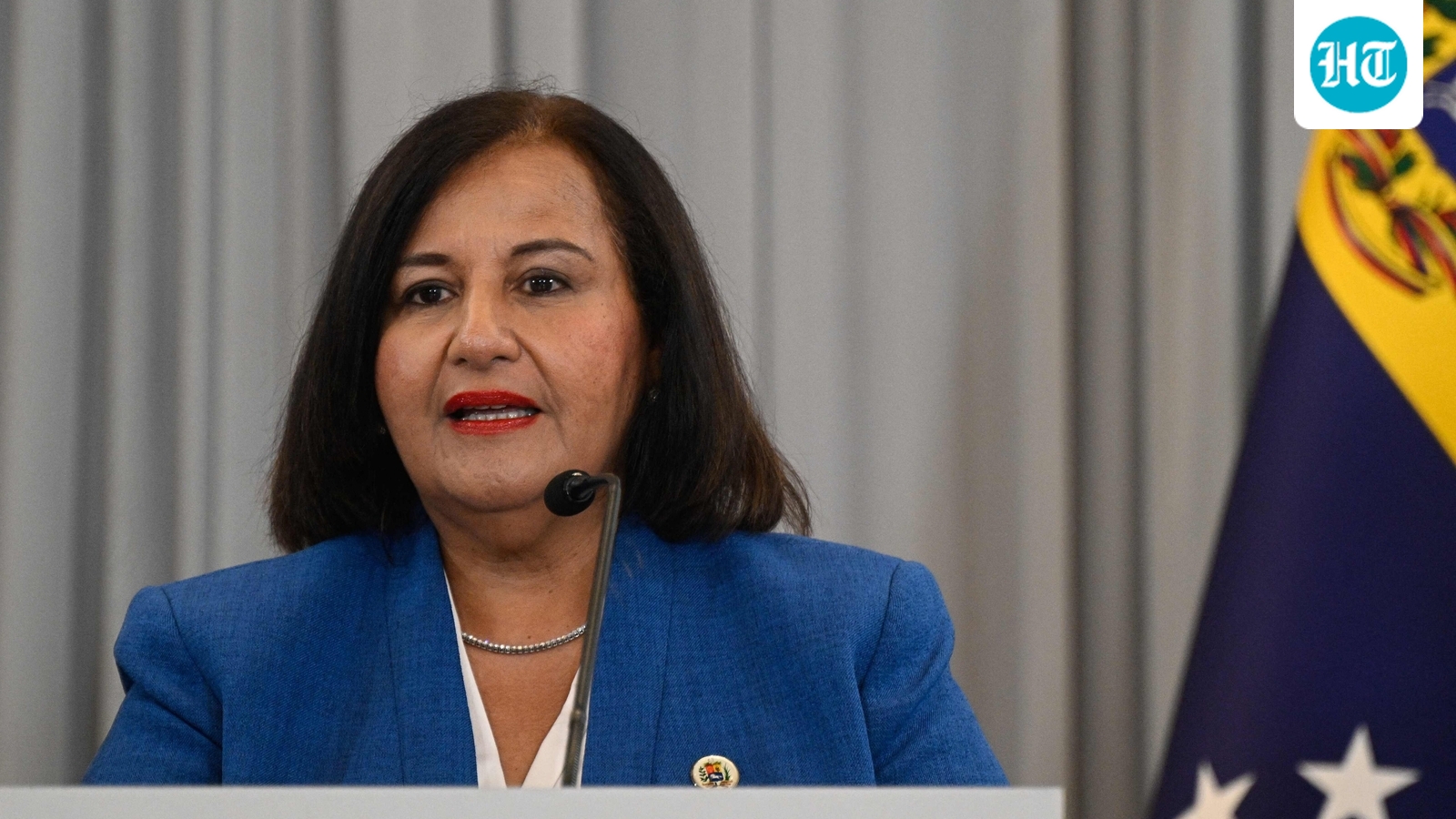
Dinorah Figuera returned to Venezuela to negotiate democratic reforms with the regime that forced her into exile. The former lawmaker, who lived in Spain, now leads talks with government officials. "No one wanted to sit down with these people," she said. Both sides have started discussing political and judicial changes.
CARACAS -- When Dinorah Figuera first sat down for talks on restoring democratic institutions here, she faced one of the most powerful figures in the autocratic regime that drove her into exile.
"I am not afraid of you," she said she told Jorge Rodríguez, a longtime loyalist of former leader Nicolás Maduro who heads Venezuela's legislature and brother of interim President Delcy Rodríguez. "Especially with the United States backing me."
Six months ago, the 65-year-old doctor and former Venezuelan opposition lawmaker was caring for elderly people in Spain to make ends meet. Her house back home had been seized, she had been accused of treason, and a close political ally had been tortured and killed in government custody. Then a senior State Department official called to enlist the little-known opposition leader for an unlikely assignment: return to Venezuela to negotiate a democratic transition with the same people who had driven her from the country.
"No one wanted to sit down with these people, no one," Figuera said in an interview with a small group of reporters in Caracas, where a third round of talks concluded this week. "Even the word 'reconciliation' was difficult to say in this country -- so difficult that I only dared to say it a week ago."
The two sides have taken initial steps toward political and judicial reforms. The government has eased some restrictions on independent media and agreed to review laws limiting political rights. While they have yet to agree on a timetable for presidential elections, Figuera is counting on Washington to use its significant leverage over former Maduro officials to secure a free vote.
"We know that what Venezuelans want is elections," said Figuera, who headed the opposition-controlled National Assembly elected in 2015, which Washington still recognizes as the country's last freely elected legislature. "But we've struggled to explain this road map to people."
Delcy Rodríguez, who took over after U.S. forces captured Maduro in a Jan. 3 raid, has her own reasons to believe that President Trump is on her side. The U.S. president has effusively praised her as "highly respected" and a "wonderful person" and posed with her for smiling photos, helping transform Maduro's former deputy into Venezuela's internationally recognized new leader.
The U.S. has also struck sweeping oil agreements with her government while lifting sanctions on her and other top officials, reversing years of efforts to isolate them. And while Trump says Venezuela will eventually hold elections, he has made clear he is in no rush to see that happen.
These competing priorities underscore the challenges of the Trump administration's experiment to remake Venezuela without dismantling its existing government. It has moved quickly to secure oil deals and deepen diplomatic and security ties with the same Maduro loyalists who could eventually negotiate their way out of power.
Figuera says she is confident in the backing of Secretary of State Marco Rubio, whom she met earlier this month in Washington. When Jorge Rodríguez said Venezuelan authorities were too consumed with earthquake relief to discuss political reforms this summer, U.S. officials intervened, she said.
"Within three days, he had to sit back down at the table," says Figuera.
U.S. officials say they are confident the transition talks -- set for a fourth round in November -- are producing results, and say that their cooperation with the interim government is laying the groundwork for eventual elections. The ultimate goal of holding a free and fair vote is "baked into this," a senior U.S. official working in Venezuela said. The officials insisted the process is "purely Venezuelan-led" with the U.S. "facilitating and accompanying the process." The support includes covering the opposition delegation's travel, hotel accommodations, and per diem expenses, the senior State Department official said.
But Washington is far from a passive participant. Trump officials helped design the negotiating framework and recruited Figuera to come back from exile to lead the opposition delegation. U.S. officials have intervened when talks encounter resistance, according to opposition leaders.
In Figuera, U.S. officials found an opposition negotiator willing to accept the difficult compromises at the center of Trump's plan for Venezuela. While she admits the American decision to keep Rodríguez in power "was a shock to all of us," she says she understands why it was necessary, citing the opposition's lack of control over the military and other government institutions.
It isn't a popular position to hold. The Venezuelan pollster Meganalisis last month found that more than 80% of respondents distrusted the talks. A similar percentage of respondents said they didn't expect to benefit from the talks. This week Figuera met Delcy Rodríguez herself at the presidential palace in an encounter broadcast on state television, drawing criticism from some opposition figures who said it played into the government's hands.
Figuera said she has also come to understand Washington's decision to work with figures such as Alejandro Betancourt, the Venezuelan oilman the U.S. chose as its partner on a sweeping oil deal. Most important, she accepts the need for a gradual transition and the need to rebuild the country's courts and electoral institutions before setting an election date.
"We think that justice will come, but for now we have to secure democracy," she said. Unlike previous failed negotiations, former Maduro officials are cooperating because "they are trying to save themselves and secure guarantees."
The talks have exposed a rift with María Corina Machado, the country's most prominent opposition leader. Machado, who remains in Panama after repeated failed attempts to return to Venezuela, has expressed support for the talks but accuses Washington of excluding her from them. In an August interview, she warned that they could become another opportunity for Maduro loyalists to buy time.
Figuera disputed that Machado had been shut out. "We invited them," she said. But Figuera said that Machado declined to receive regular updates about the process amid disagreements over who should lead the negotiations.
Machado aides didn't respond to requests for comment. On the streets of Caracas this week, Carlos Fernandez, a youth activist for Machado's party, cast doubts on the talks and called for elections next year.
"A small group is trying to tell us that transitions are slow," he said, "that you have to be patient, that this is all there is and that we have to put up with it."
There is growing skepticism in Venezuela about the U.S. approach. Disapproval for Rodríguez's management hit a record high of 65% in a recent AtlasIntel/Bloomberg poll, which also found Trump's popularity at a new low of 28%, down from 53% in February. After years watching the regime use negotiations to stall for time and cling to power, Venezuelans struggling with 400% inflation and power cuts say they have little faith in yet more promises from talks.
"They talk, and talk and talk, while we get to sit here in the dark," Ismael Gutierrez, a 69-year-old retiree said on a recent day as he tried to keep cool on his patio during a blackout. "There's no hope with any of these leaders," he said.