
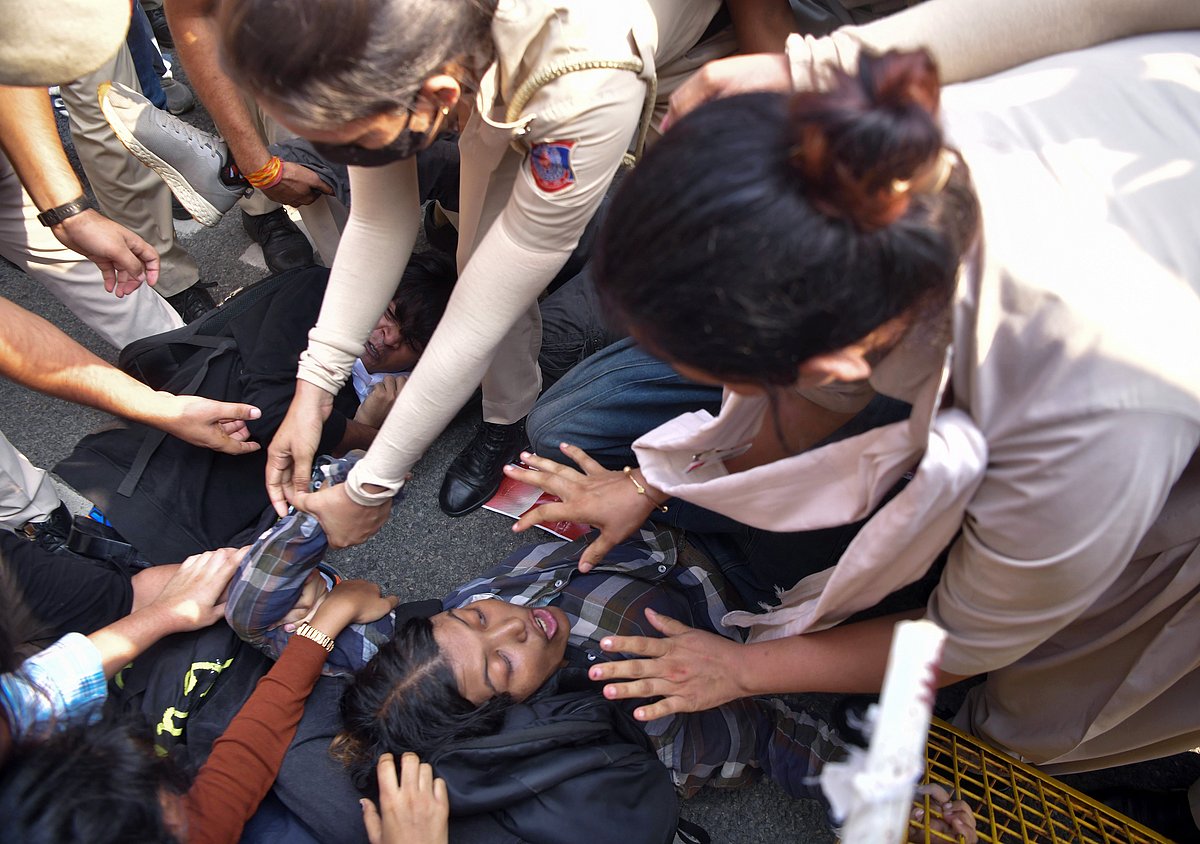
The Supreme Court on Thursday sought responses from the Centre and Delhi Police regarding guidelines for police-media interactions. The plea followed reports of journalists being assaulted during protests. The bench observed, "We would like to lay down guidelines." It also protected a woman journalist from coercive action during investigations.
The Supreme Court on Thursday sought responses from the Centre and the Delhi Police on a plea seeking binding guidelines to regulate police interactions with journalists during protests, public assemblies and crowd-control operations.
The plea alleged that several journalists, including women media professionals, were assaulted, manhandled and intimidated by police while covering protests in Delhi against Chief Election Commissioner Gyanesh Kumar over alleged irregularities in the Special Intensive Revision (SIR) of electoral rolls.
A bench of Chief Justice Surya Kant and Justice Joymalya Bagchi said it would consider framing guidelines after senior advocate Indira Jaising, appearing for the petitioner, called for a national protocol to protect journalists covering public events.
"We would like to lay down guidelines," the bench observed.
The court also directed that no coercive action be taken against a woman journalist who faces a case filed by a Delhi Police officer alleging casteist remarks and public humiliation during a protest near Jantar Mantar.
The bench termed the allegations in her complaint of alleged molestation by a police officer "very serious" and asked the police to examine the complaint and complete its inquiry.
Jaising told the court that no FIR had been registered on the journalist's complaint and urged it to ensure that no further cases were filed against women journalists. She alleged that several women reporters were pushed and assaulted, including by male police personnel, while performing their professional duties.
Arguing that the complaints should not be investigated by the police themselves, she sought an independent committee to examine the allegations. The bench suggested that the panel could comprise predominantly or exclusively women members, including retired judges and former IPS officers. Jaising said she would submit a list of complaints in a sealed cover.
Solicitor General Tushar Mehta, representing the Centre, questioned how journalists could be distinguished from people making videos for social media during protests.
"In the present era of digital technology, anyone having a mobile is a journalist," he said, adding that authorities faced difficulties distinguishing independent journalists from those making reels.