
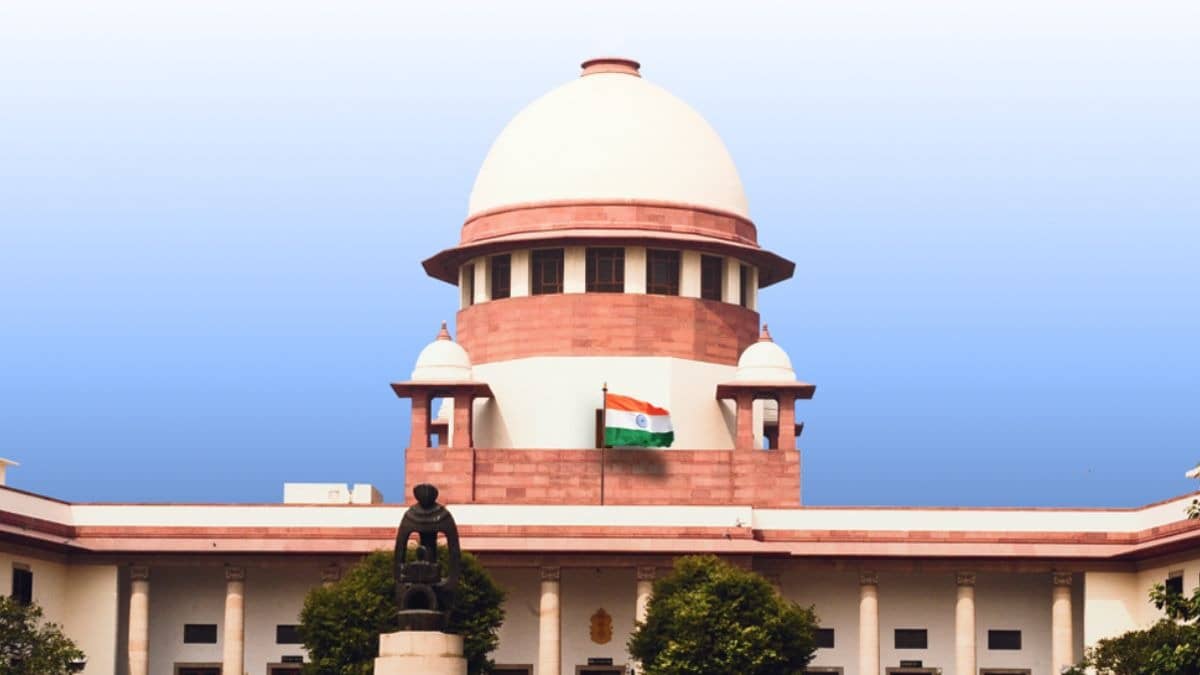
The Supreme Court on Tuesday granted 10 days to petitioners seeking the suspension of Chief Election Commissioner Gyanesh Kumar. The court issued a notice to the Election Commission of India regarding alleged irregularities in electoral rolls. The poll body said the accusations were misconceived and requested the petitions be dismissed.
New Delhi: The Supreme Court on Tuesday granted 10 days to petitioners who sought the suspension of Chief Election Commissioner (CEC) Gyanesh Kumar over alleged irregularities in the Special Intensive Revision of electoral rolls amid accusations of "vote chori". The bench also formally issued a notice to the Election Commission of India (ECI) to respond to the allegations raised in the petitions.
The case was also postponed by the three-judge panel, consisting of Chief Justice of India (CJI) Surya Kant, Justices Joymalya Bagchi and V. Mohana. It is anticipated to be listed on November 17. In addition, the Supreme Court sent a notice to the electoral board on all appeals, including the one made by Rahul Gandhi, the Leader of the Opposition (LoP) in the Lok Sabha, and other INDIA group members, requesting Kumar's suspension.
The poll body issued an affidavit the day before, supporting the SIR push and stating that all decisions were made unanimously by the commission's three members. Additionally, it denied claims that the voter registration form, Form 6, had been tampered with.
The Election Commission called the accusations "misconceived" in its 248-page counteraffidavit and requested that the petitions be dismissed summarily. According to the affidavit, the SIR orders of June 24, 2025, October 27, 2025, and May 14, 2026 were unanimously issued in accordance with Section 18 of the Chief Election Commissioner and other Election Commissioners (Appointment, Conditions of Service and Term of Office) Act, 2023 and Article 324 of the Constitution.
Any recommendation, observation, or question made by a commissioner during the processing of a dossier "does not constitute a decision" of the Commission, according to the poll body. It explained that files move first to one election commissioner, then to the other and finally to the CEC, and that approved decisions bear the signatures of all three. Where urgent orders are needed, and members are not available in person, approval is taken by electronic means and recorded on the file later, it said.