
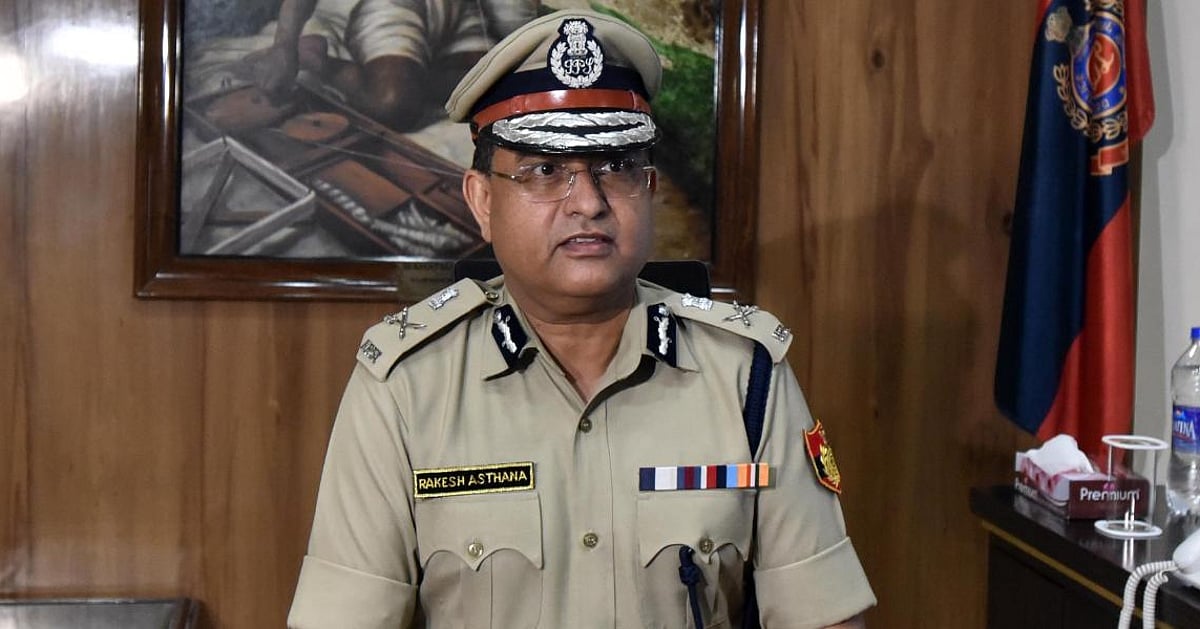
Former CBI director Rakesh Asthana said the Sabarmati Express carnage was a pre-planned conspiracy. He rebutted Sonia Gandhi’s claim that the cause remains disputed. "The Sabarmati Express case was a well planned conspiracy; from across the border, to destabilise India," he said. Courts upheld the investigation and convicted the perpetrators.
Former CBI director Rakesh Asthana maintains that the Sabarmati Express carnage was a pre-planned conspiracy hatched across the border to destabilise India and trigger communal unrest.
BENGALURU: Old scars of history often resurface as festering wounds and should be handled with care and sensitivity for the common and lasting good. So, when veteran Congress leader Sonia Gandhi writes in her memoir, Belonging: A Journey of Love, that the cause of the infamous February 2002 Sabarmati Express carnage "remains disputed", former CBI director Rakesh Asthana strongly objects to her claim.
"The Sabarmati Express case was a well planned conspiracy; from across the border, to destabilise India and its communal harmony. This was established by our detailed investigation and was upheld by the courts leading to conviction of perpetrators. The conspirators had chosen Godhra because of its historical communal history and proximity to Karachi. Around the time, there were feeds from the R&AW (Research & Analysis Wing) and the IB (Intelligence Bureau) alerting agencies on cross border conspiracy to trigger communal riots in the country. Not just Gujarat, the entire country was on alert," Asthana told TNIE in an exclusive telephonic conversation.
He said the Supreme Court-constituted SIT, headed by Dr RK Raghavan, which examined the investigation conducted by the Gujarat SIT under his leadership, "did not find any lacuna in our (SIT) investigation. Based on their report to the Supreme Court, the trial in the case commenced leading to conviction. Justice Nanavati Commission of inquiry, (to probe the Sabarmati Express incident and Godhra riots) also reached the same conclusion."
Asthana, a 1984-batch IPS officer of the Gujarat cadre, was the deputy inspector general of police, Criminal Investigation Department (CID), Gujarat, when he was appointed head of the SIT to investigate the Sabarmati Express incident and the subsequent Godhra riots.
"I had returned to the cadre after a 10 years stint with the CBI (Central Bureau of Investigation). Post Sabarmati incident there was public uproar and people wanted a CBI investigation. Perhaps because I had just returned from the CBI, the then government appointed me to head the investigation," he said.
.'The demons raped her again and again': Sonia recalls horrors of 2002 Gujarat riots in memoir.
Recalling the detailed and extensive investigation, Asthana said it had revealed that bogie S6 was "targetted and set on fire by an inflammable liquid, in pursuance to a criminal conspiracy, hatched in Aman Lodge the previous night. After examining the witnesses, forensic documents, reports etc, the trial court had convicted the accused and it was upheld by the High Court. Presently, the appeal is lying with the Supreme Court. Detailed forensic examination had established the cause of fire. It was an intentional fire," he said.
"Only bogie S6 was targetted and set on fire because of its position at that point in time. There was a 150-200 strong mob with stones and petrol bombs, where the bogie S6 was, when the train had stopped due to chain pulling. A group of six boys, who got on to the train by cutting the vestibule, had thrown 140 litres of petrol, which they were carrying inside bogie S6. Rest of the bogies had suffered collateral damage," he added.
He described it as "a dead end case because there were no eyewitnesses."
"The passengers were from outside and they could not identify the perpetrators. The case was largely based on forensic evidence and corroborated by the testimony of witnesses but the accused later retracted their testimony," said Asthana.
On the role of the ISI and suspected Hizbul Mujahideen terrorists in the Sabarmati Express incident, he said that while they were complicit, the SIT could not chargesheet any of their members because of "lack of prosecutable evidence."
"We faced intense media, public scrutiny but there was no political interference. The case was given a communal flavour by vested political interests but for us it was a crime and we investigated it from that angle. The SIT had some of the best police officers and ace investigators across community and religious lines. The investigating officer Late Noel Parmar, deputy superintendent, Western Railways, was one of the best officers we had. The SIT was given a free hand," added Asthana.