
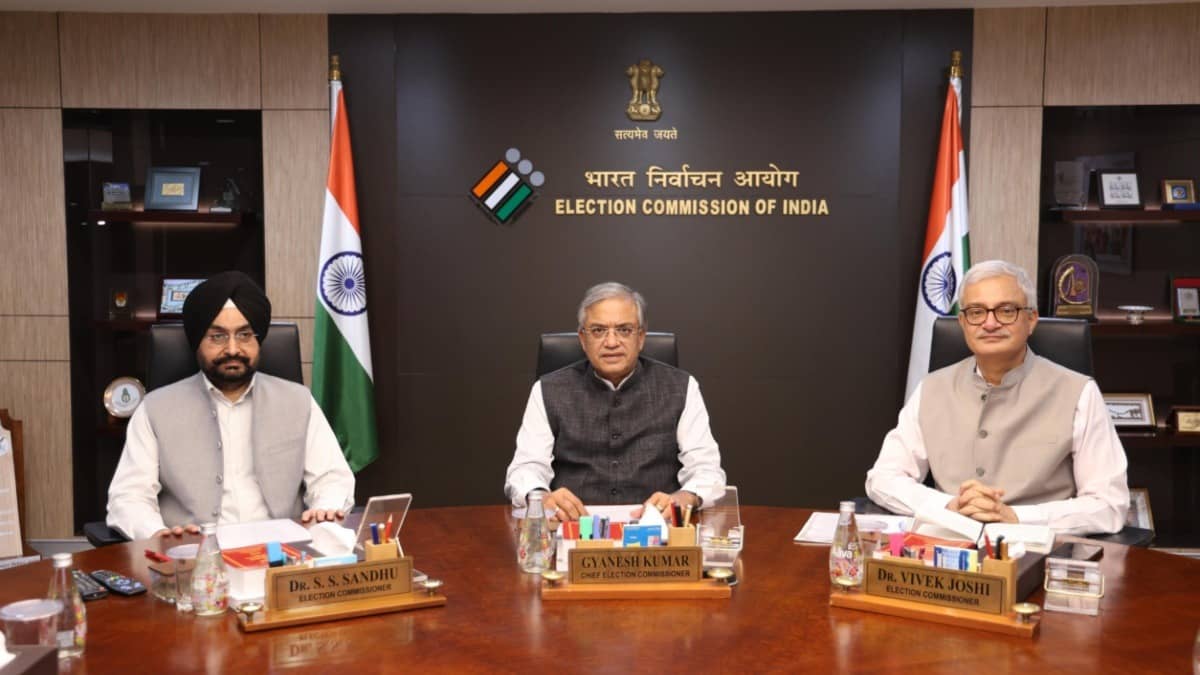
The Cabinet Secretariat declined to act on complaints by Election Commissioners Sukhbir Singh Sandhu and Vivek Joshi against ECI officer Maneesh Garg. Records show the Commissioners wrote to Cabinet Secretary TV Somanathan on July 29, 2026, regarding work allocation. Officials feared that intervention could interfere with the Commission’s constitutional independence.
RTI records reveal that the Cabinet Secretariat declined to initiate direct action on complaints by Election Commissioners Sukhbir Singh Sandhu and Vivek Joshi against ECI officer Maneesh Garg. Officials cited concerns over executive interference in the Election Commission's constitutional independence.
New Delhi: The Cabinet Secretariat declined to initiate action on complaints filed by two Election Commissioners against senior Election Commission of India (ECI) officer Maneesh Garg, citing concerns that intervention could be construed as interference in the functioning of an independent constitutional body, according to documents released under the Right to Information (RTI) Act.
The records show that Election Commissioners Sukhbir Singh Sandhu and Vivek Joshi separately wrote to Cabinet Secretary TV Somanathan on July 29, 2026, raising concerns over Garg's decision to revise the allocation of work among senior officers without consulting the Commission or the officers concerned.
The complaints and the Cabinet Secretariat's subsequent response were disclosed in an RTI reply obtained by transparency activist Commodore Lokesh K Batra (retd). The file notings detail the discussions within the Cabinet Secretariat before the decision was communicated to the two Election Commissioners.
According to the records, the Cabinet Secretariat acknowledged the complaints but concluded that taking action without an official communication from the Election Commission as a whole could be inappropriate. The matter was subsequently brought to the attention of Chief Election Commissioner (CEC) Gyanesh Kumar and the Department of Personnel and Training (DoPT).
Why Did The Two Election Commissioners Complain?
The complaints centred on a work-allocation order issued by Garg after he assumed additional responsibility for the ECI's Administration Division.
The division's regular head, Deputy Election Commissioner Bhanu Prakash Yeturu, was on leave from July 27 to August 9. Garg was assigned additional charge during this period and issued a revised work-allocation order on July 28, within hours of taking over the responsibility.
Sandhu, in his letter to the Cabinet Secretary, alleged that the revised allocation had been issued "without discussing or informing the revised allocation of work with the Commission or the undersigned".
Joshi raised similar concerns in a separate communication. He also stated that when he sought the relevant file from the Administration Division, it was not provided to him.
The two Commissioners alleged that the changes had been made despite repeated oral and written instructions requiring prior discussion or approval from the Commission before such decisions were taken.
They also questioned whether the order was consistent with established procedures and provisions of the Chief Election Commissioner and Other Election Commissioners (Appointment, Conditions of Service and Term of Office) Act, 2023.
What Did The Cabinet Secretariat Decide?
The file notings show that the Cabinet Secretariat examined the complaints on August 3 and August 4 before Cabinet Secretary TV Somanathan acknowledged them on August 5.
An initial note dated August 3 proposed seeking the CEC's opinion on the matter. However, the subsequent deliberations highlighted concerns about the constitutional independence of the Election Commission and the implications of executive intervention.
The August 4 noting stated that the two Commissioners had written in their individual capacities rather than submitting an official communication on behalf of the Commission as a whole.
The records noted that the Election Commission is a multi-member constitutional body whose business is to be transacted unanimously as far as possible, with differences of opinion resolved by majority.
The Cabinet Secretariat concluded that, although the complaints should be taken seriously, acting on them without an official communication from the Commission as a whole could be considered interference in its functioning.
The file noting stated that "in the absence of any official communication from the Commission as a whole, any action at this stage may be inappropriate".
It further recommended acknowledging the letters and sending copies to the office of the Chief Election Commissioner for information, along with the relevant personnel department.
Somanathan subsequently acknowledged the two communications and marked them to the CEC's office and the DoPT.
ECI Had Said Revised Work Orders Were Not Implemented
The dispute over the work-allocation order had earlier prompted a clarification from the Election Commission.
In a statement issued on September 26, the ECI said the letters to the Cabinet Secretary concerned the functioning of an officer on deputation to the Commission and were not related to any policy matter or the functioning of its IT division.
The Commission also stated that the work-redistribution orders issued by Garg had not been implemented following directions from the two Election Commissioners.
It maintained that oversight of the IT division by the Deputy Election Commissioner had never actually been withdrawn.
The controversy had emerged amid wider questions about administrative procedures and oversight within the poll body, including the allocation of responsibilities relating to electoral rolls and the handling of voter data.
The Election Commission's clarification was issued after reports surfaced about the objections raised by Sandhu and Joshi over the revised work allocation.
What Do The RTI Records Establish?
The documents provide an official account of how the Cabinet Secretariat handled the two letters, including the internal deliberations that preceded its decision not to intervene directly.
They establish that the complaints were received, examined and acknowledged, and that the Cabinet Secretariat considered the constitutional independence of the Election Commission while deciding how to proceed.
The records also show that the complaints were forwarded to the CEC's office and the DoPT for information and official record.
The matter raises questions about administrative oversight within the Election Commission and the distinction between the individual communications of its members and formal decisions or representations made by the Commission as a collective body.
However, the Cabinet Secretariat's decision not to initiate action should not be interpreted as a finding on the merits of the allegations against Garg. The available records document the handling of the complaints and the reasoning behind the decision not to intervene directly.