
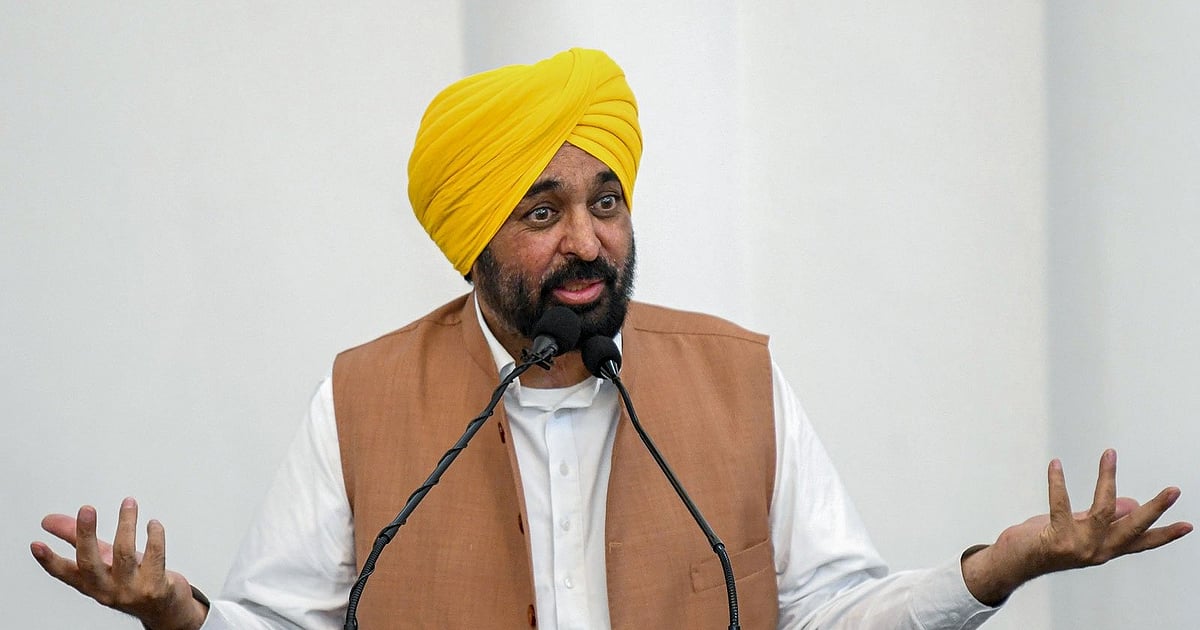
Punjab Chief Minister Bhagwant Mann said on Monday that the decision on Parvinder Singh Jhota’s post-mortem and cremation rests with his family. The government accepted all legitimate demands, but a deadlock remains. Meanwhile, Mann flagged off 100 new mini buses in Patiala to improve transport connectivity for rural Punjab residents.
Parvinder Singh Jhota's family said it would not allow a post-mortem examination until its key demands, including the resignations of Mann and DGP Gaurav Yadav, were met.
CHANDIGARH: Punjab Chief Minister Bhagwant Mann on Monday said the state government had accepted all legitimate demands made by the family of activist Parvinder Singh Jhota, adding that the decision on the post-mortem examination and cremation of the body rested entirely with the bereaved family.
Speaking to the media on the sidelines of an event to flag off 100 new mini buses in Patiala, Mann said the government had fulfilled its responsibilities sincerely.
The statement comes amid a deadlock over Jhota's post-mortem and cremation. After the third round of talks with the Aam Aadmi Party-led state government ended inconclusively, Jhota's father demanded the transfer of Mansa Senior Superintendent of Police Vaibhav Chaudhary and refused to attend further meetings in the officer's presence. The family had also said it would not allow a post-mortem examination until its key demands, including the resignations of Mann and DGP Gaurav Yadav, were met.
At the Patiala event, Mann said the government was committed to connecting every village with cities through public transport. He said the 100 new 29-seater mini buses would strengthen rural connectivity and make daily travel easier for residents and students.
"Public transport is not merely a means of travelling from one place to another; it is a lifeline for rural communities. Reliable bus services enable students to pursue education, help families access employment opportunities and strengthen the economic and social fabric of villages."
"Just as we have ensured that canal water reaches every field, we will ensure that buses reach every village in Punjab. The benefits of development must reach every household, irrespective of whether people live in big cities, small towns or remote villages," he added.
.
Taking a swipe at previous governments, Mann said, "Earlier governments neglected rural transport connectivity, leaving people struggling to travel to cities for work, education and other essential needs. Our government is determined to reverse this trend and ensure that no one is deprived of opportunities because of where they live."
"The 100 new 29-seater mini buses will operate on rural and small-town routes through PRTC's nine depots. These services will make daily commuting easier for rural residents travelling to cities for employment, business and other essential activities. School and college students will also benefit significantly from improved connectivity," he said.
The buses have been allocated across depots in Patiala, Bathinda, Chandigarh, Sangrur, Barnala, Budhlada, Kapurthala, Faridkot and Ludhiana.
Mann announced that another 309 large buses would be added to the fleet next month. "Another 309 large buses will be added to the fleet next month. Around 3,000 privately operated mini buses are also connecting villages, towns and cities across Punjab. We are continuously strengthening the public transport network to make travel more accessible for people."
On employment, he said, "The induction of these 100 new mini buses will create employment opportunities for approximately 150 drivers and conductors. Our government is committed to combining public welfare with job creation so that investments in public infrastructure also create livelihood opportunities."
"Better rural connectivity is essential for strengthening Punjab's rural economy. It will help people reach their workplaces, enable students to attend educational institutions more conveniently and allow rural residents to access markets and essential services with greater ease," he added.
Fifteen young people were also handed offer letters for jobs in the transport department.