
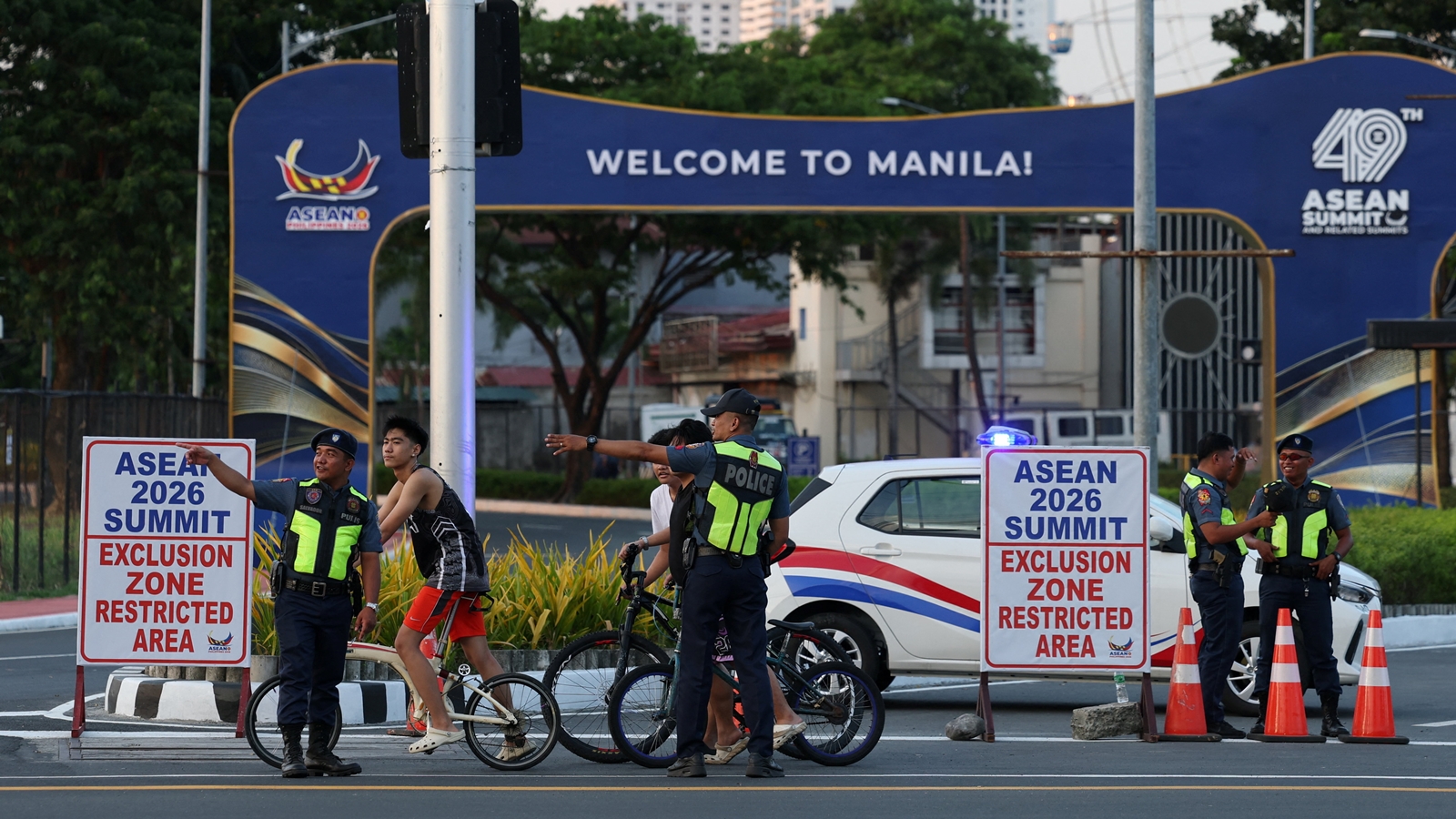
Prime Minister Narendra Modi leaves for Manila on Monday to attend the ASEAN and East Asia summits on November 16-17. He will focus on maritime security and trade. Leaders also plan a Quad summit on the sidelines. Rudrendra Tandon said, "A strong strategic relationship with the ASEAN member states is good."
Prime Minister Narendra Modi will leave for Manila, in the Philippines, on Monday for a two-day visit to attend the ASEAN (Association of Southeast Asian Nations)-India summit and the East Asia summit on November 16-17, where the three key issues on the agenda are maritime security, economic cooperation and development partnership.
Modi, US President Donald Trump, Japanese Prime Minister Sanae Takaichi and Australian Prime Minister Anthony Albanese are also expected to attend a Quad leaders' summit being planned on the sidelines in Manila.
"And we are working to formalise a Quad Leaders Summit at ASEAN next week," US Assistant Secretary of State Dylan Johnson said in a post on X on Saturday. He said US Secretary of State Marco Rubio has held five meetings of Quad foreign ministers over the past two years, with three meetings taking place in the past six months. He said Rubio's first official call after assuming office was to the Quad ministers and the sherpas of the four-country group who have had regular monthly calls and meetings.
This ties in with India's approach towards the Indo-Pacific, in which China is perceived to be engaging in aggressive behaviour.
According to officials, "maritime cooperation" is an important and growing dimension of the partnership between India and ASEAN in multiple sectors. The year 2026 was declared as the ASEAN-India Year of Maritime Cooperation, providing an opportunity to strengthen cooperation in maritime security, maritime safety, connectivity and the blue economy.
Ahead of Modi's visit, Secretary (East) in the Ministry of External Affairs (MEA), Rudrendra Tandon, said, "We in India strongly believe that as an Indian Ocean country that abuts this very important Southeast Asian maritime zone, a strong strategic relationship with the ASEAN member states, as a collective as well as individually, is good for both of us. It will make us more resilient to handle the very rapid geopolitical changes that are taking place around us and will also, I think, contribute to peace and stability in Asia as a whole."
"In 2026, we marked the India-ASEAN Year of Maritime Cooperation, where we did a series of activities, but essentially to highlight the fact that our special relationship with each other arises out of the fact that we inhabit adjoining maritime zones," Tandon said.
In Manila, addressing the opening plenary of the 49th ASEAN Summit on Sunday, Philippines President Ferdinand Marcos Jr. called for stronger maritime cooperation among ASEAN member states and efforts towards an effective and substantive code of conduct in the South China Sea, in accordance with international law, including the United Nations Convention on the Law of the Sea (UNCLOS).
Marcos identified maritime cooperation and regional security as key priorities under the Philippines' ASEAN chairmanship, emphasising the need to reinforce regional norms and dialogue to maintain peace, stability and security.
Modi's schedule will include a dinner hosted by Marcos for the visiting dignitaries on Monday. On Tuesday, he will attend the ASEAN-India Summit and the East Asia Summit. In between, there will be bilateral meetings with other leaders, and, possibly, an interaction with the Indian community there.
According to officials, "economic cooperation" remains an important pillar of the India-ASEAN relationship as they continue to work towards strengthening trade and investment ties, enhancing connectivity and promoting resilient and diversified supply chains.
"Development partnership and capacity building" is another important dimension of India's engagement with ASEAN. "Through our support to Initiative for ASEAN Integration (IAI), India supports capacity building efforts to narrow the development gap in Cambodia, Laos, Myanmar and Timor Leste," officials said.
The year 2027 will mark the 35th anniversary of ASEAN-India relations and the fifth anniversary of the Comprehensive Strategic Partnership, providing an opportunity to further deepen and expand the partnership. ASEAN will also celebrate its 60 years next year.
This will be Modi's 13th participation in the ASEAN-India Summit since 2014, reflecting the importance India attaches to its partnership with ASEAN. Officials said the visit will provide an opportunity to review the progress of the ASEAN-India Comprehensive Strategic Partnership, exchange views on regional and international developments, and identify new areas of cooperation.
The Philippines is chairing ASEAN in 2026 under the theme "Navigating our future, together".
"ASEAN has, over its almost 60 years of existence... achieved remarkable maturity as a regional organisation and as a platform for promoting regional economic cooperation amongst the ASEAN member states. It is actually very impressive how successful their endeavors have been over the last six decades or so. You only have to remember the history of the '50s and the '60s of that region and compare it to today. ASEAN is now capable of leveraging its inherent strengths as a collective organisation to serve as a locomotive for peace, stability, and economic prosperity in the region," said MEA's Secretary Tandon.
"India engages with the ASEAN grouping at multiple levels, including at the highest level of heads of government. This is what the Prime Minister's visit is all about," he said.
"The East Asia Summit process is also a very unique ASEAN-led grouping of eight leaders. It is described as a leaders-led forum where the leaders of ASEAN and these eight countries, basically discuss in an informal setting global security issues and issues of common concern," he said.
He said this year's East Asia Summit process is led by the ASEAN chair, which is the Philippines. "This, too, is a remarkable example of how successful ASEAN collective diplomacy has become. The East Asia Summit process has acquired immense international convening power, as testified by this very high-level participation that you see year in and year out, including by our Prime Minister. And though it is a forum, it has emerged as an important norm-setting platform for the region," Tandon said.
Officials said the visit will build on the growing momentum in India-ASEAN relations and provide an opportunity to advance cooperation across a wide range of areas, including maritime security, disaster preparedness and resilience, trade and investment, digital transformation, defence, connectivity, development partnership and people-to-people ties.