
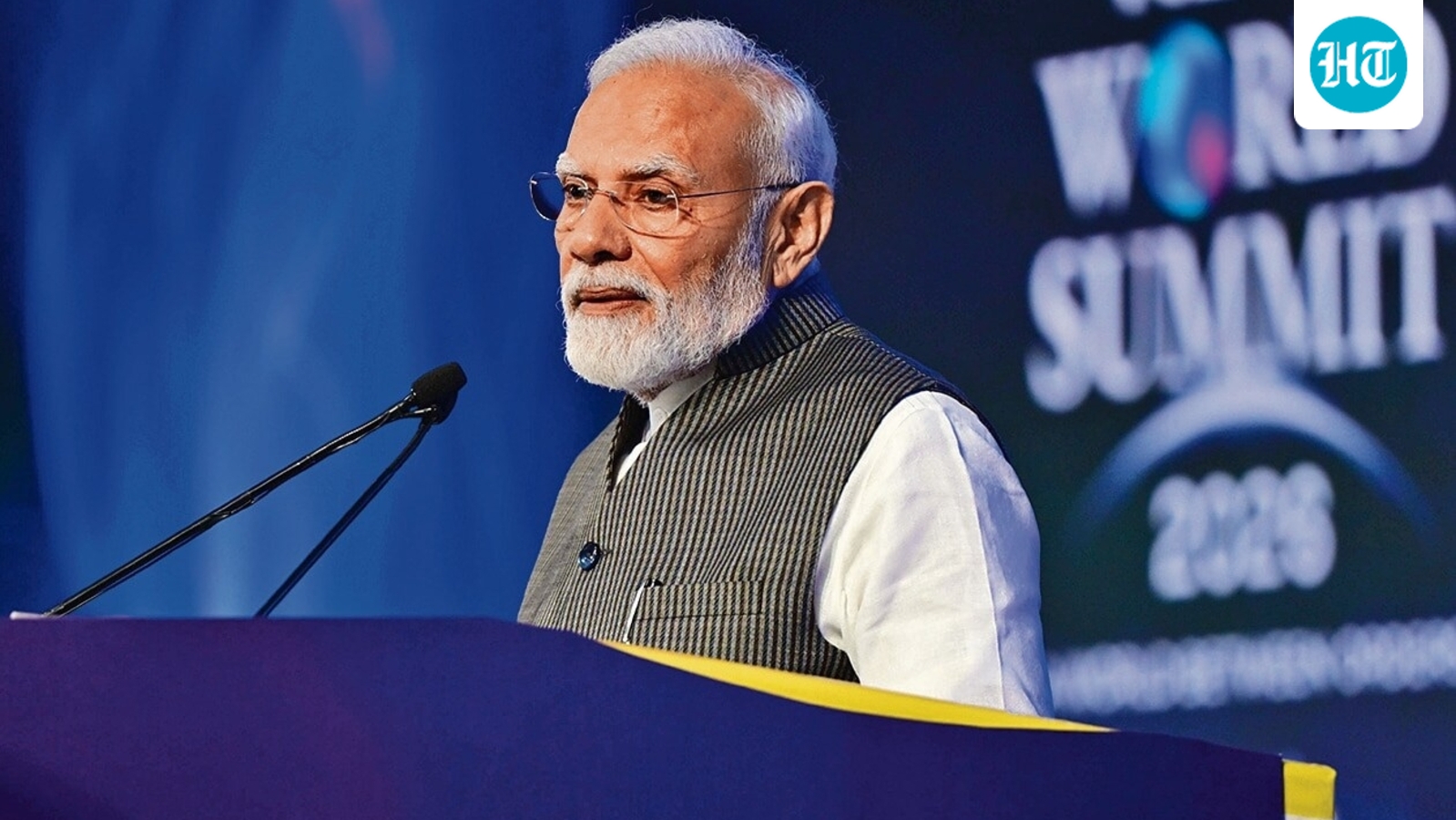
PM Modi said the United Nations' limitations are clearly visible amid a changing world order. Speaking at an NDTV event, he noted that global institutions must evolve to address complex modern challenges. He added, "The United Nations and other global institutions have had their historical role, but their limits are visible."
Describing the current global situation as a "world between orders," PM Modi said, "We have to understand two things: First, why is the world's order changing, and why is the old global order unable to provide solutions to today's challenges? And second, what is India's role in this changing world".
"The Second World War taught the world a big lesson," he added.
Modi further highlighted that the UN was founded on the principles of dialogue, cooperation and peaceful dispute resolution but noted that changing global realities and increasingly complex challenges have tested the existing world order.
United Nations' limits 'clearly visible'
"The world understood that world systems cannot run solely on the basis of power and interests. Dialogue is necessary, cooperation is necessary, and the resolution of disputes is also necessary. This sentiment laid the foundation of the United Nations (UN). For decades, the UN played its role in promoting global cooperation and peace. But with time, the world kept changing. New aspirations emerged, new economies and new powers arose. The challenges before the world became much more complex than before," he said at the NDTV's event.
"The United Nations and other global institutions have had their historical role, but in the face of today's challenges, their limits are clearly visible. Now new powers are emerging, new voices are demanding their place, and new challenges are demanding new solutions," Modi further remarked.
"The changing world order calls for stronger global institutions, a greater voice for the Global South and international cooperation that stands firm in times of crisis," he said, highlighting the need to reform global governance.
‘Trade, technology, sea routes being weaponised’
PM Modi also noted that trade, technology, and sea routes, in particular, are "being weaponised", in a reference apparently to the ongoing US-Iran war in West Asia and other such conflicts.
He referenced ancient Indian economist Chanakya, too, citing his Sanskrit mantra 'apranitah tu matsyanyayam udbhavayati', which translates to 'when the law of punishment is kept in abeyance, it gives rise to Matsya Nyaya (law of the sea)', meaning the strong shall swallow the weak.
He had said the United Nations needs urgent reform, arguing that the global body has increasingly failed to play a meaningful role in decisions on major international crises, including conflicts in Ukraine and the Gulf. Jaishankar made the remarks while responding to a question during an interactive session at the 5th Kautilya Economic Conclave in Delhi, news agency PTI reported.
He was asked about the future of the UN and multilateral institutions amid growing questions over their effectiveness in addressing global challenges.
"Where the UN is concerned, I think it's obvious to everybody by now that the UN is gridlocked. If you look at the big issues of the day, whether you look at the conflict in the Gulf, whether you look at the conflict in Ukraine, whether you look at other issues in Africa, whether you look at Covid, actually, the United Nations has been largely irrelevant to the decision-making," Jaishankar said.
"I think, again there's a widely held view that a lot of it is because the (UN) Security Council is gridlocked, that the Security Council no longer represents the entirety of the global interest," he said.