
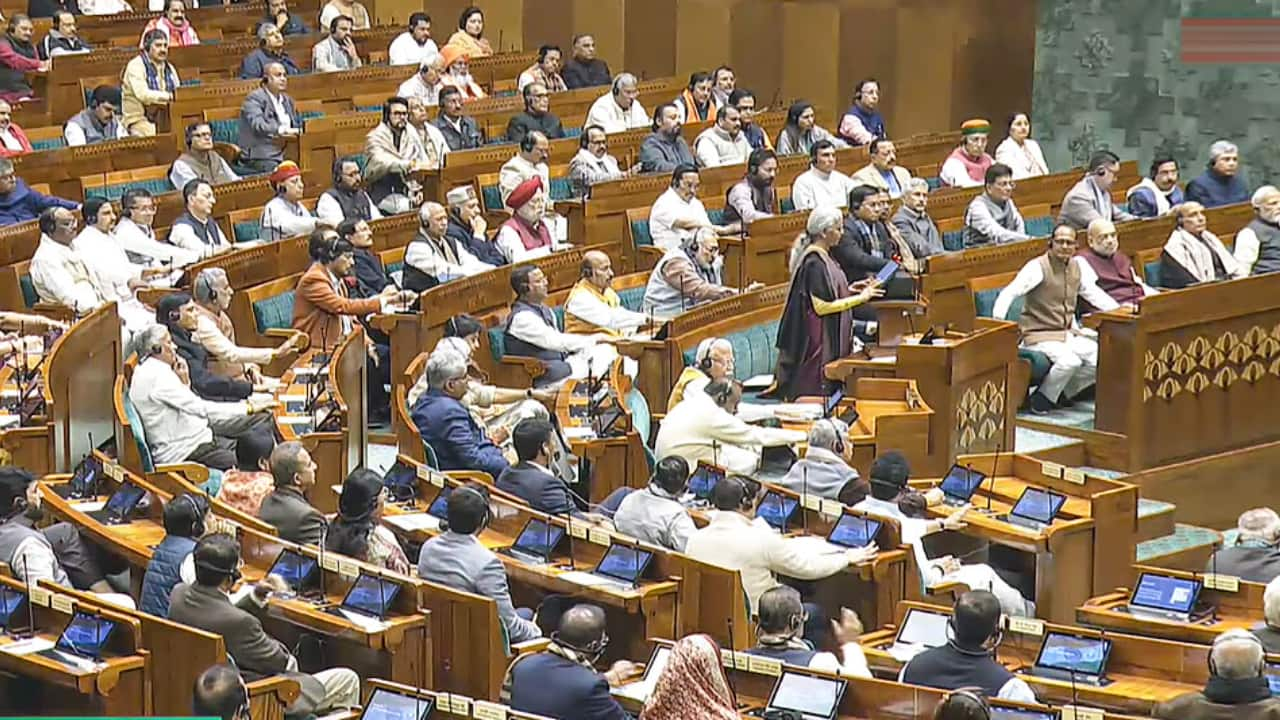
The Winter session of Parliament is expected in the first week of December. The Centre plans to link delimitation with women's reservation to increase Lok Sabha seats to 850. A senior government functionary on Thursday expressed confidence that the bill would clear the Lok Sabha with a margin of 15-18 votes.
The Winter session of Parliament is expected to commence in the first week of December, with the Centre looking to prioritise the proposed constitutional amendment linking delimitation with the implementation of women's reservation, even as tensions with the Opposition over the Special Intensive Revision (SIR) of electoral rolls threaten to disrupt proceedings. The proposed legislation seeks to increase the strength of the Lok Sabha from its current 543 seats to a maximum of 850 through a delimitation exercise. The move is aimed at facilitating the implementation of 33 per cent reservation for women in the Lok Sabha and state legislative assemblies before the 2029 general elections.
According to PTI, people familiar with the developments said the first week of December was being considered as the likely timeframe for the next session, with the proposed dates having been discussed at the highest levels of the government. However, getting the constitutional amendment passed could be a significant challenge for the ruling National Democratic Alliance (NDA), as the legislation requires the support of at least two-thirds of members present and voting in the Lok Sabha. With three vacancies, the Lower House currently has 540 members. The government would need 361 votes if all members participate in the voting.
The NDA's strength stands at 320, making support from outside the ruling alliance crucial to meeting the constitutional threshold. The numbers are not the only challenge confronting the government. Opposition parties have intensified their criticism of the SIR exercise and are demanding the resignation of Chief Election Commissioner Gyanesh Kumar. The confrontation is expected to spill over into Parliament, raising the possibility of disruptions during the Winter session. A member of the ruling alliance told PTI that meaningful deliberations and voting on a Constitution amendment bill would be difficult if the House failed to function smoothly.
Despite the arithmetic challenge, the government is understood to be optimistic about getting the legislation through. A senior government functionary on Thursday expressed confidence that the bill would clear the Lok Sabha with a margin of 15-18 votes. Monsoon session remains unprorogued The government's decision not to formally prorogue the Monsoon session has also triggered speculation about the possibility of an extended sitting or a special session to consider the proposed constitutional amendment. Parliament's Monsoon session was adjourned sine die on August 13, but has not been prorogued for the past 94 days.
This exceeds the previous record of 87 days, set in 2008. Keeping the session alive has left open the option of convening an extended sitting at short notice to take up the proposed legislation. While an extension of an existing session requires a minimum notice of two days, calling a fresh session requires at least 14 days' notice. Delimitation formula under consideration Meanwhile, as per PTI, the government is learnt to be examining a possible arrangement to address concerns over the proposed delimitation exercise, particularly those raised by southern states over the potential impact of population-based seat redistribution.
Under the formula being considered, the number of Lok Sabha seats could be increased by 50 per cent across all states. The proposal is also understood to retain the existing proportion of parliamentary representation among states based on the 1971 Census, although a final decision is yet to be taken. The proposed constitutional amendment had failed to secure the necessary support during a special sitting of Parliament on April 17. Its passage during the forthcoming Winter session is therefore expected to be a crucial legislative and political test for the government. The Constitution does not prescribe a fixed period within which a House must be prorogued after being adjourned sine die.