
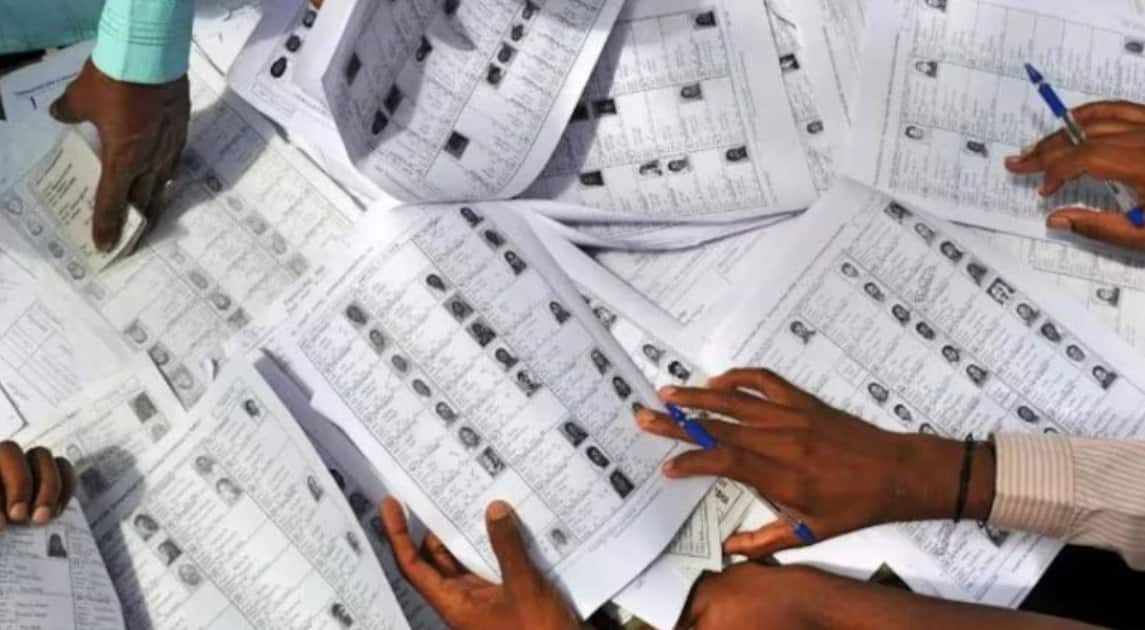
Over 1,600 suspected foreign nationals were detected across states during the Special Intensive Revision. The Election Commission of India started this process to ensure accurate electoral rolls. Karnataka Chief Electoral Officer V Anbukkumar said, "Yes, we have detected foreigners. Their number is definitely less than 1,000," as millions got removed.
More than 1,600 suspected foreign nationals or foreign citizens have been identified on electoral rolls across several states where the Election Commission of India (ECI) has conducted or is conducting the Special Intensive Revision (SIR), even as millions of voter names have been removed, according to information gathered from state election officials. The findings come amid the ECI's stated objective of ensuring accurate electoral rolls by removing ineligible entries, including those belonging to foreign nationals. However, the number of suspected foreign nationals identified remains small compared with the scale of deletions and the combined electorate of approximately 98.6 million across the states examined, according to the Hindustan Times.
When the ECI announced the SIR in Bihar on June 24, 2025, it cited rapid urbanisation, migration, newly eligible voters, unreported deaths and the inclusion of foreign illegal immigrants among the reasons necessitating the exercise. An assessment by HT found considerable differences in the information maintained by state election offices. Here is a state-wise breakdown of the findings. Karnataka: 716 foreign nationals identified Karnataka reported the highest number of suspected foreign nationals among the states that provided figures, with election officials identifying 716 people for removal from the electoral rolls.
An official from the Chief Electoral Officer's (CEO) office said the figure included 545 Nepalese citizens in Bengaluru North. On Tuesday, Karnataka Chief Electoral Officer V Anbukkumar confirmed that foreign nationals had been detected during the revision. "Yes, we have detected foreigners. Their number is definitely less than 1,000," he told reporters. An official familiar with the verification process said some individuals who possessed voter identity cards could not furnish other supporting documents, including school certificates and property records. The reported deletions in Karnataka totalled 9.97 million names in the final electoral rolls.
Kerala: Around 500 foreign citizens detected Kerala officials identified approximately 500 people holding foreign citizenship who remained on the state's electoral rolls, a senior official in the CEO's office said. The state's final electoral roll, published on February 21, contained 26.95 million names, following the removal of 897,211 entries. The figures indicate that the state identified a substantial number of foreign citizens during verification, although the available information does not establish that every person identified was an illegal immigrant. Goa: 419 suspected foreign passport holders Goa Chief Electoral Officer Sanjay Goel reported that authorities had identified 419 suspected foreign passport holders during the exercise.
The state's final electoral roll, published on February 21, contained approximately 1.06 million electors after 127,468 names were removed. The category of foreign passport holders identified by officials should be distinguished from a definitive finding that each individual was illegally enrolled or had fraudulently obtained voter registration. Jharkhand: Three Afghan nationals identified In Jharkhand, election officials identified three foreign nationals, all from Afghanistan, according to an official from the state CEO's office. The draft electoral roll was published on August 5, with the final roll scheduled for November 30.
The draft contained approximately 22.1 million names, down from 26.46 million on the pre-SIR roll -- a reduction of around 4.36 million entries. Meghalaya: Two Nepalese men removed Meghalaya identified two Nepalese-origin men on its electoral rolls, both of whom were married to Indian women, state Chief Electoral Officer BDR Tiwari said. The two men were found in Mawsynram in East Khasi Hills district. According to Tiwari, their names were removed and the matter referred to the state Home Department. "We found two Nepalese men on the rolls. They were immediately removed and the matter has been referred to the home department," he said.
Meghalaya's final electoral roll, published on October 26, contained approximately 2.18 million names, reflecting a reduction of 165,682 entries. Several states do not maintain separate data According to HT, the information gathered from the CEOs of 26 states and Union territories where the SIR had been completed or draft rolls published showed gaps in the collection of data on suspected foreign nationals. Officials from 11 states responded to the publication's queries, but only six provided figures. Four said they did not maintain separate data, while Odisha confirmed that cases had been detected without recording a count.
Officials in Punjab, Delhi, Uttarakhand and Telangana said they did not maintain such records separately. What does the Election Commission say? The ECI said it had not instructed states to collect separate data on foreign nationals detected during the SIR. "States were not asked to collect this data separately. We also don't have combined or state-wise data on this. If any such cases came up, they were placed under the 'Others' category in ASDDO. But ECI has not asked them to provide these details," a senior ECI official said. The lack of a consolidated database makes it difficult to establish the total number of suspected foreign nationals identified across states during the exercise.
The figures also highlight the distinction between identifying foreign citizens during verification and establishing that they were ineligible to remain on electoral rolls. The available state-level information does not provide a uniform breakdown of the grounds on which every individual was identified or removed. Why the SIR was introduced The ECI announced the beginning of the SIR in Bihar on June 24, 2025, citing the need to prepare accurate electoral rolls. In its press note, the commission said factors including rapid urbanisation, frequent migration, young citizens becoming eligible to vote, unreported deaths and the inclusion of foreign illegal immigrants had necessitated an intensive revision.
The latest state-level findings show that while suspected foreign nationals have been identified in multiple states, the scale of their detection varies and the data remain incomplete.