
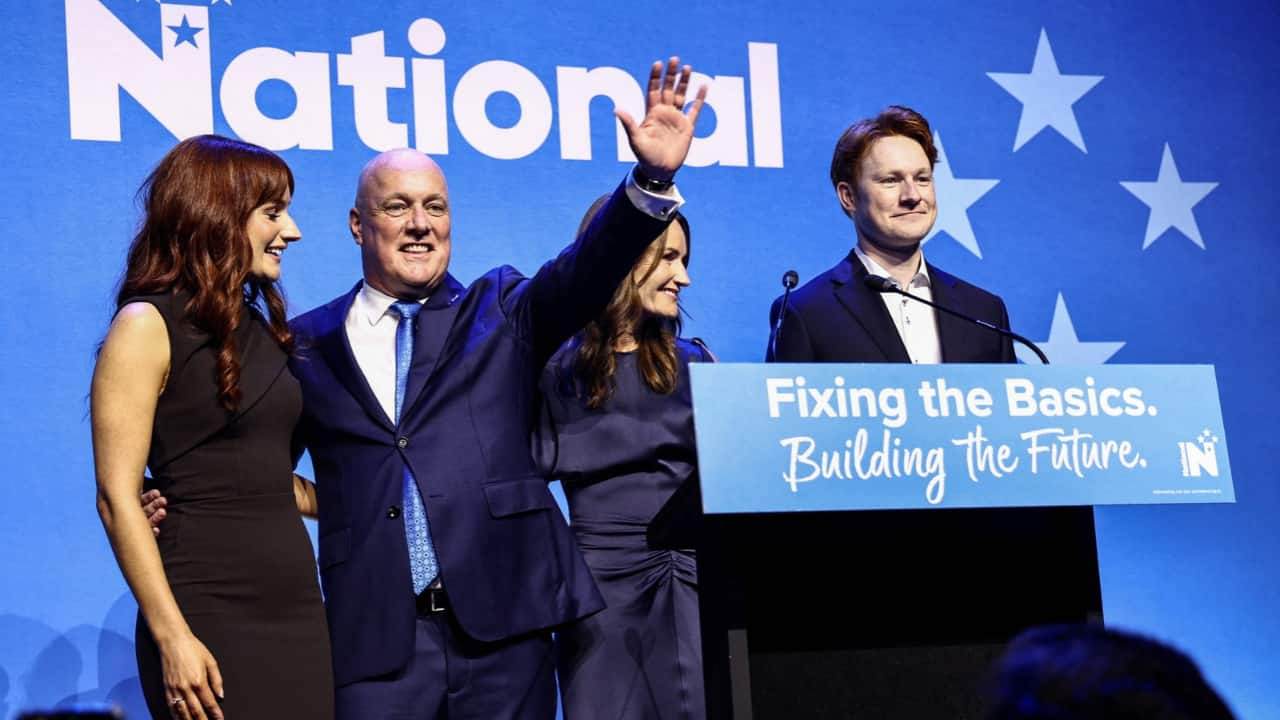
New Zealand’s National and Labour parties are neck and neck after Saturday’s general election. Prime Minister Christopher Luxon said, "National is once again the largest party in parliament, and we have a pathway to forming the next government." Final results on November 27 will decide if the current coalition keeps power.
New Zealand's ruling centre-right National Party and the opposition Labour Party were nearly neck and neck in the country's general election on Saturday, with the narrow vote margin leaving the formation of the next government uncertain. Results from the Electoral Commission showed both parties securing just under 30 per cent of the popular vote, with only a few thousand votes separating them after more than 95 per cent of ballots had been counted. An Electoral Commission projection indicated that the three-party ruling coalition led by Prime Minister Christopher Luxon's National Party could retain power with 67 seats in a 130-seat parliament, just one above the 66-seat majority threshold.
However, the outcome could change when special votes are included in the official count. "National is once again the largest party in parliament, and we have a pathway to forming the next government," Luxon told supporters in Auckland, drawing chants of "three more years". "But right now it is too close to call," he added. Labour leader Chris Hipkins also cautioned against drawing conclusions before the final results were known. "New Zealand has spoken. It may take us a little bit longer to figure out exactly what it is that you've said," he told supporters in Upper Hutt, near Wellington. Hipkins said the next parliament would require political parties to compromise, work together and find common ground.
He added that Labour would either work to form a government if the final results allowed it or continue to represent voters in opposition. Luxon said he would lead a caretaker government until the final votes were counted. The official results are expected to clarify the parliamentary arithmetic before parties negotiate over government formation. Special Votes Could Change Election Outcome The final results are expected on November 27, when special votes, including ballots cast by overseas voters and people outside their electorates, are counted. These votes have historically favoured left-leaning parties, potentially changing the outcome in constituencies where National and Labour candidates are separated by narrow margins.
The final count could therefore affect seat allocations and the ruling coalition's narrow projected majority. The close contest has also placed the spotlight on smaller political parties, which could influence the formation of the next government. New Zealand follows a mixed-member proportional representation (MMP) system, introduced in 1996. Voters cast separate ballots for a political party and a local constituency candidate. Parliament normally has 120 seats, including 71 electorate seats and at least 49 party-list seats. Additional seats can be added when a party wins more electorate seats than its share of the party vote would otherwise entitle it to, a situation known as an overhang.
A party or coalition needs a majority to form a government. Opportunity Party Could Influence Government Formation The centrist Opportunity Party, led by Qiulae Wong, has crossed the 5 per cent threshold required to enter parliament and is projected to win seven seats. Its support could become important if the special votes deprive the National-led coalition of its narrow projected majority. However, Luxon has ruled out forming a government with the newcomer, while Wong has said her party is open to negotiating with either political bloc. "We made that call based on the fact that we need a majority of seats in parliament in order to form a government.
So that is what we will stick to," she told public broadcaster TVNZ. Wong said her party would negotiate with whichever political group secured the largest number of seats after the official results. She added that she had the phone numbers of both Luxon and Hipkins ready for discussions. She also described the result as a vote for unity over division, saying voters had chosen to change New Zealand politics. The existing National-led coalition includes the populist NZ First and libertarian ACT parties. ACT leader David Seymour said it could take time before the political picture became clear. The Green Party is projected to win 16 seats, which would represent an apparent record for the party.
Its performance could strengthen the left-leaning bloc in parliament. Cost Of Living, Economy Dominate Election Campaign The election took place amid widespread dissatisfaction with the country's major political parties, with voters concerned about a sluggish economy, rising living costs and ageing infrastructure. New Zealand has emerged only slowly from a prolonged economic downturn, with subdued growth and household budgets under pressure. Unemployment reached 5.7 per cent in the third quarter, its highest level in 11 years. The price of basic goods has remained elevated, while a global fuel shock following the war in the Middle East has added to economic pressure.
Healthcare and hospital services have also emerged as major concerns, alongside housing affordability, even as house prices have broadly stabilised. Luxon's three years in office have been marked by economic difficulties and internal party tensions, including two unsuccessful attempts by members of his own party to remove him as leader. National had campaigned on promises including no new taxes. The election has also dealt a blow to some senior figures in the ruling party. Deputy leader and Finance Minister Nicola Willis is unlikely to return to parliament following National's poor performance in the party vote, while Housing, Infrastructure and Transport Minister Chris Bishop appeared likely to lose his Hutt South seat.
Both outcomes remain subject to the final count. Maori Voters Raise Concerns Over Government Policies Indigenous Maori voters have also expressed concerns over the government's attempts to roll back policies intended to improve conditions for their community. They have opposed efforts to reduce the influence of the Treaty of Waitangi, New Zealand's founding document, in policymaking. With special votes still to be counted, the result could reshape the balance of power in parliament and determine whether the National-led coalition can secure another term.