
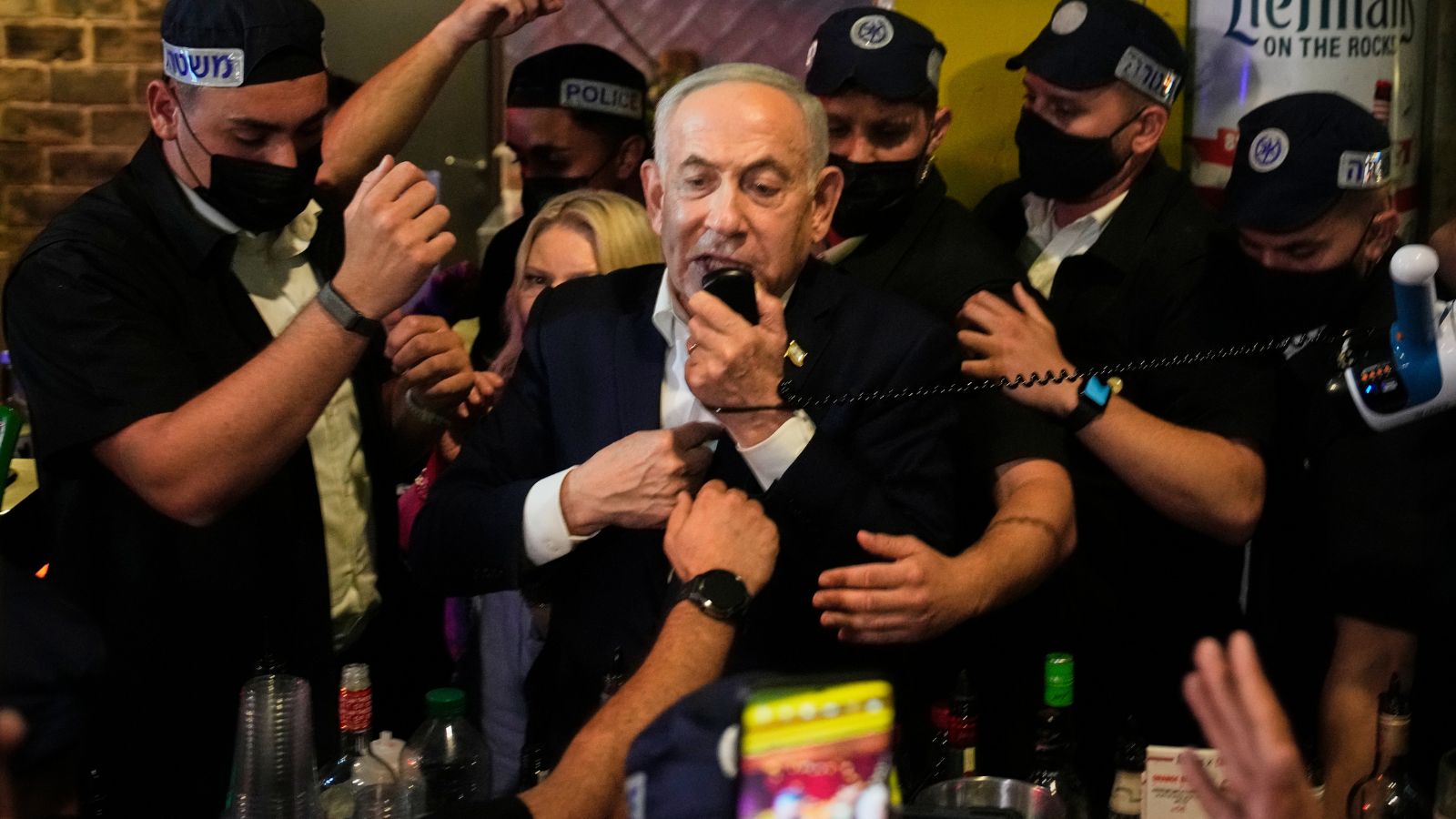
Israel’s parliamentary election on October 27 will decide the fate of Prime Minister Benjamin Netanyahu. Many fear his victory could escalate the war against Iran. Even if Gadi Eisenkot wins, experts say a change in security policy is unlikely. The result depends on which coalition parties get the most support.
Israel's parliamentary election on October 27 will decide the fate of incumbent Prime Minister Benjamin Netanyahu.
It is significant because this is the first election since Hamas's attack on Israel on October 7, 2023. The central question is whether a change in leadership will occur, and if so, whether it will usher in a new political trajectory. Many fear that a Netanyahu victory will embolden him to escalate the war against Iran and continue his coercive policies towards Gaza.
Given the fractious nature of Israel's politics and shifting coalitions, it is difficult to predict the outcome. Opinion polls suggest that neither the present coalition nor the opposition parties will attain a majority. Netanyahu is locked in a close contest with Gadi Eisenkot, the leader of a newly formed Yashar party.
Eisenkot draws his popularity from his long military service, family sacrifices, and widespread anti-Netanyahu sentiment. He lost his son, Gal Eisenkot, during a military operation in Gaza in 2023. Widely seen as a hawk, he served in Netanyahu's emergency war cabinet in 2024 and later resigned over disagreements with respect to Gaza. Thus, if he wins, expecting a moderation of Israel's policy would be premature.
Naftali Bennett, the former prime minister, is also in the race. However, much will depend upon the coalition that emerges, in which the support of right-wing parties would be fundamental.
The election is widely regarded as a referendum on Netanyahu's uncompromising and coercive approach to governance. He is being blamed for pushing Israel into a perpetual war with Iran and its proxies and for exposing the country to widespread international opprobrium and diplomatic isolation over its conduct in Gaza. He could neither topple the theocratic regime in Tehran nor succeed in destroying its nuclear enrichment programme.
Further, his military operations in Gaza have created the worst humanitarian crisis in recent years, leading to about 74,000 deaths. The disproportionate Israeli military response in Gaza shifted the narrative from attributing responsibility to Hamas to holding Netanyahu responsible for its escalation.
Netanyahu's biggest success lies in convincing the Trump administration to launch a joint attack on Iran. In return, Trump has endorsed his leadership in the current election, praising him as an ally, a "great warrior prime minister", and a peace partner. Trump's support for Netanyahu, however, has come at a high political cost. His popularity in the US is at an all-time low owing to his misadventures in Iran. The price of diesel has skyrocketed, and the Republican Party is facing trouble in the midterm elections.
you may like
Israel's parliament, the Knesset, has 120 seats, and representatives are elected under a proportional representation system. Netanyahu enjoys the support of other far-right parties, but this coalition might shift based on the electoral outcomes. Security is the central issue, and Eisenkot has centred his campaign on Netanyahu's failure to prevent Hamas's attacks and his policies on Gaza. The exemption of ultra-Orthodox Jewish men from conscription and Netanyahu's attempts to control the judiciary remain highly divisive issues in Israel.
Even if there is a change in leadership, the underlying security concerns of Israel remain, and there will be no major shift in its policy towards Palestine or Iran. The far-right nature of Israeli politics prevents any moderation of policy. All the major parties object to the two-state solution and the creation of Palestine as an independent state. On the issue of Iran, however, Eisenkot appears cautious and calibrated. He is firmly opposed to Iran acquiring nuclear weapons, but is sceptical of achieving political objectives through military means. But if Netanyahu forms the government, the US and Israel are likely to initiate the next phase of coercive measures.
The writer is professor at the School of International Studies, Jawaharlal Nehru University, New Delhi