
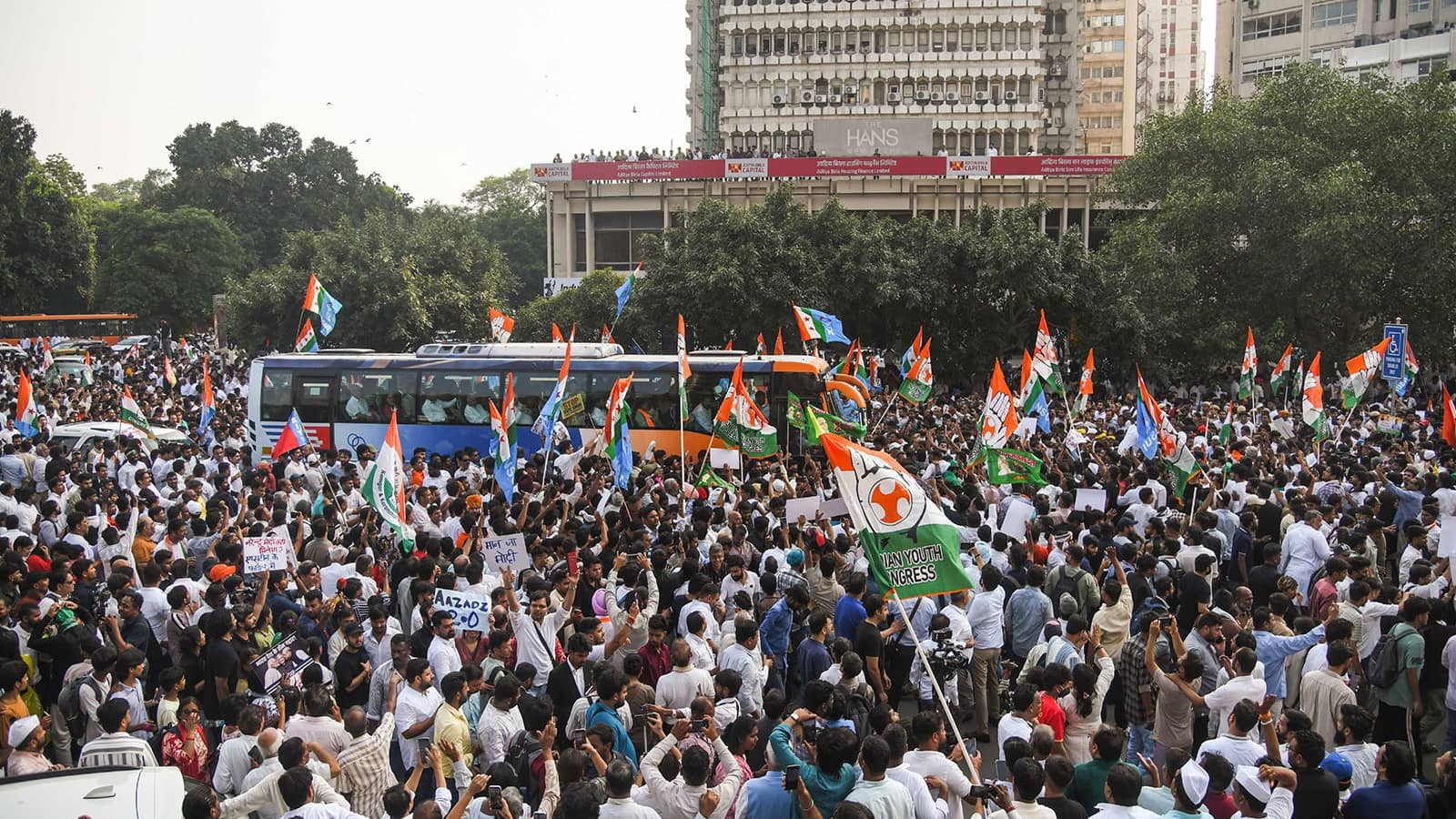
Nearly 200 Supreme Court Bar Association members wrote to their committee seeking a resolution against Rahul Gandhi’s October 12 march. They said, "The Supreme Court is not a platform for demonstrating political influence, financial power or numerical strength." Members fear such large gatherings put indirect pressure on the country's judges.
New Delhi: Nearly 200 members of the Supreme Court Bar Association (SCBA) have written to the association's Secretary and Executive Committee, seeking a resolution condemning Congress leader Rahul Gandhi's march to the Supreme Court on October 12, accompanied by thousands of party workers.
The representation raises concerns over what the members described as a "display of political and numerical strength" in connection with Gandhi's move to file a petition against the Election Commission of India (ECI).
According to the representation, such demonstrations could exert indirect pressure on judges and run contrary to the principles of the rule of law.
"The Supreme Court is not a platform for demonstrating political influence, financial power or numerical strength," the members stated, underlining their concerns over political mobilisation around judicial proceedings.
The representation further warns that allowing such practices could set a precedent for similar demonstrations outside High Courts and district courts, potentially affecting the functioning and independence of the judiciary.
The SCBA members have sought a resolution that would apply equally to all individuals and political parties, indicating that the proposed position should not be restricted to any particular political leader or organisation.
The development comes after Gandhi's march to the Supreme Court on October 12, when he was accompanied by a large number of party workers while seeking to file his petition against the Election Commission of India.
The representation places the focus on the manner in which political leaders approach judicial institutions and the potential implications of large public demonstrations in their vicinity. The members' demand for a uniform resolution seeks to establish that political influence or numerical strength should not be used in a manner that could be perceived as exerting pressure on the judiciary.