
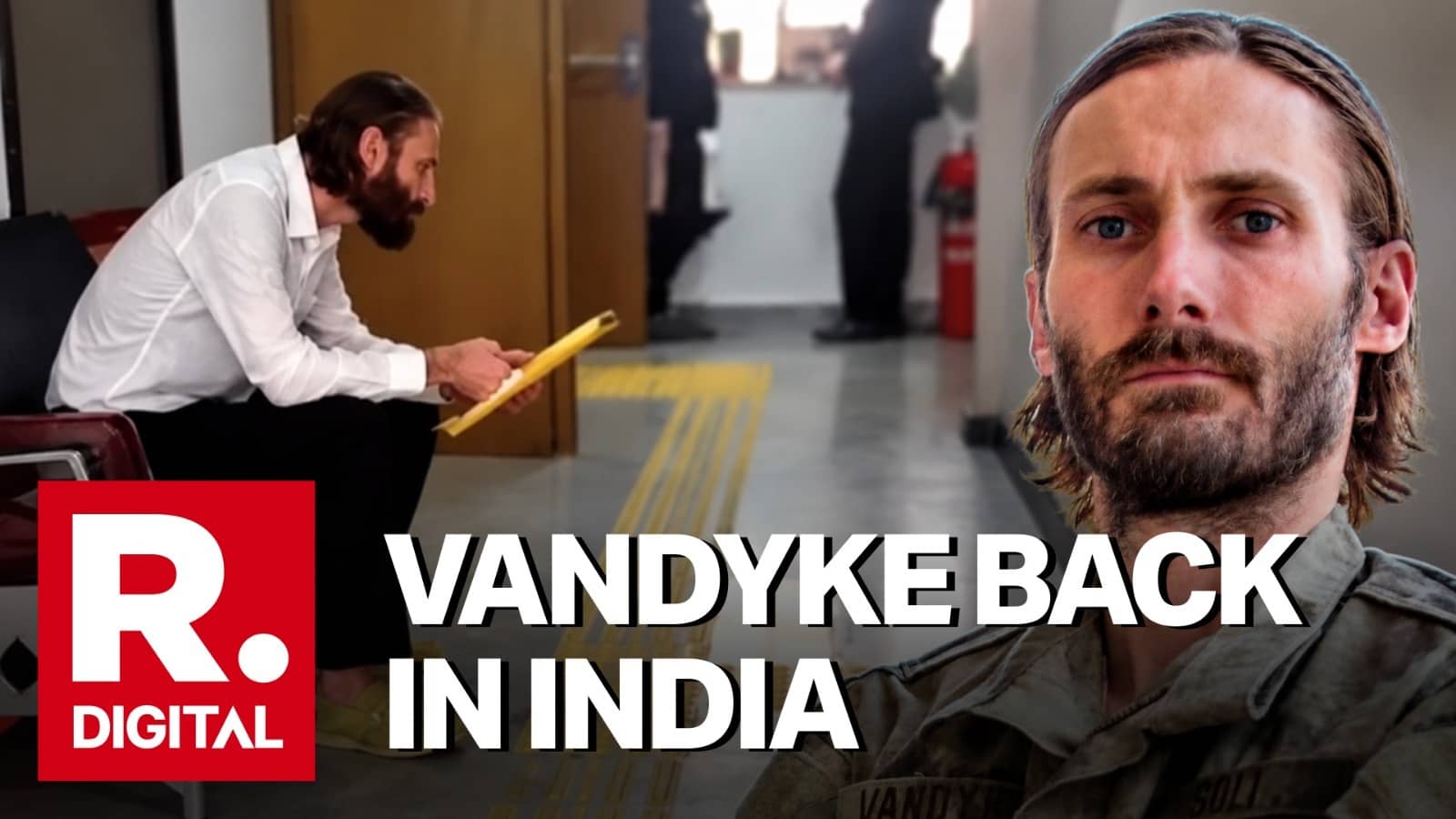
A Delhi court allowed US national Matthew Aaron VanDyke to return home while his case remains pending. VanDyke, accused of training ethnic groups in Myanmar, got his default bail extended until February 24, 2027. He appeared before the NIA court on October 23 after returning to India from the US.
New Delhi: US national Matthew Aaron VanDyke, accused in a case involving alleged drone warfare training for ethnic armed groups in Myanmar, has been allowed to return to the United States by a Delhi court. His default bail has also been extended until February 24, 2027.
VanDyke appeared before a special court of the National Investigation Agency (NIA) in Delhi on Friday, October 23, after returning to India from the US. He had earlier been permitted to travel to his home country for a month after securing default bail in the case.
The latest court order allows VanDyke to return to the US while his case remains pending. The extension of his default bail comes amid the NIA's continuing investigation into alleged links between foreign nationals and ethnic armed groups operating in Myanmar.
Why Was Matthew VanDyke Arrested?
The NIA arrested VanDyke at Kolkata airport on March 13, 2026, along with six Ukrainian nationals who were detained at airports in Delhi and Lucknow. The agency alleged that the seven foreign nationals had travelled to Myanmar through Mizoram without valid travel documents and trained members of ethnic armed groups there.
According to the NIA, the accused allegedly imparted training in drone warfare, drone operations, equipment assembly and jamming technology to members of groups including the Chin National Front (CNF) and the Kachin Independence Army (KIA).
The seven were initially booked under the Unlawful Activities (Prevention) Act (UAPA) in connection with the alleged activities.
How Did VanDyke Get Default Bail?
VanDyke was granted default bail by a special NIA court on September 18 after the agency failed to complete its investigation into the alleged UAPA offences within the prescribed statutory period.
The NIA filed a chargesheet on September 8, invoking Sections 21 and 23 of the Immigration and Foreigners Act, 2025, relating to unauthorised entry and other immigration violations. The agency did not invoke UAPA provisions in the chargesheet, stating that its investigation into the alleged offences under the anti-terror law was continuing.
The court held that filing a chargesheet limited to immigration offences while the UAPA investigation remained pending did not defeat VanDyke's entitlement to default bail.
The six Ukrainian nationals arrested in the case were also granted default bail by the court in September. The immigration-related offences were compounded following the payment of penalties to the Foreigners Regional Registration Office (FRRO).
VanDyke and the six Ukrainians were subsequently allowed to travel to their respective countries for a month, subject to conditions requiring them to cooperate with the investigation and return to India.
The latest order permits VanDyke to travel back to the US and extends his default bail until February 24, 2027. The NIA's investigation into the alleged activities linked to Myanmar remains ongoing.