
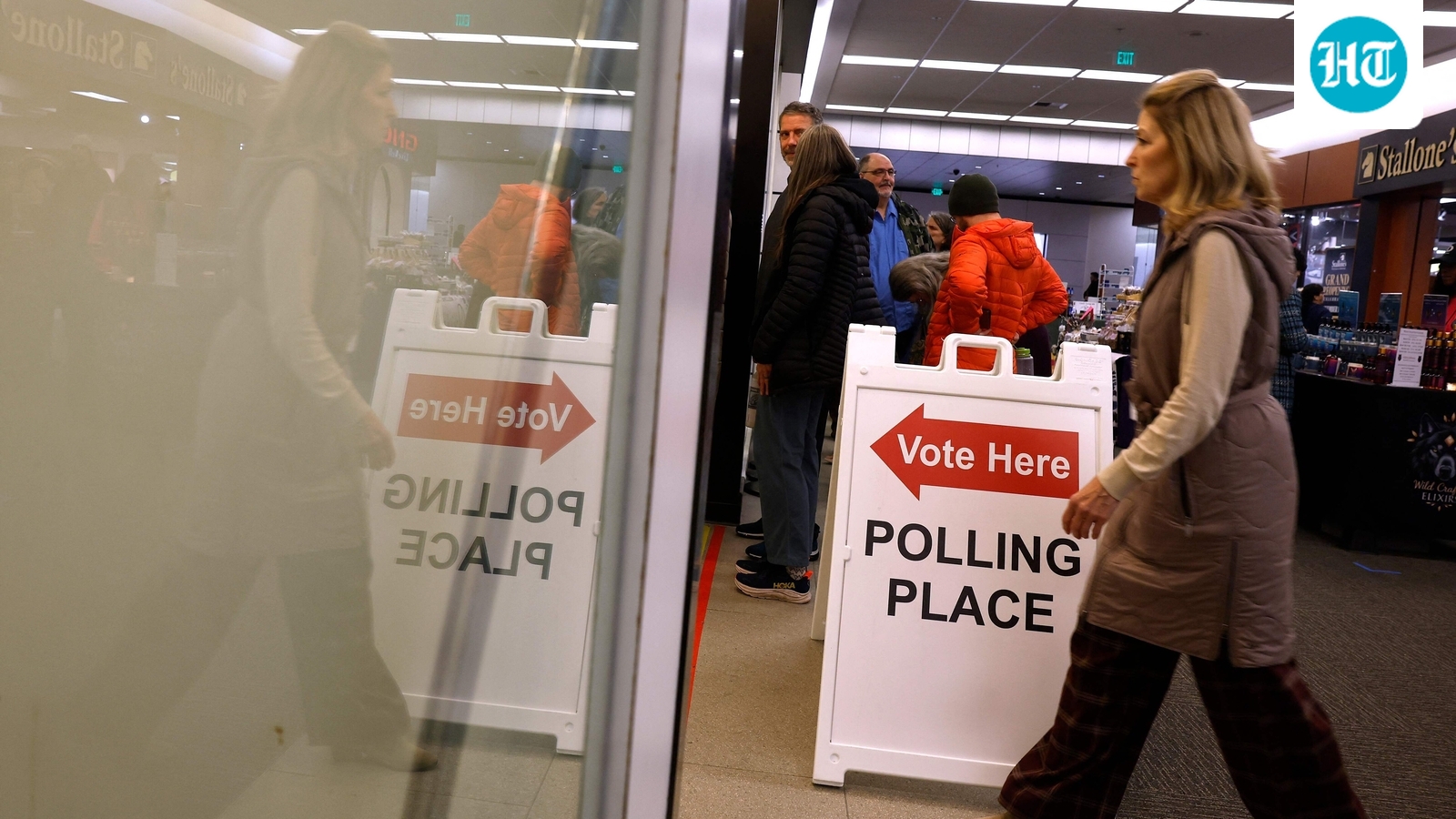
More than 51 million Americans have voted before polling day in the US midterm elections. This record turnout follows a long legal fight over mail-in ballots. While President Donald Trump questioned their security, federal courts blocked his restrictions. States continue to manage these early voting methods through their own local rules.
More than 51 million Americans had voted before polling day in the US midterm elections, a record for a midterm, and the mail ballots among them have been the subject of a seven-month legal fight between President Donald Trump and states.
Trump has repeatedly questioned the security of mail-in voting and sought to change the rules governing how states distribute and process these ballots. Federal courts have blocked his restrictions for Tuesday's vote, and in September the Supreme Court declined to let them take effect.
Early voting is not a new feature of American elections. Millions of voters use it in every election cycle.
Unlike a system in which voters are required to visit polling stations on a single election day, the US allows eligible voters to cast their ballots earlier through different methods.
These broadly include:
There is no single nationwide procedure governing these methods. The US Constitution's Elections Clause gives state legislatures the power to decide the "Times, Places and Manner" of congressional elections, subject to laws passed by Congress. The president does not have a direct role. Individual states determine when early voting begins, whether voters need a reason to request an absentee ballot, how ballots must be returned and the deadlines for their receipt.
Mail ballots also undergo verification before being counted. According to the EAC, state laws govern how these ballots must be completed and returned, while election officials verify them under the applicable procedures. These can include checks involving voter signatures and other ballot requirements.
In 2024, nearly 15 million mail ballots were returned at drop boxes in the 36 states that allowed them, the EAC found. More than 585,000 went through "curing", a process that lets voters correct certain errors on their ballots, and more than half of those were corrected and counted.
In the 2024 presidential election, 48.9 million Americans voted in person before Election Day and 46.8 million voted by mail, against 52.8 million who voted in person on the day, according to the EAC's 2024 Election Administration and Voting Survey. More than 158 million ballots were cast in all.
The US Census Bureau's survey of voters, in which respondents report how they voted, put early in-person voting at 30.7% and mail-in voting at 29% in 2024. Together, these accounted for nearly 60% of voters.
According to the Census Bureau data, around 40% of voters cast ballots early or by mail in 2018. That share increased to approximately 50% in 2022 and nearly 60% in 2024. It had reached around 69% in 2020, when states expanded early and mail-in voting options during the Covid-19 pandemic. Early in-person voting rose from 18% of voters in 2022 to 30.7% in 2024. Mail voting has fallen from its 2020 peak but remains more common than before the pandemic, the EAC found.
The trend has held this year. By midday on Saturday, October 31, more than 51.3 million ballots had been cast ahead of Tuesday's vote, according to the University of Florida's Election Lab, which tracks early voting across the states. In all of 2022, 45.9 million ballots were cast before Election Day. More than 28 million of this year's early ballots were cast in person, against about 20.5 million in 2022.
Voting before Election Day does not mean the ballot is counted immediately or that its result is announced before polling closes. No state publishes mail ballot results before polls close. Mail ballots take longer to count than votes cast in person, since officials must check each envelope, confirm the voter is eligible and remove the ballot before it can be scanned.
Some states let officials begin this work days or weeks before Election Day. Wisconsin and Pennsylvania do not allow it until polls open at 7am on Election Day, and their results often take longer as a result.
Some states also count mail ballots received after Election Day, provided they were postmarked by that day. On June 29, the Supreme Court ruled 5-4 that federal law allows this, in a case over a Mississippi law that counts such ballots if they reach officials within five business days of the election.
Justice Amy Coney Barrett, a Trump appointee, wrote the majority opinion, joined by Chief Justice John Roberts and the court's three liberal justices. The ruling left in place laws in more than half the states and Washington, DC, that allow some late-received ballots to be counted, according to the Associated Press.
The postmark has also become less reliable. In December 2025, the US Postal Service (USPS) finalised a rule clarifying that a postmark shows the day mail is handled at a processing centre, not necessarily the day the agency took possession of it. In Oregon's May primary, 7,314 ballots received during the state's grace period were rejected for late postmarks, a rejection rate of 13% against 9.5% two years earlier, AP reported. In Washington state, the count of late-postmarked ballots in this year's primary rose to 20,267 from 16,131 in 2024.
USPS urges voters to post ballots at least a week before the deadline, and voters can ask a post office to stamp a ballot by hand free of charge.
Results announced on election night are unofficial, and in several states the count continues for days as mail ballots are added.
Trump has repeatedly questioned the security of mail-in ballots, claiming that widespread fraud affected the 2020 presidential election, which he lost to Democrat Joe Biden. He often votes by mail himself, including this year, according to AP.
Registered Democrats have cast more of this year's early ballots than Republicans: 43.2% against 31.7% in states that report voters' party registration, according to the University of Florida's Election Lab.
Trump has tried twice to change the rules by executive order. The first, signed in March 2025, sought to require documentary proof of citizenship to register, to count only mail ballots received by Election Day, and to tie federal election grants to that deadline. On June 24, 2026, Denise Casper, a federal judge in Boston, permanently barred most of it.
The second, Executive Order 14399, signed on March 31, 2026, directed the Department of Homeland Security to compile lists of confirmed adult citizens in each state, and ordered the US Postal Service (USPS) to draw up rules for ballots sent by mail. The resulting USPS rule required states to supply lists of mail ballot recipients and to print unique barcodes on ballot envelopes. USPS could refuse to deliver ballots from states that did not comply. The order says unique envelope identifiers "enable confirmation that only citizens receive and cast ballots, reducing the risk of fraud and protecting the integrity of Federal elections".
Twenty-three states led by California, along with Washington, DC, and voting rights groups sued. They argued that the President was interfering with the states' constitutional authority to run elections, and later argued that states had already prepared envelopes and begun sending out ballots.
Indira Talwani, a federal judge in Boston, blocked parts of the order in June. The Supreme Court lifted that block in August, finding the states had sued before the postal rule was final. Once USPS issued the rule, Talwani blocked the rule, and Carl Nichols, a federal judge in Washington, blocked it too.
On September 14, the Supreme Court refused the administration's request to let the rule take effect. It said the government was "unlikely to succeed on the merits", meaning it was likely to lose the legal argument itself. The court's conservatives Samuel Alito and Clarence Thomas dissented. Justice Brett Kavanaugh, another conservative, agreed the rule should not apply to the midterms but indicated he might side with the administration if the issue returns to the court. Two days later, USPS told its staff it would "not be enforcing any of these new rules in the 2026 federal election". The case continues in the lower courts.
The administration has also gone to court over ballots already sent. In mid-October, the Justice Department sued California to make officials set aside ballots sent to about 20,000 people it suspects are not citizens. California officials said the list was highly unreliable.
A district judge rejected the request on October 28. On October 30, the 9th US Circuit Court of Appeals rejected it 2-1, saying there was "no feasible way to identify and segregate the ballots of specific individuals without potentially catastrophic effects on the entire system".
The department has said it will appeal to the Supreme Court. "Federal law prohibits noncitizens from voting. Enforcing that law is not an agenda item. It is the Department's job," it said in a statement on its efforts against noncitizen voting. Noncitizen voting is exceptionally rare, AP has noted.
The administration also faces other legal challenges over voter registration data and efforts to verify citizenship through federal databases.
India primarily conducts elections through in-person voting at designated polling stations, using electronic voting machines (EVMs). There is no early voting. Polling is spread over several phases instead, and the 2024 Lok Sabha elections were held in seven phases between April 19 and June 1.
Postal ballots are available to specified categories of voters rather than being a general voting option for the entire electorate. These categories include service voters, people on election duty, voters aged 85 and above and persons with disabilities assessed at 40% or more, who can vote by postal ballot from home, and voters in certain notified essential services.
Indian citizens living abroad who register as overseas electors cannot vote by post. They must vote in person at their designated polling station in India.
The Election Commission of India (ECI) said 42.82 lakh postal ballots were cast in the 2024 Lok Sabha elections, compared with approximately 64.64 crore total votes polled. Postal ballots accounted for around 0.66% of the total.
In the US, mail ballots made up about three in 10 votes cast in 2024, according to the EAC.