
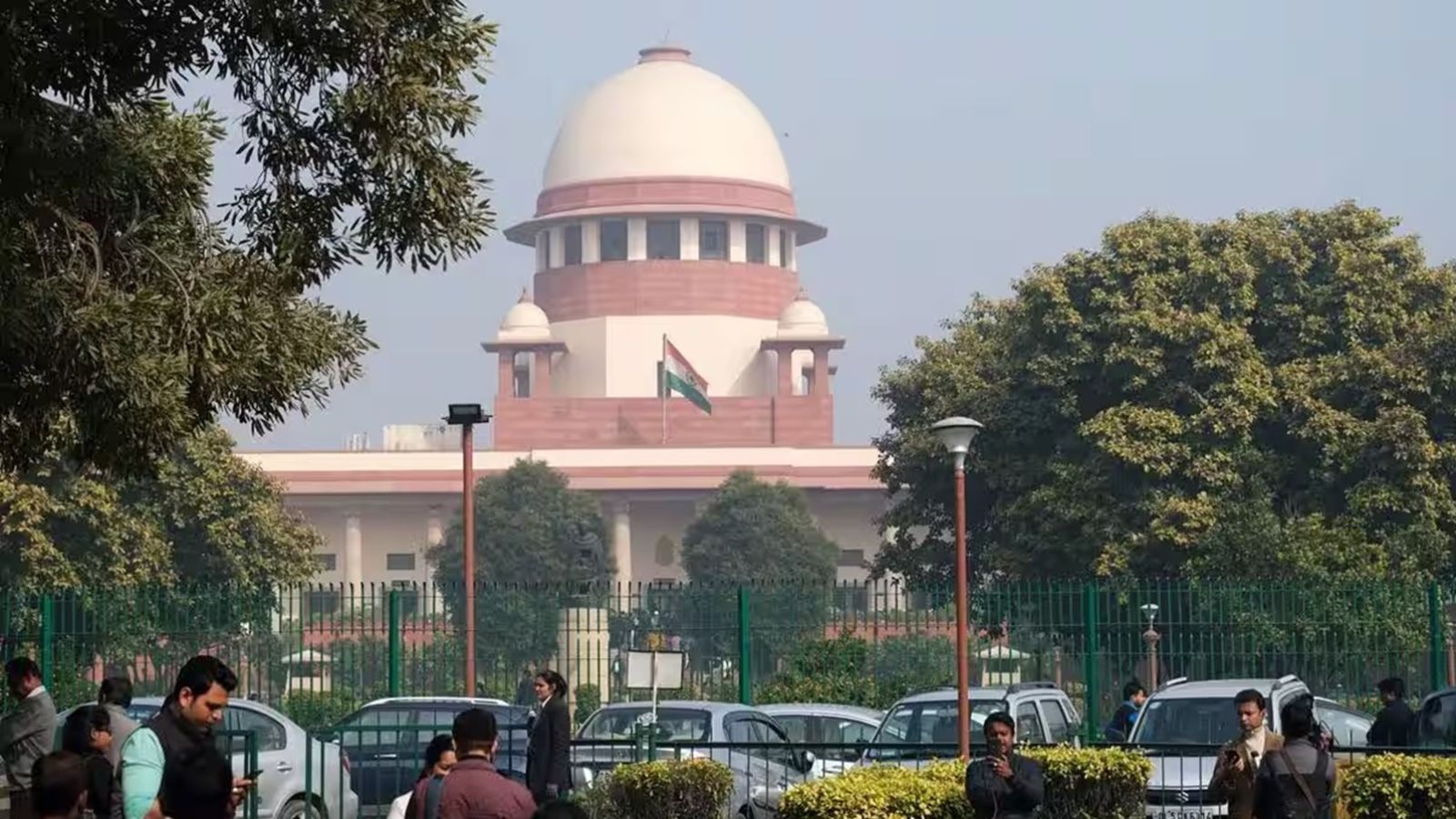
The Supreme Court on Tuesday allowed Karnataka to replace two members of the Special Investigation Team probing KPSC recruitment cases. The court modified a September 21 High Court order, letting the state DGP pick the team head. The bench noted, "The state has suggested a change in composition of the SIT."
The Supreme Court Tuesday modified a September 21 Karnataka High Court order that mandated a fresh probe by a Special Investigation Team (SIT) into two recruitment cases involving the Karnataka Public Service Commission (KPSC). It left the selection of the SIT head to the Karnataka director general of police (DGP) and sent the matter back to the High Court.
A bench comprising Justices Manoj Misra and Vijay Bishnoi modified the High Court's directive for a "de novo" (fresh) investigation after the Karnataka government challenged the unilateral selection of SIT members and the requirement for a fresh probe despite ongoing investigations and arrests by the state Criminal Investigation Department (CID).
In its order, the Supreme Court noted that it "deems it appropriate to give liberty to the state to suggest the replacement of two members" of the SIT.
The court directed that the SIT be constituted within 10 days, after which the Karnataka High Court will review its composition. "The state has suggested a change in composition of the SIT by requiring the state DGP to nominate an officer not below the rank of an ADGP," the Supreme Court noted.
State government's objections
The Karnataka government opposed the High Court's appointment of DGP-rank officer Alok Kumar as SIT head, citing past probes against him, and highlighted a potential conflict of interest regarding SIT member Dr Divya Gopinath, who heads the state forensic science laboratory. Anup A Shetty, Kushal Chouksey and Kshama Mishra are the other SIT members.
On October 1, the Supreme Court stayed the High Court's September 21 order. The state government argued that the High Court created the SIT without finding any fault with the ongoing CID probe, which was nearing completion, and had selected members without consulting the state.
"Besides, they have objection to the direction which requires the SIT to undertake a de novo investigation. It has been submitted that there is no need for a de novo investigation, particularly when there were no allegations of mala fide against the investigating agency," the Supreme Court observed in its October 1 stay order.
Two recruitment cases
The Karnataka High Court ordered the SIT to probe two cases: alleged fraud in the KPSC recruitment of veterinary doctors for 400 vacancies, in which suspended KPSC chairman Shivashankarappa Sahukar is among the accused; and the recruitment of Sahukar's daughter in the state industries and commerce department.
While the High Court declined to hand over the probe to the CBI or retain it with the CID, the All Karnataka Students Association, which sought a CBI probe in the High Court, argued in the Supreme Court that the CID had failed to arrest Sahukar and other KPSC members.
The Congress government transferred the two controversial cases to the CID unit in late July. The CID arrested former KPSC exam controller Gyanendra Kumar Gangwar, 41, an IAS officer, in connection with the alleged scam involving veterinary officers' recruitment. He is accused of leaking questions from the veterinary doctors' entrance exam to approximately 20 candidates through a middleman named Basavaraj Kannale, who has ties to the BJP.
In the second case, the daughter of the suspended KPSC chairman, Shivashankarappa Sahukar, is accused of submitting a fake income certificate. The certificate allegedly falsely claimed family earnings of Rs 40,000 per annum, enabling her to be selected as an industrial extension officer in the state industries department under the Other Backward Classes (OBC) reservation category.
On October 6, the Enforcement Directorate (ED) arrested Shivashankarappa Sahukar and KPSC member B V Geetha. They allegedly leaked answer keys for the veterinary doctors exam conducted on January 9 of this year to six candidates in exchange for bribes.