
Governments often blame a "foreign hand" to frame major protests against them. Prime Minister Narendra Modi said on October 22 that some people "want to destroy India's global reputation." Leaders like Shivraj Singh Chouhan and Mohan Bhagwat also warned against conspiracies, while the Opposition continues to protest against recent issues.
A look at how the governments of Indira Gandhi, Manmohan Singh, and Narendra Modi have framed major protest movements.
"Foreign hand" and "destabilisation of the country" have been two themes that governments and ruling parties have frequently deployed to frame major protest movements, and the Narendra Modi government is no exception. The protesters have almost invariably evoked Mahatma Gandhi or the Constitution to legitimise their protest as a fundamental right.
Here is a look at how governments and ruling parties framed the three major protests they faced on issues of corruption or governance: the current protests by the Cockroach Janta Party and the broader Opposition -- first against the NEET exam paper leaks and then the Special Intensive Revision (SIR) of electoral rolls -- the Anna Hazare movement of 2011 which shook the previous UPA government, and the JP movement that unseated Indira Gandhi from power after the Emergency of 1975-77.
SIR, NEET paper leaks
Targeting Leader of Opposition Rahul Gandhi, Prime Minister Narendra Modi said on October 22 that at a time when "the world is searching for a new order, some people are dreaming of disorder" in the country and "want to destroy India's global reputation". "One wonders how long the Congress will continue to wager the nation's interests just to launch its failed product," Modi said.
This happened on a day when Union Minister Shivraj Singh Chouhan said in Bhopal that "the regime change gang will never succeed in its nefarious designs to destabilise the country and seize power".
Days ago, RSS sarasanghchalak Mohan Bhagwat said in Nagpur on the 101st foundation day of the RSS that there was a need to be vigilant against agitations that "seek to fan hatred for systems, ideologies and individuals within the country".
Bhagwat hinted at the possibility of a global conspiracy behind the protests and referred to recent protests and unrest in France and Albania and previous ones in Bangladesh and Nepal to claim that such agitations were leading to instability.
In multiple posts on X, Union Minister of Parliamentary Affairs Kiren Rijiju has also framed the protesters as "Dimagi Naxals", anarchists, "traitors". Days earlier, BJP president Nitin Nabin said, "Frustrated at being repeatedly rejected by the public in our democracy, the Opposition is now hatching a deep conspiracy to spread instability and anarchy in Bharat at the behest of foreign powers."
Anna Hazare agitation (2011)
In 2011, the Congress-led UPA was in power when social activist Anna Hazare and Arvind Kejriwal, who later entered active politics, started an agitation for a strong Lokpal (ombudsman) to counter corruption.
The UPA government showed restraint during the protests and also called a special session of Parliament to discuss the Lokpal, but there were statements from ministers and Congress leaders accusing the movement of being disruptive and foreign-sponsored, in much the way the Modi government is now framing ongoing protests. The BJP, then the Opposition party, was sympathetic to the Anna movement.
On August 18, 2011, Congress spokesperson Rashid Alvi labelled Anna Hazare's insistence on holding an indefinite fast as "blackmail" and wondered how he was carrying on the movement given that he was alone and had no organisation.
Alvi said in the previous 65 years, about 100 countries had secured freedom, but none of them emerged as powerful as India. Citing Prime Minister Manmohan Singh's statement in the Lok Sabha about many forces that would not like to see India realise its true place in the comity of nations, Alvi said, "Which are these forces? What was the need for America to state that Anna's movement should go on? This creates doubts and suspicion."
However, then US State Department spokesperson Victoria Nuland dismissed reports that the US supported the anti-corruption movement in India, calling it "inaccurate reporting". US Senator John McCain also dismissed Alvi's accusations, saying the US does not interfere in the affairs of other nations.
Congress leader Manish Tiwari alleged in 2011 that Hazare was "steeped in corruption" and that Team Anna comprised "armchair fascists, overground Maoists, closet anarchists funded by invisible donors", but later apologised to Hazare in writing.
JP movement and Emergency
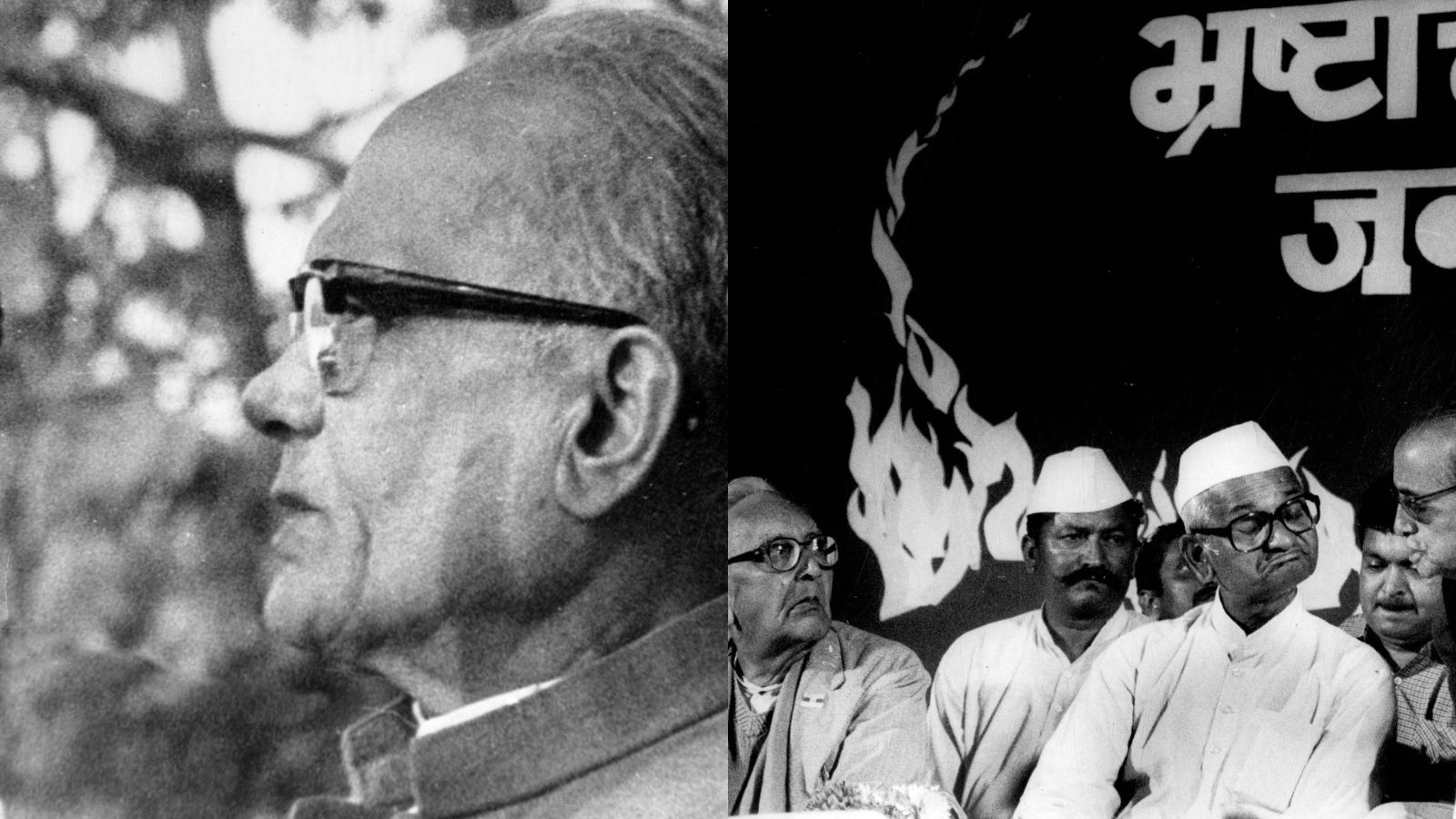
When Prime Minister Indira Gandhi clamped the Emergency in 1975 to counter the JP movement against corruption and misgovernance that was intent on ousting her from power, she liberally framed the movement as a result of a "foreign hand" out to destabilise India.
you may like
In 2001, on the 25th anniversary of the Emergency, historian Ramachandra Guha dealt with this at length in an article. "Mrs Gandhi's singular contribution to Indian political discourse was the idea of the 'foreign hand'. The nationality of this hand is hard to establish, although one presumes it was coloured white. A week after the declaration of Emergency, the Prime Minister gave an interview to M. Shamim of the Times of India. 'The aim of the opposition parties was obvious', she remarked, it was 'to paralyse the Government and indeed all national activity and thus walk to power over the 'body' of the nation. The situation had come to such a pass that a few more steps would have led to disintegration, which would have exposed us to foreign danger," Guha wrote.
Guha added, "She returned to the theme in a speech of 11 November, broadcast over what was now routinely referred to, if in private, as All Indira Radio. Here, the Prime Minister told the nation that 'there are many people outside the country who are not our well-wishers and who do not like to see India being strong and united and carrying forward its economic programmes. This was their desire and their efforts and our countrymen also got entrapped in the process'.
After her defeat in 1977, she explained this to a foreign interviewer, Guha writes. "They had a lot of money to spend... Some sections in the Janata Party had the support of the Western press, Amnesty International and other Western organisations. Another section was supported by the Soviets."