
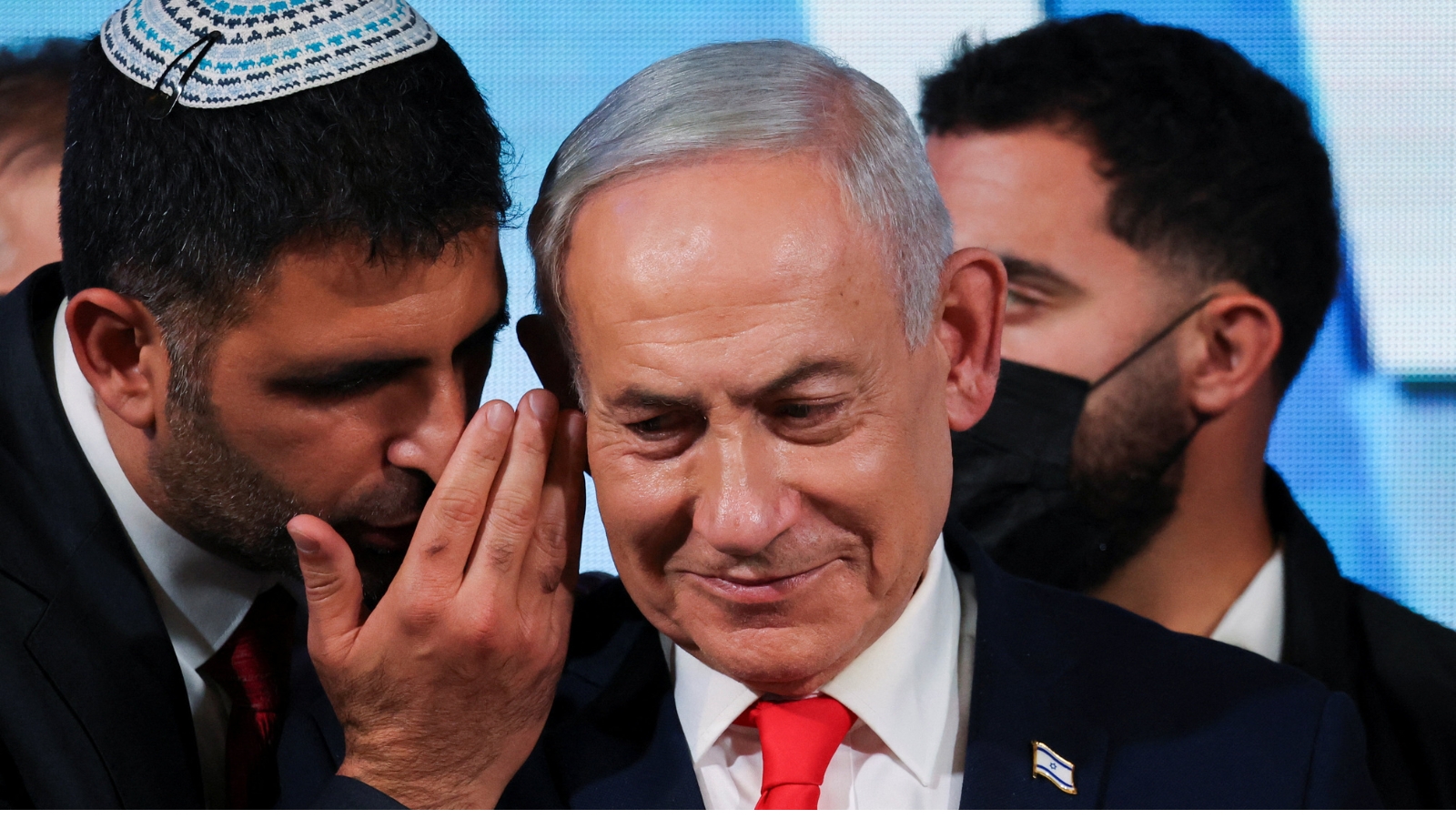
Benjamin Netanyahu’s rivals face a tough choice after the October 27 parliamentary election left both blocs short of a majority. Arab-led parties hold 19 projected seats, potentially helping the opposition reach 67. Gadi Eisenkot must now decide if he will work with them to end Netanyahu’s long tenure in power.
Netanyahu has ruled out cooperation with Arab-led parties, whose projected 19 seats could help the opposition reach a parliamentary majority. With both blocs short of the 61 seats needed to govern, Gadi Eisenkot faces a political dilemma over whether to seek their support.
Israeli Prime Minister Benjamin Netanyahu has ruled out cooperation with Arab-led parties and intensified allegations of election fraud against them, even as their gains in the October 27 parliamentary election have placed them in a potentially decisive position in negotiations to form the next government.
The question now remains whether the opposition bloc led by former military chief Gadi Eisenkot will be willing to work with the Arab-led Ra'am and Joint List parties to end Netanyahu's tenure, or whether political differences will prevent an alternative government from taking shape.
The Times of Israel reported, citing the latest partial count, that Netanyahu's bloc has 53 seats in the 120-member Knesset, compared with 48 for Eisenkot's bloc. The two Arab-led parties are projected to win a combined 19 seats, taking the potential opposition grouping to 67, more than the 61 required for a parliamentary majority. The figures remain provisional as counting continues.
However, the seat arithmetic does not guarantee a coalition. Netanyahu has rejected cooperation with the Arab parties, while Eisenkot and several of his prospective allies have been reluctant to commit to relying on their support.
Netanyahu alleges election fraud, rules out Arab-party cooperation
On Thursday, Netanyahu intensified his allegations of election fraud by Arab-led parties, describing suspected foreign interference as an "earthquake" and demanding an immediate investigation by the police and Shin Bet, Israel's internal security agency.
In a social media post, Netanyahu cited Central Elections Committee chief Justice Noam Sohlberg's decision to ask Shin Bet chief David Zini to investigate suspicions of foreign funding and improper influence in Tuesday's election.
Israel election 2026 · InfoGenIE
Israel election 2026: The full picture
Build a coalition, test the Arab parties' role, see who gained and lost, who is heading to the Knesset, where parties led and how the count unfolded. Pick a section.
Data updated: Oct 29, 2026, 08:02 Israel time. Projected seats from the Central Elections Committee count as reported by N12 (06:14) and Calcalist (08:02): 91.7% of votes and 98.6% of regular polling stations counted. About 430,000-480,000 double-envelope ballots were still being counted. Seats are projections, not an official allocation; official results are due by Nov 4. The map section uses an earlier vote-share snapshot, labelled there.
61?
Build a coalition
Arab parties
±
Gains and losses
120
Who's heading in
●
Map
The count
Can you build a coalition that reaches 61 seats?
Tap a party to add its seats. Tap it again to take it out. The counter and bar update as you go.
This is a mathematical scenario, not a prediction. Parties may rule out cooperation even when their seats add up to a majority.
Netanyahu bloc
53 seats
26seats
Likud
Benjamin Netanyahu
+ Add to coalition
7seats
Shas
Aryeh Deri
+ Add to coalition
UTJ
7seats
United Torah Judaism
Yaakov Asher
+ Add to coalition
7seats
Otzma Yehudit
Itamar Ben-Gvir
+ Add to coalition
6seats
Religious Zionism-Zehut
Bezalel Smotrich
+ Add to coalition
Eisenkot bloc
48 seats
21seats
Yashar
Gadi Eisenkot
+ Add to coalition
12seats
B'Yachad
Naftali Bennett
+ Add to coalition
7seats
Yisrael Beytenu
Avigdor Liberman
+ Add to coalition
8seats
The Democrats
Yair Golan
+ Add to coalition
Arab-led parties
19 seats
JL
11seats
Joint List
Yousef Jabareen
+ Add to coalition
8seats
Ra'am
Mansour Abbas
+ Add to coalition
of 120 seats
Tap again to remove
61 seats or more
Mathematical majority: seats
Below majority
more seats needed
Political reality check
Dated public positions relevant to your mix appear here: ruled out, reluctant, policy clash or open to talks. A position can change in negotiations.
Ruled out: Yisrael Beytenu + Arab-led parties
Avigdor Liberman has pledged not to form a government that relies on Arab parties (The Times of Israel, Oct 28).
Ruled out: B'Yachad + Arab-led parties
Naftali Bennett has pledged not to sit with Arab parties this time, although he led a government that included Ra'am in 2021 (The Times of Israel, Oct 28).
Ruled out: The Democrats + Likud or Haredi parties
Yair Golan says he will not sit with the Haredi parties, or with Likud while Netanyahu leads it (The Jewish Chronicle, Oct 28).
Ruled out: Likud + Arab-led parties
Netanyahu said it was unthinkable "to set up a government that relies upon anti-Zionist Arab parties" (The Times of Israel, Oct 28).
Ruled out: Yashar + Likud
Gadi Eisenkot has rejected serving under Netanyahu, including in a rotation (The Jerusalem Post, Oct 28). Netanyahu says partners are welcome "without a rotation" (Israel Hayom, Oct 28).
Policy clash: Yashar + Haredi parties
Eisenkot's stated priority is a "Zionist government committed to military conscription" (Ynet, Oct 28). United Torah Judaism quit Netanyahu's government over the draft law.
Reluctant: Yashar + Arab-led parties
Before the vote, Eisenkot ruled out a minority government relying on Arab-led parties (Al Jazeera, Oct 29). Since then he has not set out any framework for working with them (Ynet, Oct 28).
Open to talks: Ra'am
Mansour Abbas told Channel 12 that "everyone is speaking with us", and said he is willing to join an Eisenkot-led coalition if it proves viable (The Times of Israel, Oct 28).
Open to talks: The Democrats + Arab-led parties
Golan has urged partners to form "a government of change in partnership with Israel's Arab citizens" (The Times of Israel, Oct 28).
Open to talks: Joint List
Ahmad Tibi said the Joint List would not seek ministries or formal coalition membership, but would consider backing a government from outside in return for commitments on crime in Arab communities and an end to Bedouin home demolitions (Ynet, Oct 28).
61 is not the only route. To take office, a government needs more votes for it than against in a Knesset confidence vote. A party can join the cabinet, back the government from outside without taking ministries, or abstain. The Bennett-Lapid government was sworn in by 60 votes to 59 in 2021, with one abstention. A coalition below 61, though, needs outside help to pass laws and survive.
Sources: Projected seats: Central Elections Committee count as reported by N12 and Calcalist (Oct 29, 2026, 06:14-08:02 Israel time). Positions: The Times of Israel, The Jerusalem Post, Israel Hayom, Ynet, The Jewish Chronicle, Al Jazeera (Oct 28-29, 2026). 2021 vote: Axios. Seats are calculated projections, not an official allocation.
Can Arab parties decide Netanyahu's future?
Joint List (11) and Ra'am (8) together hold a record 19 projected seats, but they are separate parties with different leaders and positions. Pick a starting bloc, then decide what each Arab-led party does in the confidence vote.
Step 1 · Start with a bloc
Eisenkot bloc
Yashar, B'Yachad, Democrats, Yisrael Beytenu
Eisenkot bloc without Bennett and Liberman
Yashar and the Democrats only
Netanyahu bloc
Likud, Shas, UTJ, Otzma, Religious Zionism
Step 2 · What do the Arab-led parties do?
Ra'am
Led by Mansour Abbas
Votes against
Joins coalition
Backs from outside
Abstains
JL
Joint List
Led by Yousef Jabareen
Votes against
Joins coalition
Backs from outside
Abstains
For
Against
Abstain
Takes office
More votes for than against
Fails
Not enough votes for the government
Working majority
Coalition holds seats, 61 or more
Minority
Coalition holds of 120 seats
Political reality check
Reluctant: Eisenkot
Before the vote, Eisenkot ruled out a minority government relying on Arab-led parties (Al Jazeera, Oct 29). Since then he has not set out any framework for working with them (Ynet, Oct 28).
Ruled out: Bennett
Naftali Bennett has pledged not to sit with Arab parties this time, although he led a government that included Ra'am in 2021 (The Times of Israel, Oct 28). This mix needs his support.
Ruled out: Liberman
Avigdor Liberman has pledged not to form a government that relies on Arab parties (The Times of Israel, Oct 28). This mix needs his support.
Arithmetic: without Bennett and Liberman
Yashar and the Democrats hold 29 projected seats between them.
Open to talks: Golan
Golan has urged partners to form "a government of change in partnership with Israel's Arab citizens" (The Times of Israel, Oct 28).
Ruled out: Netanyahu
Netanyahu said it was unthinkable "to set up a government that relies upon anti-Zionist Arab parties" (The Times of Israel, Oct 28). Abbas says Likud has also approached him (The Times of Israel, Oct 28).
Open to talks: Abbas
Mansour Abbas told Channel 12 that "everyone is speaking with us", and said he is willing to join an Eisenkot-led coalition if it proves viable (The Times of Israel, Oct 28). In 2021 Ra'am became the first Arab-majority party to join an Israeli government.
Open to talks: Joint List
Ahmad Tibi said the Joint List would not seek ministries or formal coalition membership, but would consider backing a government from outside in return for commitments on crime in Arab communities and an end to Bedouin home demolitions (Ynet, Oct 28).
Three ways to back a government
Join
Inside the coalition. Ministers and a share of power. Ra'am did this in the Bennett-Lapid government of 2021.
Back
Support from outside. Votes for the government without taking ministries. Yitzhak Rabin's government relied on outside Arab support after 1993.
Abstain
Stay out of the vote. A government needs more votes for than against, not 61. Bennett-Lapid was sworn in 60-59, with one abstention.
The calculator assumes every party you have not added votes against. It is arithmetic, not a forecast: the Joint List and Ra'am are separate parties with different leaders and positions.
Sources: Projected seats: Central Elections Committee count as reported by N12 and Calcalist (Oct 29, 2026, 06:14-08:02 Israel time). Positions: The Times of Israel, Ynet, Al Jazeera, The Jerusalem Post (Oct 28-29, 2026). 2021 vote: Axios. 1993 precedent: The Times of Israel.
Which parties gained seats and which lost ground?
Projected seats compared with what each list won in the 2022 election, the last consistent baseline. Many lists merged or split, and some members switched parties during the outgoing Knesset, so read the notes before comparing names.
Netanyahu bloc
-11
Eisenkot bloc
+2
Arab-led parties
+9
Seat change
How the lists changed
Grey bar: seats won in the 2022 election. Coloured bar: projected seats now. The 2022 bloc totals above are a retrospective grouping of the 2022 lists into today's blocs.
YA
Yashar
First election
New
2022
2026
New party. Eisenkot was elected in 2022 on Benny Gantz's National Unity list.
JL
Joint List
In 2022: Hadash-Ta'al
+6
2022
2026
Balad, which missed the threshold running alone in 2022, rejoined.
TH
The Democrats
In 2022: Labor
+4
2022
2026
Labor merged with Meretz, which won no seats in 2022.
RA
Ra'am
+3
2022
2026
YI
Yisrael Beytenu
+1
2022
2026
UTJ
United Torah Judaism
±0
2022
2026
New leader: Yaakov Asher replaced Moshe Gafni.
OT
Otzma Yehudit + Religious Zionism-Zehut
In 2022: Religious Zionism alliance
-1
2022
2026
The 2022 joint list, which also included Noam, split. Otzma 7, Religious Zionism-Zehut 6.
SH
Shas
-4
2022
2026
LI
Likud
-6
2022
2026
Now includes Gideon Sa'ar's New Hope, which ran on the National Unity list in 2022.
B&
B'Yachad
In 2022: Yesh Atid
-12
2022
2026
Yesh Atid now runs inside Naftali Bennett's list; Yair Lapid is No. 2.
NU
National Unity
Did not run in 2026
Did not run
2022
2026
Broke up in 2025. Gantz's Blue and White withdrew on Oct 19, 2026.
Lists that merged, split or are new since 2022. 2022 seats in grey. Shas, United Torah Judaism, Yisrael Beytenu and Ra'am run under the same names as in 2022.
Yesh Atid 24
Bennett 2026 new
→
B'Yachad12 projected
Formed April 2026 and headed by Naftali Bennett.
National Unity 12
→
Yashar21 projected
Eisenkot left National Unity in 2025 and founded Yashar. The alliance ended in July 2025; Gantz's Blue and White withdrew from the race on Oct 19, 2026.
Likud 32
New Hope ran in National Unity
→
Likud26 projected
Gideon Sa'ar's New Hope agreed in 2025 to merge back into Likud.
Religious Zionism alliance 14
→
Otzma Yehudit7 projected
The joint list split in November 2022. Each party now runs on its own.
Religious Zionism alliance 14
Zehut no seats
Jewish Home no seats
→
Religious Zionism-Zehut6 projected
Jewish Home merged into Religious Zionism in 2023. Moshe Feiglin of Zehut is No. 2.
Labor 4
Meretz 0
→
The Democrats8 projected
Labor and Meretz merged in July 2024 under Yair Golan.
Hadash-Ta'al 5
Balad 0
→
Joint List11 projected
Hadash, Ta'al and Balad agreed on Aug 19, 2026, to run together again.
Sources: 2022 results: Central Elections Committee. Projected 2026 seats: Central Elections Committee count as reported by N12 and Calcalist (Oct 29, 2026, 06:14-08:02 Israel time). List changes: PoliWave, Israel Policy Forum. The 2022 baseline is the election result, not the outgoing Knesset's final faction sizes.
Who is heading to the Knesset?
Israel votes for party lists, not local candidates. Seats go to names in ballot order, so a party's projected seat count shows who is likely to enter. Tap a party.
Likud26
Yashar21
B'Yachad12
JL
Joint List11
The Democrats8
Shas7
UTJ
United Torah Judaism7
Otzma Yehudit7
Yisrael Beytenu7
Ra'am8
Religious Zionism-Zehut6
Likud
Led by Benjamin Netanyahu
26projected seats
The top 26 names are projected to enter the Knesset on the current count. The next two would enter if the party gains seats in the final count.
Benjamin NetanyahuPrime minister
Eli CohenEnergy minister
Amir OhanaKnesset speaker
Yariv LevinJustice minister
Miri RegevTransportation minister
Israel KatzDefence minister
Gideon Sa'arForeign minister
Ofir KatzCoalition chairman
Tali Gu'iliNew Hope candidate on the Likud list
Yoav KischEducation minister
Yaakov BardugoBroadcaster
Miki ZoharCulture and sport minister
Almog CohenDeputy minister, PM's Office
Amichai ChikliDiaspora affairs minister
Elisha MadanReserve combat soldier
David PeterLitigator
Moshe SaadaMK, former police investigator
Haim KatzTourism and housing minister
David AmsalemRegional cooperation minister
Etty AtiaMK
Boaz BismuthMK, foreign affairs and defence committee chair
David BitanMK, economics committee chair
Shlomo KarhiCommunications minister
Nir BarkatEconomy minister
Gila GamlielScience and technology minister
Eli GoldschmidtFormer MK
Projected cut-off
Erez TadmorPublicist and broadcaster
Shlomo LernerLawyer
Yashar
Led by Gadi Eisenkot
21projected seats
The top 21 names are projected to enter the Knesset on the current count. The next two would enter if the party gains seats in the final count.
Gadi EisenkotFormer IDF chief of staff
Yoram CohenFormer Shin Bet director
Orit Farkash-HacohenFormer science minister
Matan KahanaFormer religious services minister
Chili TropperFormer culture minister; Yesodot Israel
Shaul MeridorFormer Treasury budgets chief
Tair IfarganFormer Labour Ministry director-general
Oshrat Gani GonenRegional council head
Shira ShapiraCivic activist
Inbar Harush GitiFormer Defence Ministry official
Elazar SternFormer intelligence minister
Kamil Abu RukunFormer COGAT head
Dvora BakarEducational entrepreneur
Alex RifActivist
Inbar YehezkeliAttorney
Roy FolkmanFormer MK
Israel ZariDeputy mayor of Ramat Gan
Tal OhanaFormer Yeruham council head
Elyasaf PeretzIDF reservist
Yafa TabajaInnovation centre founder
Projected cut-off
Nir HajbiColonel (res.)
Ron BarkaiPolicy programme director
B'Yachad
Led by Naftali Bennett
12projected seats
The top 12 names are projected to enter the Knesset on the current count. The next two would enter if the party gains seats in the final count.
Naftali BennettFormer prime minister
Yair LapidYesh Atid leader, former PM
Keren TernerFormer ministry director-general
Merav Ben-AriYesh Atid faction chair
Liran Avisar Ben-HorinFormer ministry director-general
Noam TibonMaj. Gen. (res.)
Michal Hirsch NegriMunicipal director-general
Eitan GinzburgFormer communications minister
Meirav CohenFormer social equality minister
Yonatan ShalevReservist activist
Bruria Naim ErmanB'Yachad director-general
Ram Ben BarakFormer deputy Mossad head
Projected cut-off
Amir StrugoYouth movement leader
Naor ShiriMK
Joint List
Led by Yousef Jabareen
11projected seats
The top 11 names are projected to enter the Knesset on the current count. The next two would enter if the party gains seats in the final count.
Yousef JabareenHadash chairman
Ahmad TibiTa'al chairman
Faten GhattasHadash
Bakr AwawdehBalad
Ofer CassifHadash MK
Youssef AtaunaFormer MK, Hadash
Maha Karkabi-SabahSociologist, Balad
Ahmad DarawsheTa'al
Nihaya WishahyLecturer, Hadash
Hassan NasasraEducator, Balad
Haitham ZahalkaLawyer, Ta'al
Projected cut-off
Iyas NatourProducer, Hadash
Ghassan AbdallahTa'al
The Democrats
Led by Yair Golan
8projected seats
The top 8 names are projected to enter the Knesset on the current count. The next two would enter if the party gains seats in the final count.
Yair GolanMaj. Gen. (res.)
Naama LazimiMK
Gilad KarivMK, Reform rabbi
Efrat RaytenMK
Yair FinkSocial activist
Gaby LaskyFormer MK
Omri RonenProtest activist
Michal RozinFormer MK
Projected cut-off
Moshe RadmanProtest leader
Sumaya BashirArts therapist
Shas
Led by Aryeh Deri
7projected seats
The top 7 names are projected to enter the Knesset on the current count. The next two would enter if the party gains seats in the final count.
Aryeh DeriParty chairman
Yinon AzoulayMK
Michael MalkieliMK, former minister
Yoav Ben-TzurMK, former minister
Haim BitonMK, former minister
Dror AmosHaifa religious council head
Moshe AbutbulMK
Projected cut-off
Uriel BusoMK, former health minister
Yossi TaiebMK
United Torah Judaism
Led by Yaakov Asher
7projected seats
The top 7 names are projected to enter the Knesset on the current count. The next two would enter if the party gains seats in the final count.
Yaakov AsherParty chairman, Degel HaTorah
Yitzhak GoldknopfAgudat Yisrael chairman
Yitzhak PindrusMK, Degel HaTorah
Meir PorushJerusalem affairs minister
Moshe Azriel RosenthalBnei Brak education official
Eli StarkPolitical operative
Yehuda Leib WeissfishYeshiva network director
Projected cut-off
Yoel Yaakov TesslerMK, Agudat Yisrael
David ZaltzActing mayor of Beitar Illit
Otzma Yehudit
Led by Itamar Ben-Gvir
7projected seats
The top 7 names are projected to enter the Knesset on the current count. The next two would enter if the party gains seats in the final count.
Itamar Ben-GvirNational security minister
Tally GotlivMK, ex-Likud
Yitzhak WasserlaufNegev and Galilee minister
Amichai EliyahuHeritage minister
Limor Son Har-MelechMK
Yitzhak KroizerMK
Chanamel DorfmanFormer chief of staff to Ben-Gvir
Projected cut-off
Tzachi EliyahuParty activist
Yosef GoldbergerPolitical adviser
Yisrael Beytenu
Led by Avigdor Liberman
7projected seats
The top 7 names are projected to enter the Knesset on the current count. The next two would enter if the party gains seats in the final count.
Avigdor LibermanParty chairman
Rafi Ben ShitritFormer Beit She'an mayor
Talia LankriCol. (res.)
Oded ForerMK, former agriculture minister
Yulia MalinovskyMK
Sharon SharabiHostage-return campaigner
Hamad AmarMK
Projected cut-off
Evgeny SovaMK
Elvira KulichmanFormer deputy mayor of Lod
Ra'am
Led by Mansour Abbas
8projected seats
The top 8 names are projected to enter the Knesset on the current count. The next two would enter if the party gains seats in the final count.
Mansour AbbasParty chairman
Yoav SegalovitzFormer deputy public security minister
Waleed TahaMK
Waleed AlhwashlaMK
Iman Khatib-YassinMK
Yasir HujeiratMK
Ibrahim al-TuriRahat
Abd al-Karim MasriKafr Qara
Projected cut-off
Abd al-Karim AzzamNazareth
Ibrahim Abu LabanRamla
Religious Zionism-Zehut
Led by Bezalel Smotrich
6projected seats
The top 6 names are projected to enter the Knesset on the current count. The next two would enter if the party gains seats in the final count.
Bezalel SmotrichFinance minister
Moshe FeiglinZehut chairman
Orit StrookSettlements minister
Simcha RothmanConstitution committee chair
Tzvika MorTikva Forum chairman
Itamar EitamLt. Col. (res.)
Projected cut-off
Zvi SukkotMK
Yitzhak ZagaLawyer, Zehut
Projected, not elected. Seats are confirmed only after the official results on Nov 4. Names further down a list can still enter if members resign, including ministers who give up their seats under the so-called Norwegian law. List order verified against the Central Elections Committee's published candidate lists. Short role descriptions are from The Petek and The Times of Israel and have not all been independently verified.
Sources: Candidate lists: Central Elections Committee approved lists for the 26th Knesset (via the Israel Democracy Institute), cross-checked with The Times of Israel, The Jerusalem Post and The Petek. Projected seats: Central Elections Committee count as reported by N12 and Calcalist (Oct 29, 2026, 06:14-08:02 Israel time).
Where Netanyahu, the opposition and Arab parties led
A map of the leading party in 29 of Israel's statistical regions, plus the localities where first and second place are separated by less than two points.
Map
Close races
Regions and towns do not elect members. All 120 seats are shared out nationally by proportional representation; these figures show where each list drew its votes.
Each dot is a statistical region, coloured by the party with the most votes. Tap a dot to see the result.
CloseHaifa Region
×
Haifa Region
355,850 votes counted
Largest list: Likud1.9 pts ahead of the next list
Eisenkot-bloc lists together polled more here, but Likud was the largest single list.
Netanyahu37.8%
Eisenkot51.0%
Arab-led6.3%
Judean Mountains
×
Judean Mountains
339,700 votes counted
Largest list: UTJ3.9 pts ahead of the next list
Netanyahu65.2%
Eisenkot23.3%
Arab-led5.8%
Be'er Sheva Region
×
Be'er Sheva Region
266,345 votes counted
Largest list: Ra'am24.1 pts ahead of the next list
Netanyahu29.4%
Eisenkot19.5%
Arab-led47.7%
Judea and Samaria
×
Judea and Samaria
229,831 votes counted
Largest list: Religious Zionism3.5 pts ahead of the next list
Netanyahu79.4%
Eisenkot13.8%
Arab-led0.1%
Holon Region
×
Holon Region
183,052 votes counted
Largest list: Likud13.4 pts ahead of the next list
Netanyahu50.3%
Eisenkot43.4%
Arab-led0.3%
Hadera Region
×
Hadera Region
153,702 votes counted
Largest list: Likud6.2 pts ahead of the next list
Eisenkot-bloc lists together polled more here, but Likud was the largest single list.
Netanyahu34.8%
Eisenkot39.7%
Arab-led20.3%
Ashqelon Region
×
Ashqelon Region
128,904 votes counted
Largest list: Likud25.7 pts ahead of the next list
Netanyahu61.5%
Eisenkot31.8%
Arab-led0.2%
Ashdod Region
×
Ashdod Region
126,277 votes counted
Largest list: Likud17.7 pts ahead of the next list
Netanyahu63.1%
Eisenkot31.7%
Arab-led0.1%
Alexander Mountain
×
Alexander Mountain
95,573 votes counted
Largest list: Joint List50.1 pts ahead of the next list
Netanyahu12.2%
Eisenkot8.9%
Arab-led76.8%
Judean Foothills
×
Judean Foothills
78,034 votes counted
Largest list: UTJ17.8 pts ahead of the next list
Netanyahu80.8%
Eisenkot12.4%
Arab-led0.4%
Karmi'el Region
×
Karmi'el Region
72,021 votes counted
Largest list: Joint List17.0 pts ahead of the next list
Netanyahu16.9%
Eisenkot26.3%
Arab-led52.7%
Eastern Sharon
×
Eastern Sharon
64,797 votes counted
Largest list: Joint List51.0 pts ahead of the next list
Netanyahu2.9%
Eisenkot10.3%
Arab-led84.9%
Lakhish Region
×
Lakhish Region
47,539 votes counted
Largest list: Likud25.5 pts ahead of the next list
Netanyahu71.2%
Eisenkot23.2%
Arab-led0.1%
Akko Region
×
Akko Region
43,091 votes counted
Largest list: Joint List17.6 pts ahead of the next list
Netanyahu30.3%
Eisenkot18.8%
Arab-led48.3%
Gerar Region
×
Gerar Region
37,115 votes counted
Largest list: Likud8.1 pts ahead of the next list
Netanyahu81.0%
Eisenkot14.3%
Arab-led0.1%
Kinnerot
×
Kinnerot
35,988 votes counted
Largest list: Likud19.6 pts ahead of the next list
Netanyahu62.8%
Eisenkot29.5%
Arab-led3.1%
Besor Region
×
Besor Region
32,288 votes counted
Largest list: Likud16.7 pts ahead of the next list
Netanyahu68.8%
Eisenkot25.2%
Arab-led0.3%
Arava Region
×
Arava Region
29,744 votes counted
Largest list: Likud13.4 pts ahead of the next list
Netanyahu50.2%
Eisenkot42.8%
Arab-led1.6%
Eastern Lower Galilee
×
Eastern Lower Galilee
27,641 votes counted
Largest list: Yashar6.2 pts ahead of the next list
Netanyahu23.1%
Eisenkot45.0%
Arab-led27.2%
Eastern Upper Galilee
×
Eastern Upper Galilee
26,559 votes counted
Largest list: Likud13.8 pts ahead of the next list
Netanyahu67.8%
Eisenkot21.0%
Arab-led7.5%
Hula Basin
×
Hula Basin
24,030 votes counted
Largest list: Likud7.1 pts ahead of the next list
Eisenkot-bloc lists together polled more here, but Likud was the largest single list.
Netanyahu43.6%
Eisenkot50.0%
Arab-led0.7%
Hof HaKarmel
×
Hof HaKarmel
20,228 votes counted
Largest list: Joint List5.4 pts ahead of the next list
Eisenkot-bloc lists together polled more here, but Joint List was the largest single list.
Netanyahu17.3%
Eisenkot41.5%
Arab-led37.1%
Bet She'an Basin
×
Bet She'an Basin
19,666 votes counted
Largest list: Likud26.3 pts ahead of the next list
Netanyahu66.6%
Eisenkot26.6%
Arab-led0.3%
Hazor Region
×
Hazor Region
14,983 votes counted
Largest list: Likud5.5 pts ahead of the next list
Netanyahu44.8%
Eisenkot27.1%
Arab-led24.4%
Elon Region
×
Elon Region
12,492 votes counted
Largest list: Yashar3.0 pts ahead of the next list
Netanyahu24.4%
Eisenkot53.0%
Arab-led16.0%
Kokhav Plateau
×
Kokhav Plateau
8,852 votes counted
Largest list: Joint List22.0 pts ahead of the next list
Netanyahu3.1%
Eisenkot27.2%
Arab-led67.6%
Harod Valley
×
Harod Valley
7,356 votes counted
Largest list: Yashar15.5 pts ahead of the next list
Netanyahu20.0%
Eisenkot61.4%
Arab-led14.0%
Hermon Region
×
Hermon Region
1,871 votes counted
Largest list: Yisrael Beytenu5.1 pts ahead of the next list
Netanyahu10.0%
Eisenkot78.5%
Arab-led2.6%
Arava Region (incl. Eilat) lies further south; its dot sits at the bottom edge
Likud 14
Joint List 6
Yashar 3
UTJ 2
Ra'am 1
Religious Zionism 1
Yisrael Beytenu 1
Dots are placed on each region's main town, not its boundaries; Besor and Judea and Samaria are placed at approximate centres, and Hazor and Eastern Upper Galilee are nudged apart so both can be tapped. Central Lower Galilee (1,126 votes) is not plotted. PoliWave lists all 53 regions; only the 29 we could retrieve and check row by row are shown, so areas including Tel Aviv are missing.
Localities where the top two lists are within two points, with the exact vote gap in the count so far. Shares are rounded to one decimal place. These could still flip as the last ballots are counted.
Rekhasim
Tied on 2,983 votes each
Shas
43.7%
2,983 votes
UTJ
43.7%
2,983 votes
Giv'at Ze'ev
20 votes apart
Shas
22.7%
2,603 votes
UTJ
22.6%
2,583 votes
Majdal Shams
5 votes apart
Yisrael Beytenu
35.6%
529 votes
Yashar
35.3%
524 votes
Meshhed
38 votes apart
Ra'am
49.2%
2,570 votes
Joint List
48.5%
2,532 votes
Zur Hadassa
41 votes apart
Likud
21.4%
1,151 votes
Yashar
20.6%
1,110 votes
Atlit
53 votes apart
Yashar
27.0%
1,674 votes
Likud
26.1%
1,621 votes
Pardes Hanna-Karkur
277 votes apart
Yashar
24.5%
6,693 votes
Likud
23.5%
6,416 votes
Netivot
328 votes apart
Shas
28.7%
7,254 votes
Likud
27.4%
6,926 votes
Alfe Menashe
75 votes apart
Likud
25.7%
1,256 votes
Yashar
24.2%
1,181 votes
El'ad
366 votes apart
Shas
39.2%
8,750 votes
UTJ
37.6%
8,384 votes
Hurfeish
55 votes apart
Yisrael Beytenu
31.4%
989 votes
Yashar
29.7%
934 votes
Giv'at Shmuel
334 votes apart
Likud
19.8%
3,552 votes
Religious Zionism
17.9%
3,218 votes
Yirka
143 votes apart
Likud
31.9%
2,439 votes
Yashar
30.0%
2,296 votes
Beit Jann
100 votes apart
Yisrael Beytenu
30.4%
1,611 votes
Yashar
28.5%
1,511 votes
Nizzan
27 votes apart
Religious Zionism
32.8%
457 votes
Likud
30.8%
430 votes
Sources: PoliWave live results from the Central Elections Committee count (98% of polling stations, Oct 29, 2026, 2:01am Israel time). Bloc groupings are PoliWave's. Only the 29 of 53 regions we could retrieve and check are shown. Comparable 2022 figures by region were not available, so change since 2022 is not shown. Percentages are rounded; vote gaps in close races are exact counts.
How the result changed as votes came in
Tap a time to see the share of the vote for each bloc and the seat projections published at that point.
Netanyahu bloc
50.0%→42.0%
Eisenkot bloc
39.9%→37.7%
Arab-led parties
4.2%→15.3%
Others
5.9%→5.1%
10:00pm
TueExit poll
2:11am
Wed1.9%
3:47am
Wed18.8%
4:05am
Wed25.2%*
4:51am
Wed32.5%*
5:13am
Wed34.5%
6:02am
Wed41.1%*
7:42am
Wed54.9%
10:02am
Wed72.1%
2:33pm
Wed92.8%
11:35pm
Wed97.4%
2:01am
Thu98.0%
6:14am
Thu~91%*
10:00pmTue, Oct 27
Before any results
Polls close. Both main exit polls put neither bloc near 61.
Share of the counted vote
No votes counted yet.
Seat projections published
Channel 12 exit poll
Channel 13 exit poll
Dashed line: 61-seat majority
2:11amWed, Oct 28
1.9% counted
First results. Netanyahu bloc on half the counted vote.
Share of the counted vote
Netanyahu bloc
50.0%
Eisenkot bloc
39.9%
Arab-led parties
4.2%
Others
5.9%
Seat projections published
No seat projection was published in our sources at this time.
3:47amWed, Oct 28
18.8% counted
Share of the counted vote
Netanyahu bloc
48.4%
Eisenkot bloc
37.4%
Arab-led parties
8.6%
Others
5.6%
Seat projections published
No seat projection was published in our sources at this time.
4:05amWed, Oct 28
25.2%* counted
Netanyahu bloc projected at 63. Ra'am was below the 3.25% threshold (3.2%), so its votes earned no seats.
Share of the counted vote
No bloc vote shares were published in this update; seat projection only.
Seat projections published
Seat projection (The Times of Israel)
Dashed line: 61-seat majority
4:51amWed, Oct 28
32.5%* counted
Netanyahu bloc down to 59. The report did not break down the remaining 15 seats.
Share of the counted vote
No bloc vote shares were published in this update; seat projection only.
Seat projections published
Seat projection (The Times of Israel)
15†
Dashed line: 61-seat majority
5:13amWed, Oct 28
34.5% counted
Share of the counted vote
Netanyahu bloc
46.3%
Eisenkot bloc
36.0%
Arab-led parties
12.3%
Others
5.4%
Seat projections published
No seat projection was published in our sources at this time.
6:02amWed, Oct 28
41.1%* counted
With about two-fifths of votes counted, the Netanyahu bloc was projected at 57 seats.
Share of the counted vote
No bloc vote shares were published in this update; seat projection only.
Seat projections published
Seat projection (Ynet)
Dashed line: 61-seat majority
7:42amWed, Oct 28
54.9% counted
Share of the counted vote
Netanyahu bloc
43.8%
Eisenkot bloc
39.0%
Arab-led parties
11.9%
Others
5.2%
Seat projections published
No seat projection was published in our sources at this time.
10:02amWed, Oct 28
72.1% counted
Share of the counted vote
Netanyahu bloc
43.3%
Eisenkot bloc
37.5%
Arab-led parties
14.0%
Others
5.2%
Seat projections published
No seat projection was published in our sources at this time.
2:33pmWed, Oct 28
92.8% counted
Netanyahu bloc down to 53 projected seats; Arab-led parties at a record 19.
Share of the counted vote
Netanyahu bloc
42.2%
Eisenkot bloc
37.7%
Arab-led parties
15.0%
Others
5.1%
Seat projections published
Seat projection (Times of Israel, 2:32pm)
Dashed line: 61-seat majority
11:35pmWed, Oct 28
97.4% counted
Share of the counted vote
Netanyahu bloc
42.1%
Eisenkot bloc
37.7%
Arab-led parties
15.2%
Others
5.1%
Seat projections published
No seat projection was published in our sources at this time.
2:01amThu, Oct 29
98.0% counted
Last PoliWave snapshot before the double-envelope count.
Share of the counted vote
Netanyahu bloc
42.0%
Eisenkot bloc
37.7%
Arab-led parties
15.3%
Others
5.1%
Seat projections published
Seat projection (PoliWave)
Dashed line: 61-seat majority
6:14amThu, Oct 29
~91%* counted
Double-envelope count under way. Ra'am up to 8 seats and the Joint List down to 11; the bloc totals did not change.
Share of the counted vote
No bloc vote shares were published in this update; seat projection only.
Seat projections published
Seat projection (N12)
Dashed line: 61-seat majority
Bloc vote share, all snapshots (Wed-Thu)
2:11
3:47
5:13
7:42
10:02
2:33
11:35
2:01
Shares move as different areas report, so early figures are not a sample of the whole country. Projected seats also jump when a list crosses or falls below the 3.25% threshold, and because of surplus-vote agreements, so a seat change does not by itself mean voters changed their minds. Exit polls are surveys, not counts. †Not broken down in the report; calculated as the remainder of 120. *Starred figures are shares of votes counted as reported by The Times of Israel, Ynet and N12; unstarred figures are PoliWave's share of polling stations reported. The two measures are not directly comparable.
Sources: Vote shares and 2:01am seats: PoliWave, from Central Elections Committee data. Exit polls and 6:02am projection: Ynet. 4:05am, 4:51am and 2:32pm projections: The Times of Israel. Thursday 6:14am: N12. All times Israel time.
Note: All figures are unofficial and provisional until the Central Elections Committee publishes official results, due by Nov 4, 2026. Projected seats are calculations from the count, not an official allocation. Sources are listed in each section.
Express InfoGenIECreated by Aniruddha Dhar
"The Ra'amgate affair is an earthquake. They stole the elections in Israel!" Netanyahu wrote, targeting Ra'am, also known as the United Arab List, and the Joint List alliance.
He alleged that foreign entities had interfered in the parliamentary elections and bribed voters in favour of Arab-led parties. Netanyahu also claimed that the alleged interference was intended to secure a foreign takeover of Israel's parliament, promote the "Islamisation of Israel" and end right-wing rule.
Netanyahu said no Zionist party should cooperate with Ra'am or the Joint List, alleging that votes had been bought with cash to facilitate a change in the Knesset leadership and the formation of a government that would pose a danger to Israel.
The Central Elections Committee chief had earlier written to Shin Bet chief Zini, asking him to investigate suspicions of improper influence through funding from foreign entities allegedly acting against Israeli interests. Sohlberg said he could not attest to the substance of the suspicions but considered a thorough investigation necessary, asking for the findings within a week.
The letter did not identify the countries allegedly involved or provide further details of the suspected interference. Hebrew-language media reports said Netanyahu's Likud party believed Qatar and Turkiye might have been sources of funds allegedly sent to organisations involved in mobilising Arab voters.
Police have dismissed Likud's broader claim that the election was "stolen" by Arab parties, saying there was "no supporting evidence", news agency PTI reported.
Can Eisenkot work with Arab parties?
Eisenkot has so far largely avoided giving an unequivocal commitment to partner with Arab parties if their support is needed to form a government. According to The New York Times report reproduced in the supplied material, he said none of the parties met his conditions as potential allies.
Interestingly, the scale of the Arab parties' projected gains could make their support difficult for the opposition to ignore.
The Arab minority represents about one-fifth of Israel's population. Record turnout among Arab citizens appears to have translated into a projected 19 seats for Ra'am and the Joint List, their strongest combined showing in generations, according to The New York Times. The two parties have 10 seats in the outgoing Knesset.
Without their support, Eisenkot's bloc is likely to fall short of the 61 seats needed to form a government and remove Netanyahu from power.
Yousef Jabareen, leader of the Joint List alliance, said Netanyahu was using allegations against Arab parties to prevent political change.
"Netanyahu knows that without the Arab parties, there's no majority to unseat him. That's why he incites against us," Jabareen told The New York Times.
He added, "The ball is now in Eisenkot's court. Whoever wants to remove Netanyahu and change his policies -- we are ready to cooperate to topple his government."
Political analysts cited by the newspaper said the Joint List could be more likely to support an Eisenkot-led government from outside the coalition, including by helping prevent no-confidence votes that could bring it down.
Democrats leader Yair Golan has also urged the opposition to work with Arab parties. On Thursday, Eisenkot said he was in contact with the relevant authorities and receiving updates on suspicions of foreign interference. In a social media post, he said Israel must protect the integrity of its elections and thoroughly investigate every complaint, while cautioning against political actors exploiting the situation to influence the timing of the inauguration of the 26th Knesset, PTI reported.
Ra'am and the Joint List have different political positions
Although both parties represent Arab citizens of Israel, Ra'am and the Joint List have different political backgrounds and approaches to coalition politics.
Ra'am, led by Mansour Abbas, has roots in Islamist politics and has sought to build greater acceptance among Jewish political parties. The Joint List is an alliance of smaller parties that includes leftists and Palestinian nationalists and is generally seen as more antagonistic towards Zionism, according to The New York Times.
Ra'am joined the coalition formed in 2021 under then-prime minister Naftali Bennett and Yair Lapid. That government ended in 2022, triggering another election, PTI reported.
Abbas has since sought to make his party more acceptable to Jewish voters and potential coalition partners. The party has recognised Israel's Jewish character as a fact of life and considered ways to integrate Arab citizens into national service.
The Joint List, by contrast, has historically been reluctant to join Zionist-led governments. Its leaders have nevertheless indicated that they are willing to help bring about a change of government.
What are the possible outcomes?
The first possibility is that Eisenkot and his prospective partners reach an agreement with Ra'am and the Joint List, either through a coalition or through external support. That would require some opposition leaders to reconsider their stated positions and accept the political risks of relying on Arab lawmakers.
Israel · Election 2026
Israel election: who won what
Seats by party, and the coalition paths open to Netanyahu and Eisenkot.
Data updated: Oct 29, 2026, 08:02 Israel time. Projected seats from the Central Elections Committee count as reported by N12 (06:14) and Calcalist (08:02): 91.7% of votes and 98.6% of regular polling stations counted. About 430,000-480,000 double-envelope ballots were still being counted. Seats are projections, not an official allocation; official results are due by Nov 4.
Seats by party
The blocs
Coalition paths
Projected seats for the 120-member Knesset from the count so far. These are calculations, not an official allocation.
61 = majority 120seats
Netanyahu bloc
53 seats
Likud
Benjamin Netanyahu
Shas
Aryeh Deri
UTJ
United Torah Judaism
Yaakov Asher
Otzma Yehudit
Itamar Ben-Gvir
Religious Zionism
Bezalel Smotrich
Eisenkot bloc
48 seats
Yashar
Gadi Eisenkot
B'Yachad
Naftali Bennett
Yisrael Beytenu
Avigdor Liberman
The Democrats
Yair Golan
Arab-led parties
19 seats
JL
Joint List
Yousef Jabareen
Ra'am
Mansour Abbas
Below the 3.25% threshold on the current count, so no seats: the Reservists-Economic Party, Amcha Yisrael and the Haredi Public, among other lists.
Neither side reaches the 61 seats needed. The dashed line marks the majority.
Netanyahu bloc
8 short. Likud, Shas, United Torah Judaism, Otzma Yehudit, Religious Zionism. The same lists won 64 seats in 2022.
Eisenkot bloc
13 short. Yashar, B'Yachad, The Democrats, Yisrael Beytenu.
Arab-led parties
Record high. Joint List 11 and Ra'am 8, up from 10 seats in 2022 and a previous best of 15. They are separate parties with different positions.
Eisenkot bloc 48 + Arab-led parties 19 = 67 on paper, but Bennett and Liberman have pledged not to rely on Arab parties, and Eisenkot ruled out such a minority government before the vote.
Four ways this could go. Nothing starts until President Herzog consults party leaders.
Path 1
Netanyahu builds from 53
His bloc needs 8 more seats for 61. Ra'am's 8 would make 61 on paper, but Netanyahu called a government relying on "anti-Zionist Arab parties" unthinkable. He stays caretaker prime minister until a new government is formed.
Netanyahu bloc: 53 of 61
Path 2
Netanyahu-Eisenkot unity government
Israel Hayom's analysis calls it Netanyahu's only realistic path to stay prime minister. Eisenkot has rejected serving under Netanyahu, including in a rotation; Netanyahu says partners are welcome "without a rotation".
Path 3
Opposition government backed by Arab parties
Eisenkot bloc 48 + 19 = 67 on paper. Golan and the Joint List favour it; Bennett and Liberman have ruled out relying on Arab parties. The Joint List would back it from outside, not join; Ra'am's Abbas says he is open to joining an Eisenkot-led coalition.
On paper: 67 of 61
Path 4
A new election
Possible if deadlock holds. Herzog has urged parties to avoid another vote.
What happens next: About 430,000-480,000 double-envelope ballots (soldiers, diplomats, prisoners and others) are being counted and could shift seats at the margins; so far one seat has moved from the Joint List to Ra'am, with no change to the blocs. Official results are due by November 4. Herzog then consults the parties and picks who tries to form a government.
Tap a tab to switch. Bloc labels follow how Israeli media group the parties; the Eisenkot bloc is the opposition side without the Arab-led parties.
Sources: Projected seats: Central Elections Committee count as reported by N12 and Calcalist (Oct 29, 2026, 06:14-08:02 Israel time). Positions and analysis: The Times of Israel, The Jerusalem Post, Israel Hayom, Ynet, Al Jazeera (Oct 28-29, 2026). 2022 results: Central Elections Committee.
Express InfoGenIECreated by Aniruddha Dhar
A second possibility is a prolonged deadlock. If neither Netanyahu's bloc nor the opposition can assemble a viable government, negotiations could continue without an immediate change in leadership.
A third possibility is another election or a unity government involving Netanyahu, though neither outcome is assured. The Times of Israel has identified a potential Arab-backed opposition government, a unity arrangement and a fresh election among the possible scenarios.
The Central Elections Committee is expected to publish the final results by November 4. President Isaac Herzog will then consult political factions before assigning a lawmaker the task of forming a government, PTI reported.