
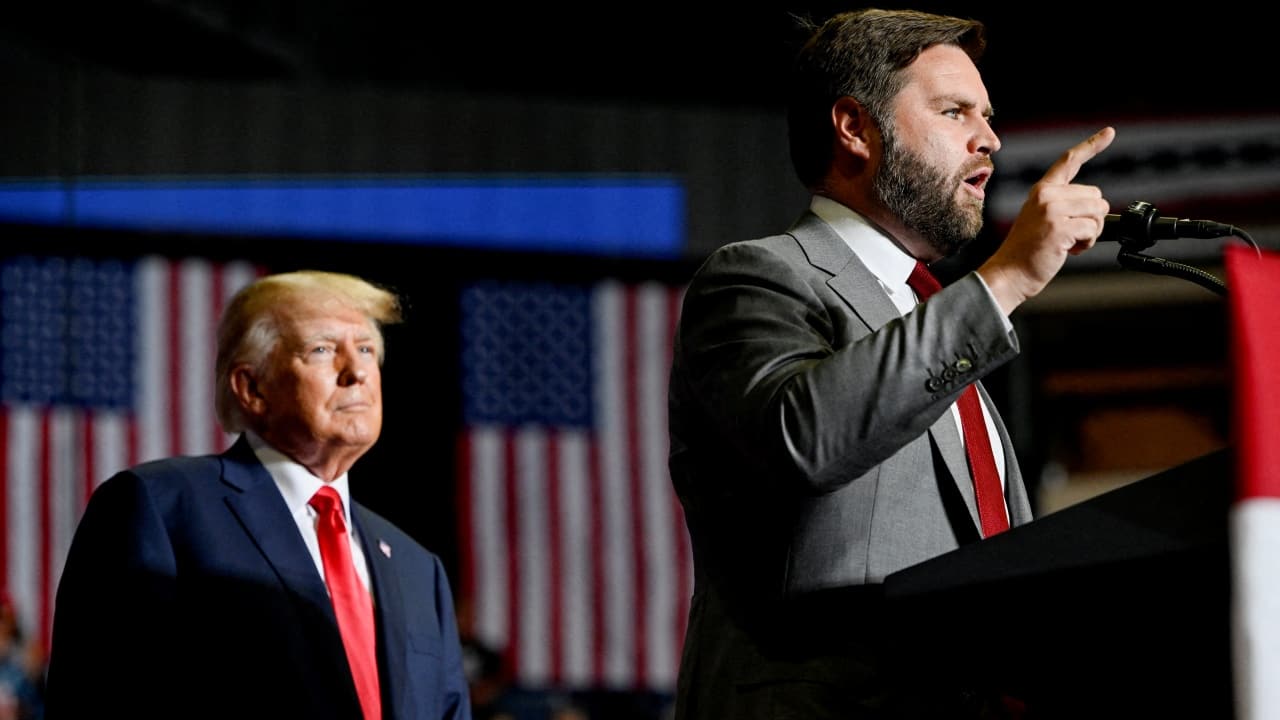
US Vice President JD Vance is leading a push for a new ceasefire with Iran and revived nuclear talks. He held near-daily discussions with mediators over the past two weeks. President Donald Trump said, "We're talking to them." Despite these efforts, officials noted that progress remains very slow right now.
US Vice President JD Vance is leading behind-the-scenes efforts to secure a new ceasefire with Iran and revive stalled nuclear negotiations, holding near-daily discussions with Qatari and Pakistani mediators over the past two weeks, Axios reported on Friday, citing two sources familiar with the matter. The diplomatic push comes as US President Donald Trump remains open to negotiations, although the US military is prepared to launch further strikes against Iran if ordered. Vance has been in regular contact with Qatari Prime Minister Sheikh Mohammed bin Abdulrahman Al-Thani, Pakistan's Army Chief Field Marshal Asim Munir and other mediators to discuss the possibility of a technical meeting between US and Iranian officials in the coming days, according to the report.
White House envoy Steve Witkoff and Trump's adviser and son-in-law Jared Kushner are also involved in the diplomatic efforts. Vance's letter to Iranian official Axios reported that Vance sent a letter two weeks ago to Mohsen Rezaei, secretary of Iran's Supreme National Security Council, proposing a resumption of direct negotiations. Iranian officials indicated that the communication had generated positive momentum towards reviving talks. The two sides have also discussed arranging a technical meeting involving American and Iranian representatives. However, no meeting has been finalised, and sources involved in the mediation described progress as very slow.
Vance's involvement is significant given his earlier opposition to the war and his preference for a diplomatic solution. Before the conflict began in late February, he had reportedly been among the most sceptical voices within Trump's inner circle about military intervention. He had previously led the US negotiating team during an April summit on Iran in Islamabad and played a role in securing a bilateral memorandum of understanding in June. Vance later headed the American delegation for direct talks in Switzerland, which, according to the report, resulted in Tehran pledging to allow UN inspectors back into its nuclear facilities.
However, the diplomatic efforts subsequently faltered after units of Iran's Islamic Revolutionary Guard Corps resumed attacks on commercial shipping. Trump keeps diplomatic channel open Asked about Washington's message to Tehran on Friday, Trump told reporters, "We're talking to them." The US president also spoke with Qatar's Emir Sheikh Tamim bin Hamad Al-Thani on Friday about efforts to bridge differences between Washington and Tehran. In a statement, the Qatari emir's office stressed the need to continue dialogue and pursue diplomatic means to resolve differences, prevent further regional escalation and safeguard freedom of maritime navigation and energy supplies.
Separately, Qatar's prime minister said on Friday that discussions with the Trump administration had continued after the midterm elections, although at a slower pace. He added that Washington remained committed to pursuing a diplomatic solution. According to Axios, Trump is willing to give negotiations more time. However, US forces remain prepared to carry out renewed strikes at relatively short notice if the president orders military action. Military tensions continue alongside negotiations The diplomatic push is unfolding alongside continued military tensions between the two countries. On Friday, the US military struck an anti-aircraft missile launcher on Iran's Qeshm Island in the Strait of Hormuz after it allegedly fired a missile towards a US fighter jet, Trump confirmed.
The strike underscores the contrast between Washington's diplomatic efforts and its continued military operations, with the administration keeping the option of further military action open. Vance's diplomatic involvement also comes amid growing political pressure on the Trump administration following the Republican Party's losses in the midterm elections. On Wednesday, Vance blamed the Iran conflict for the party's poor electoral performance, arguing that the war had contributed to voters turning against Republicans. His criticism reflects his longstanding preference for an America First approach that prioritises domestic interests over overseas military engagements.
His current efforts to revive negotiations are also in line with his opposition to prolonged US military involvement overseas.