
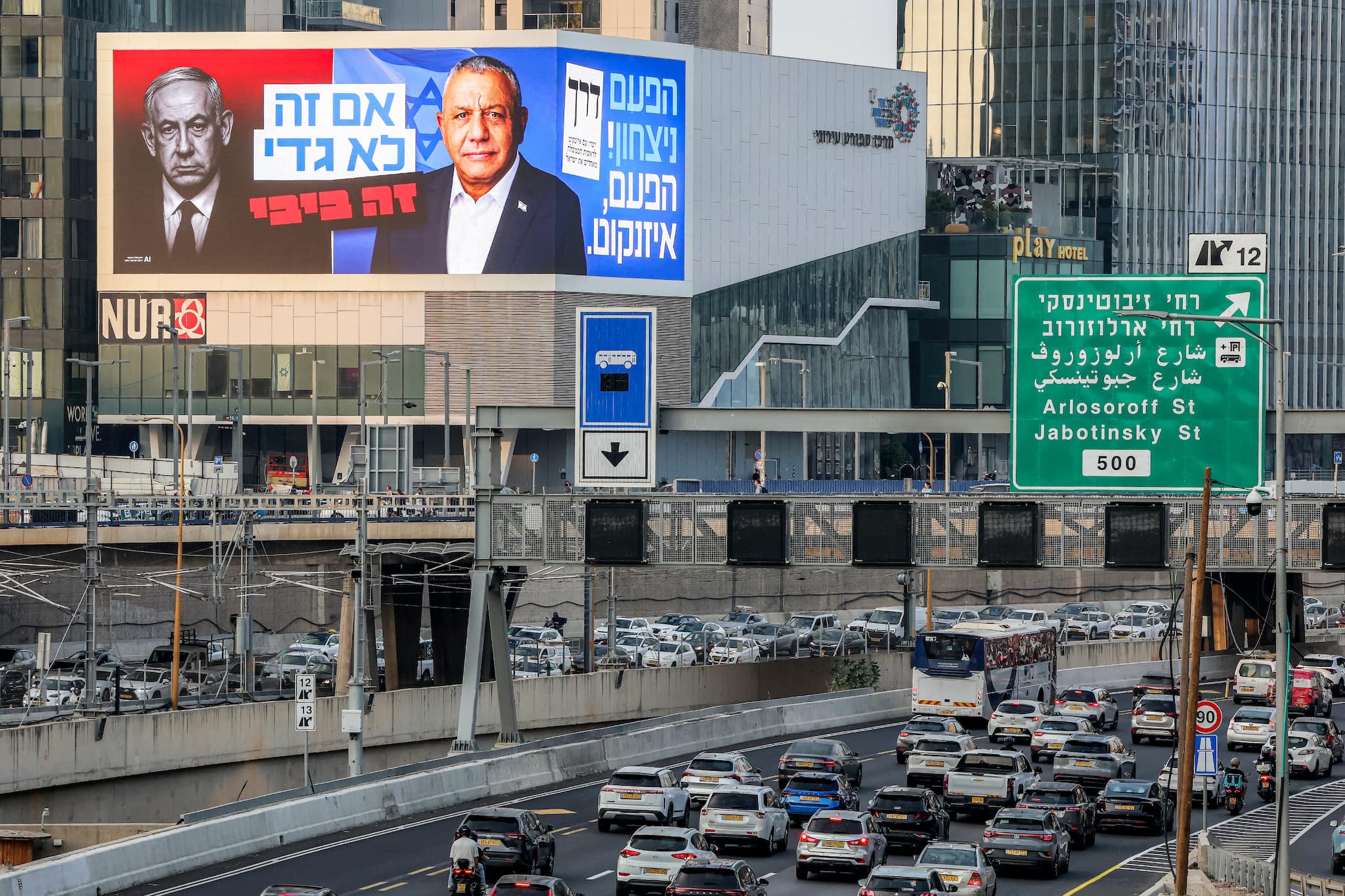
Israelis head to the polls on October 27 in a closely contested election. Prime Minister Benjamin Netanyahu faces former IDF chief Gadi Eisenkot, whose Yashar party leads in many polls. The result will shape Israel’s approach to the Iran war and its strategic partnership with India as voters demand new accountability.
Israelis head to the polls on October 27 in a closely contested election that could determine whether Prime Minister Benjamin Netanyahu extends his political dominance or gives way to a new government led by his challengers. The result could shape Israel's approach to Iran, the war in Gaza, relations with the United States and its growing strategic partnership with India. Opinion polls have placed former Israel Defence Forces (IDF) chief Gadi Eisenkot's Yashar party ahead of Netanyahu's Likud in several surveys. However, neither the ruling coalition nor the opposition is projected to secure the 61 seats required for a majority in the 120-member Knesset, Israel's parliament. The election comes three years after the Hamas-led October 7, 2023, attack, which exposed major security failures and triggered Israel's subsequent military campaigns. Accountability for the attack, compulsory military service, the economy and Israel's international standing have become central electoral issues. Who are the main contenders? Benjamin Netanyahu: Israel's longest-serving prime minister leads the right-wing Likud party and relies on far-right and ultra-Orthodox partners. His campaign is built around national security and his record of military action against Israel's adversaries. However, he faces criticism over the October 7 security failures, his resistance to a state commission of inquiry and the influence of his coalition partners. US President Donald Trump has endorsed Netanyahu, calling him a "great warrior prime minister". The endorsement reinforces their longstanding relationship, although Netanyahu has also faced disagreements with Washington over regional military operations 2. Gadi Eisenkot: The former IDF chief of staff has emerged as Netanyahu's principal challenger. His Yashar party has performed strongly in recent polls, with some surveys projecting it to win around 22-23 seats. Eisenkot joined Netanyahu's wartime government after the October 7 attack but left in June 2024, accusing the leadership of lacking a clear strategy. His son was killed fighting in Gaza in December 2023. Eisenkot promises greater accountability for the October 7 failures and mandatory military or national service. However, he is not a peace candidate: he opposes Iran acquiring nuclear weapons and wants Hamas's military capabilities dismantled. Other opposition figures, including former prime minister Naftali Bennett and former defence minister Avigdor Liberman, could also influence coalition negotiations. What happens if Netanyahu wins? A Netanyahu victory would likely preserve the current government's hardline security approach, particularly towards Iran, Hamas and Hezbollah. Israel's confrontation with Tehran could continue, with further military action remaining possible if its leadership believes Iran poses an unacceptable nuclear or security threat. Netanyahu has advocated removing Iran's ruling establishment as a way to eliminate the threat. A renewed war would nevertheless depend on military developments, US involvement and the calculations of both sides. For India, a Netanyahu victory would offer continuity in a relationship that has expanded across defence, intelligence, agriculture and technology. Netanyahu's close relationship with Prime Minister Narendra Modi has been a prominent feature of bilateral ties. However, continued military escalation could complicate India's diplomatic balancing act. New Delhi has strategic interests in Israel while maintaining relations with Iran and the wider Gulf region, including energy supplies, trade and connectivity projects. What if Netanyahu loses? An Eisenkot-led government could bring changes in political accountability, relations with Western countries and the influence of Israel's far-right parties. It could also be more open to diplomatic initiatives over Gaza and regional security. However, a change in leadership would not necessarily end the Iran conflict. Eisenkot shares Netanyahu's central objective of preventing Iran from acquiring nuclear weapons, although he has criticised the absence of a clear strategy and emphasised that military gains must be accompanied by diplomacy. Eisenkot has also pledged to end Hamas rule in Gaza within 18 months. Yet his opposition to Palestinian statehood and his insistence on Israeli security control indicate that a new government would not automatically deliver a major shift in Palestinian policy. For India, an opposition victory could mean a new leadership dynamic in bilateral relations. Defence and technology cooperation are likely to remain important, although India would need to establish a working relationship with the new prime minister. A less confrontational regional approach could also create diplomatic opportunities for India. Why the election matters beyond Israel The outcome may be determined as much by coalition arithmetic as by which party finishes first. Israel's proportional electoral system requires a governing majority, and disagreements among opposition parties could leave Netanyahu in power or produce a prolonged political deadlock. For India, the key issue is continuity in strategic cooperation alongside the risks posed by a wider Middle East conflict. For Iran, the election could influence the timing and intensity of future military action, but neither leading contender has signalled a willingness to abandon Israel's core security objectives. A new prime minister could change the methods Israel uses, its diplomatic posture and its domestic priorities. Whether that translates into a lasting reduction in regional tensions remains uncertain.