
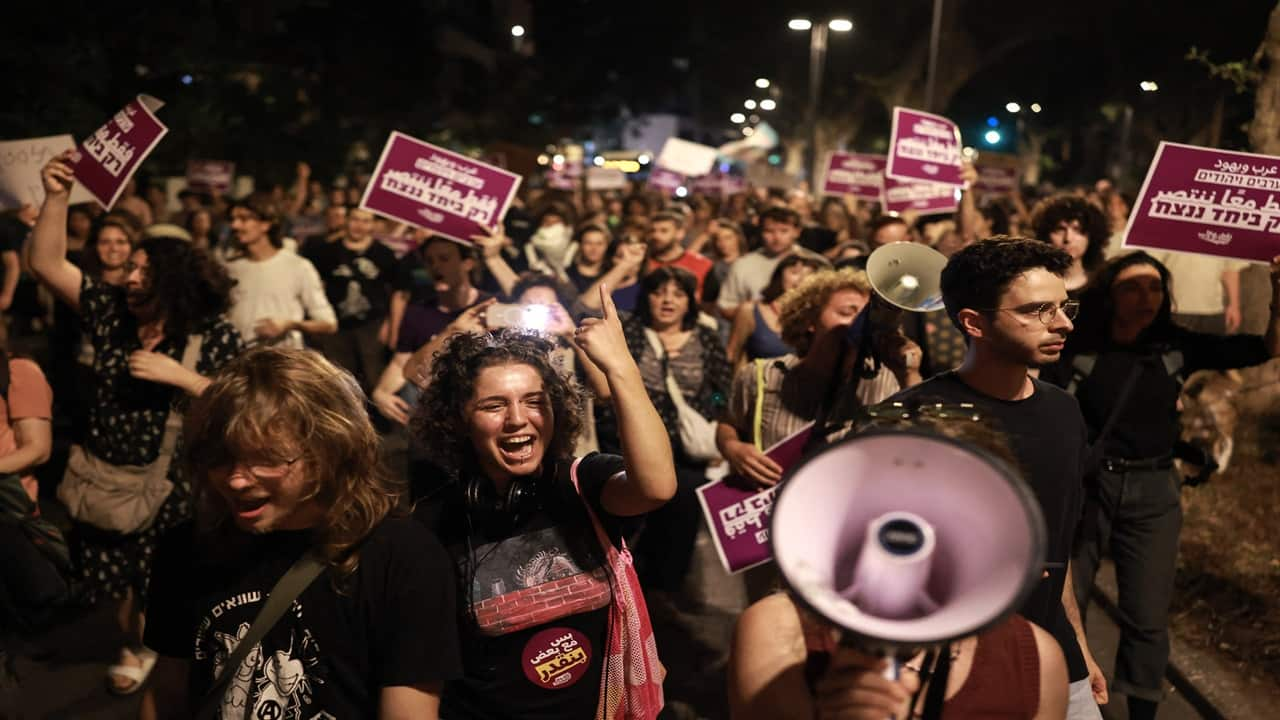
Arab parties emerged as power brokers in Israel’s election after Benjamin Netanyahu’s bloc fell short of a majority. With 19 seats, these parties now hold the key to forming the next government. Ahmad Tibi said, "the opposition had approached him about replacing the Knesset speaker," showing their new political influence.
Arab parties have emerged as the biggest power brokers in Israel's post-election political deadlock, with their combined 19 seats potentially determining who forms the next government after Prime Minister Benjamin Netanyahu's right-wing bloc fell short of a parliamentary majority. The final results from Israel's 120-member Knesset show Netanyahu's Likud-led coalition securing 53 seats, while the opposition bloc led by former military chief Gadi Eisenkot won 48. With neither side reaching the 61 seats required for a majority, the Arab-led parties, which secured 19 seats, have acquired considerable leverage in government formation. The result marks a significant electoral breakthrough for Israel's Arab minority, which accounts for around 21% of the country's population. Their increased parliamentary representation has also brought a long-standing political question back into focus - whether Arab parties can translate their electoral strength into a meaningful role in governing Israel. While the opposition could theoretically cross the majority threshold with Arab support, ideological divisions within its ranks and resistance to depending on Arab lawmakers threaten to complicate the negotiations. The Arab representation in the new Knesset comprises the Joint List and the United Arab List, also known as Ra'am, led by Mansour Abbas. Their combined 19 seats give them the ability to influence parliamentary decisions even if they do not become part of the next governing coalition. The increased representation follows growing dissatisfaction within Arab communities over the policies of Netanyahu's far-right government, particularly concerns over discrimination, rising violent crime and inadequate government intervention in Arab towns. Arab political leaders have argued that the community has faced increasing marginalisation despite being an integral part of Israeli society. Ahead of the election, party leaders had urged Arab voters to turn out in large numbers to challenge the government's policies. The outcome has given them a stronger parliamentary position than either of the two main political blocs can comfortably ignore. Their potential influence extends beyond government formation. Even without joining a coalition, Arab lawmakers could support opposition efforts to replace the Knesset speaker, influence parliamentary appointments and help shape the legislative agenda. Ahmad Tibi, one of the leaders of the Joint List, told Army Radio that the opposition had approached him about replacing the Knesset speaker. He indicated that his party would support the opposition's candidate. Despite the arithmetic favouring cooperation, securing Arab support will not be straightforward. Eisenkot, Netanyahu's principal rival and leader of the Yashar party, has indicated that he is open to working with Arab-led parties under certain conditions. However, key members of his opposition grouping, including former prime minister Naftali Bennett and former defence minister Avigdor Liberman, oppose any government that depends on Arab parties, either as coalition members or external supporters. This creates a major obstacle for an opposition alliance that needs Arab backing to reach the majority mark. Israel has a precedent for Arab participation in government. In 2021, Ra'am became the first Arab party to join a governing coalition, helping an eight-party alliance led by Bennett remove Netanyahu from office. That government, however, collapsed after just over a year. For Arab parties, the present election offers another opportunity to secure a greater say in policymaking. Their priorities have included addressing violent crime, improving public services and securing greater investment in Arab communities. The Arab parties' electoral gains have also triggered a political controversy, with Netanyahu and his far-right allies alleging that the results were influenced by voter fraud, intimidation and foreign funding. Netanyahu described the controversy as an "earthquake" and claimed that foreign entities had interfered in the election in favour of Arab parties. His Likud party amplified allegations that the election had been "stolen", while National Security Minister Itamar Ben Gvir called for the arrest of Arab party leaders and alleged that money from Qatar was involved. The allegations have not been substantiated. Qatar has categorically denied interfering in Israel's elections or funding activities intended to influence the vote, accusing Israeli politicians of using its name to serve domestic political interests. Arab political leaders have also rejected the accusations. Ra'am chief Mansour Abbas welcomed an investigation into the allegations but denied his party's involvement and pledged cooperation with authorities. Joint List chairman Sami Abou Shahadeh accused Netanyahu and his allies of escalating hostility towards Arab parties and the wider Arab population. Israel's Central Elections Committee has also pushed back against claims of widespread electoral malpractice. Acting director general Dean Livne said the election was conducted lawfully and that there was no basis for allegations of systematic violations of electoral integrity. However, committee chair Justice Noam Sohlberg has directed Shin Bet chief David Zini to investigate suspicions of improper foreign influence, asking the agency to submit its findings within a week. Shin Bet has clarified that its investigation is limited in scope and does not implicate the broader Arab community. Israel's President Isaac Herzog has also called for a thorough investigation while cautioning against tarnishing an entire community that exercised its democratic right to vote. Eisenkot, meanwhile, has accused Netanyahu of using unverified allegations to delegitimise the election outcome and potentially delay the inauguration of the 26th Knesset. The investigation into alleged foreign interference could further complicate the possibility of Arab parties supporting an opposition-led government. Netanyahu's opponents have accused him of using the allegations to discourage cooperation between Jewish opposition parties and Arab lawmakers. The opposition could attempt to form a government under Eisenkot with external support from Arab parties. But the resistance from Bennett and Liberman makes this route politically difficult. Another possibility is a national unity government involving Likud and opposition parties, although Eisenkot has ruled out serving under Netanyahu. Netanyahu could also attempt to attract individual lawmakers or parties from the opposition, but the principal opposition leaders have publicly rejected joining his government. If none of these arrangements succeeds, Israel could face another election as early as spring 2027, prolonging the political uncertainty. President Isaac Herzog will consult party leaders and appoint a candidate he believes has the best chance of forming a government. The candidate will initially have 28 days to assemble a coalition, with a possible 14-day extension. The election has delivered more than an increase in parliamentary seats for Israel's Arab parties. It has placed them at the centre of negotiations over the country's political future and reopened the debate over their representation, participation and influence in national governance. Whether that electoral strength translates into a direct role in government or remains limited to parliamentary support will depend on how far the opposition is willing to go in accepting Arab backing.