
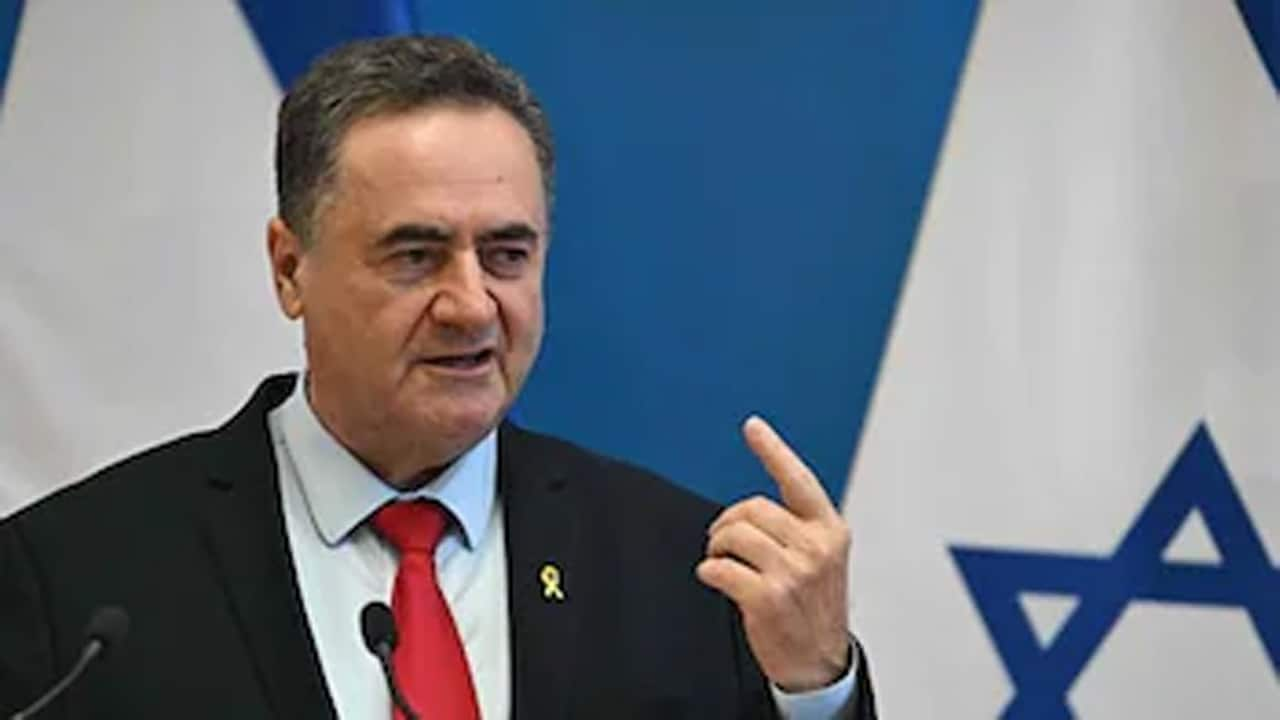
Israeli Defence Minister Israel Katz said on Sunday that the mission against Iran is not complete. He warned Hezbollah against joining any attack on Israel, saying the group would suffer severe blows. Meanwhile, President Isaac Herzog selected Gadi Eisenkot to form the next government after the October 27 election.
Israeli Defence Minister Israel Katz on Sunday said Israel's mission against Iran was "not complete", accusing Tehran of seeking to revive its efforts to develop nuclear weapons. He also warned Lebanon-based Hezbollah against joining Iran in any renewed attack on Israel. "With regard to Iran, the mission is still not complete. Iran is trying to renew its efforts to obtain nuclear weapons -- alongside other grave efforts that place the State of Israel in real danger," Katz said at a memorial ceremony for Israeli soldiers killed during the 1956 Suez War. Katz said Israel must remain prepared to respond to potential threats and protect its citizens.
He stressed that political disagreements should not come in the way of national security. "We may argue and we may disagree, but when the security of the state is at stake, we must know how to rise above our disputes," he said, reiterating Prime Minister Benjamin Netanyahu's call for national unity. Katz also warned Hezbollah against entering any renewed confrontation alongside Iran. "If the terrorist organisation Hezbollah chooses to join Iran in an attack on Israel, it will suffer extremely severe blows," he said. He added that Israel would not withdraw from the security zones it occupies in Gaza, Lebanon and Syria.
Netanyahu seeks unity government amid political setback Katz's remarks come as Netanyahu faces a major political challenge, with Israeli President Isaac Herzog selecting opposition leader Gadi Eisenkot to form the country's next government. Herzog announced his decision on Saturday after consultations with political factions in the 120-member Knesset. Factions representing 67 lawmakers recommended Eisenkot for the mandate, while those representing 46 backed Netanyahu. A faction comprising seven lawmakers did not recommend either candidate. Eisenkot, a retired military chief who leads the centrist Yashar party, is due to formally receive the mandate at a ceremony at the President's Residence on Sunday.
He will have 28 days to form a government, with a possible extension of up to 14 additional days. The recommendations for Eisenkot included support from the Jewish-led opposition bloc, the Arab Ra'am party and the Joint List. However, the October 27 election did not give either side a parliamentary majority. Netanyahu's right-wing and religious bloc secured 53 of the Knesset's 120 seats, while Eisenkot's four-party alliance won 48. Arab-led parties secured the remaining 19 seats. The ultra-Orthodox United Torah Judaism party abstained from recommending either candidate, marking a split in its longstanding alliance with Netanyahu.
Netanyahu had called on opposition parties to join a proposed national unity government, arguing that a broad political alliance was needed to address Israel's security challenges, particularly the threat from Iran. In a televised address on Saturday, he called for a government comprising "all parties of the national camp and all Zionist parties that wish to protect our country". The proposal was rejected by opposition leaders. Democratic Party chairman Yair Golan said Netanyahu's government must be replaced by an administration focused on protecting Israel's democracy, security and future. Netanyahu has threatened further strikes on Iran Netanyahu has repeatedly threatened fresh strikes against Iran in recent weeks.
However, it remains unclear whether he has the backing of US President Donald Trump, his close ally, following the Republican Party's poor performance in Tuesday's US midterm elections. Israel's Channel 12 reported on Friday that Netanyahu and the Mossad intelligence service had attempted an operation against Iran on the eve of Israel's October 27 election, but that the United States discovered the plan and stopped it. Iran has been targeted twice since last year in major Israeli-US bombing campaigns. Tehran denies seeking to develop nuclear weapons. The wider regional conflict escalated after Hamas, the Palestinian militant group backed by Iran, launched an unprecedented attack on Israel on October 7, 2023.
Israel subsequently launched its military campaign in Gaza and invaded Lebanon after Hezbollah began firing across the border in solidarity with Iran. Israel has also moved beyond a former ceasefire line to occupy part of Syria following the fall of longtime leader Bashar al-Assad in 2024. Katz's warning of further action against Iran comes as Netanyahu faces uncertainty over his political future. While the defence minister has called for unity against external threats, Eisenkot's efforts to form a new government could determine whether Netanyahu remains in power.