
Iran threatened to target dams, ports, and power plants near American and Israeli military bases on Tuesday. Speaker Mohammad Bagher Ghalibaf said, "New rule: Any dam, port, or power plant near a US or Israeli base is dual-use." This warning followed reports that Iranian dams might support military facilities.
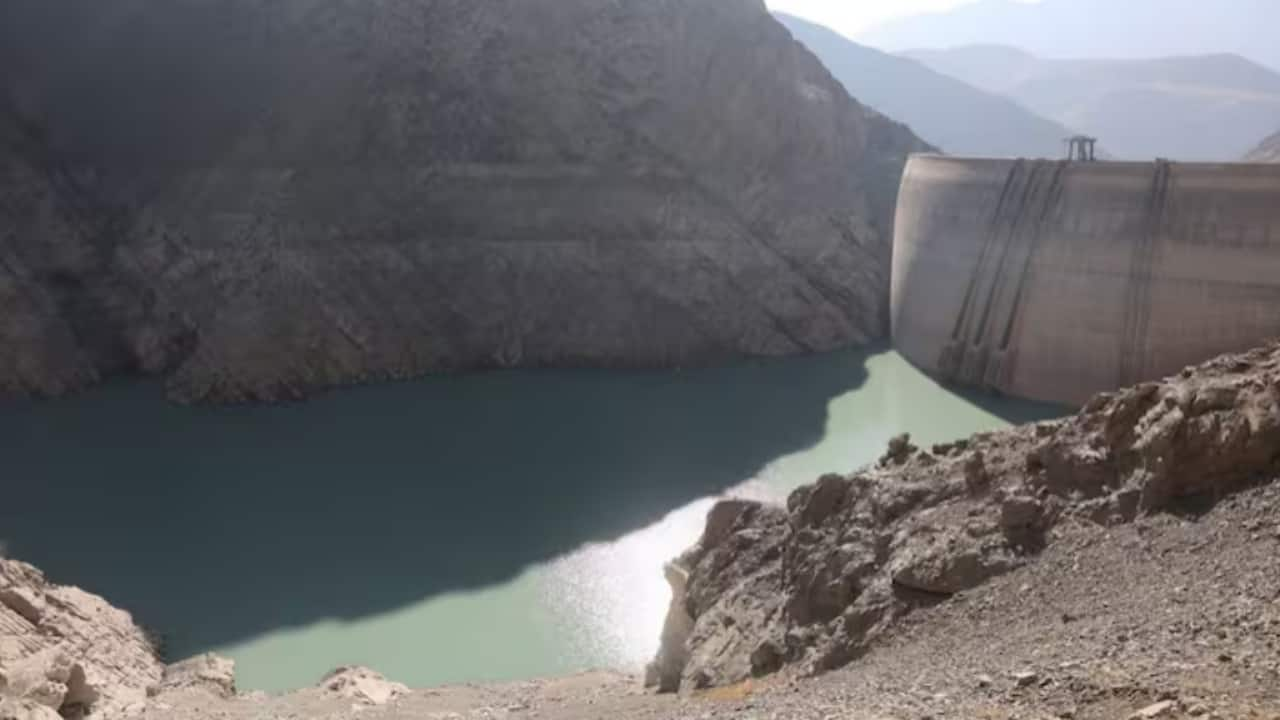
Iran has threatened to target dams, ports and power plants near American and Israeli military bases, warning that civilian infrastructure could be considered legitimate targets under the same logic used to justify strikes on Iranian facilities. Iranian parliament speaker Mohammad Bagher Ghalibaf issued the warning on Tuesday in response to a report by The New York Times suggesting that some of Iran's dams and water-transfer projects may have been developed partly to support the country's underground military facilities and missile infrastructure. Ghalibaf accused the United States and Israel of using the report as a pretext to target civilian infrastructure in Iran.
"Prepping the next round on civilian infra, their 'experts' tell NYT: 'dams near Iran's missile sites are dual-use.' Cool. New rule: Any dam, port, or power plant near a US or Israeli base is dual-use. We'll apply your logic consistently and even-handedly," Ghalibaf wrote on X. The warning raises concerns over the potential expansion of attacks to critical civilian infrastructure as the conflict between Iran and the US-Israel alliance continues. Prepping the next round on civilian infra, their "experts" tell NYT: "dams near Iran's missile sites are dual-use." Cool. New rule: Any dam, port, or power plant near a US or Israeli base is dual-use.
We'll apply your logic consistently and even-handedly. https://t.co/ynpDMvgLSV -- محمدباقر قالیباف | MB Ghalibaf (@mb_ghalibaf) November 17, 2026 Why Iran has threatened infrastructure near US, Israeli bases The New York Times report examined Iran's network of at least 533 dams and suggested that some could serve purposes beyond water storage and management. It noted that the locations of certain dams overlap with areas associated with underground military facilities. However, the report did not establish a definitive link between the dams and Iran's missile infrastructure. Danny Citrinowicz, a former Israeli intelligence officer, said the possibility of infrastructure serving both civilian and military purposes could complicate any assessment of potential targets.
Other experts have questioned the suggestion that Iranian dams have significant military utility. Esfandyar Batmanghelidj said fewer than 50 of Iran's more than 500 large dams have turbines to generate electricity. He also pointed to the role of politically connected construction companies in the country's infrastructure projects. Water and infrastructure expert Nima Shokri cautioned against assuming that a dam has a military purpose simply because it is located near a military facility. Proximity alone, he argued, does not establish the intended use of the infrastructure. Iran reports strike on US radar system in Bahrain Separately, Iran's Islamic Revolutionary Guard Corps (IRGC) said it had carried out a drone strike targeting a US-operated radar system at Sheikh Isa Air Base in Bahrain.
The IRGC said the operation was in response to repeated violations of Iranian airspace by US military drones. "Combat drones belonging to the Revolutionary Guards carried out a precision operation this morning, targeting a radar system operated by US forces at the Sheikh Isa Air Base in Bahrain," the Guards said in a statement published by Sepah News, its official media outlet. Explosions were reported in Bahrain's capital, Manama, after residents received mobile phone alerts warning of a potential threat. Bahrain's Interior Ministry urged citizens and residents to remain calm, move to the nearest safe location and follow official channels for updates.
It subsequently issued an all-clear alert. AFP journalists reported hearing explosions in the Bahraini capital. Iran warns against attacks on civilian infrastructure The latest warning from Ghalibaf comes amid growing concerns over the potential targeting of essential civilian infrastructure in the conflict. Iranian Foreign Ministry spokesperson Esmaeil Baghaei also criticised remarks by US Secretary of State Marco Rubio on the relationship between military power and international law. Baghaei questioned whether the US believed military strength placed it above international legal obligations, warning that such an approach could undermine the international order.
He urged the international community not to assume it would remain insulated from the consequences of powerful nations disregarding international law. Meanwhile, Ghalibaf's warning that Tehran could classify dams, ports and power plants near US and Israeli military bases as dual-use facilities has raised the stakes over the protection of civilian infrastructure.