
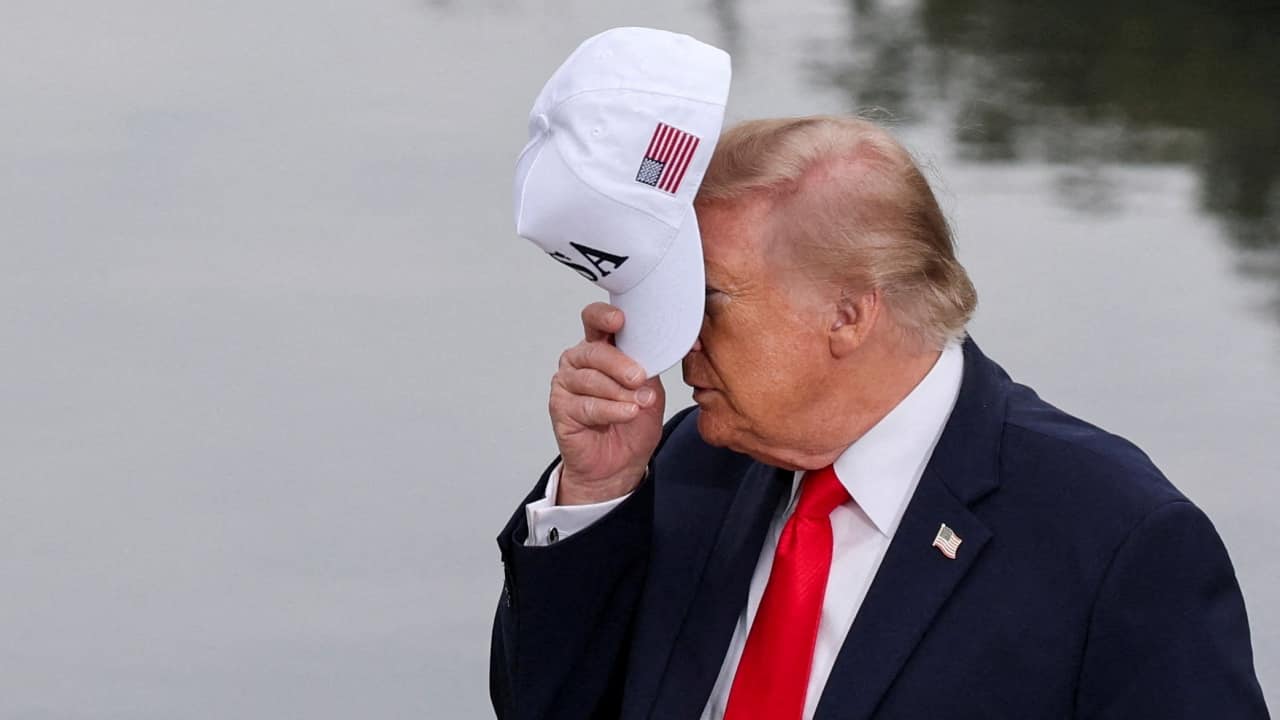
Iran said US voters rejected the war after the Republican Party faced a midterm setback. Parliament Speaker Mohammad Bagher Ghalibaf said, "We endorse this message." President Trump defended his military campaign despite rising petrol prices. Meanwhile, tensions grew as the IRGC reported four oil tankers caught fire near the Strait.
Iran has interpreted the Republican Party's poor performance in the US midterm elections as a public rejection of President Donald Trump's military campaign against Tehran, with Parliament Speaker Mohammad Bagher Ghalibaf saying American voters had delivered a clear message against war. Ghalibaf, who is Iran's chief negotiator in talks with Washington, reacted to the election results in a post on X, saying, "We endorse this message". He cautioned the US administration against disregarding the public's mandate and continuing to serve "international paymasters and blackmailers", warning that Iran's "NO comes with a Nightmare".
Trump has himself acknowledged that the eight-month-long conflict and the subsequent rise in petrol prices contributed to the Republicans' electoral setback. However, the US President has defended his decision to launch the joint American-Israeli offensive against Iran in February, insisting he would make the same choice again. "I think a part of it was Iran," Trump told Fox News, while suggesting that although Americans supported his actions against Tehran, they were less willing to face the immediate financial consequences of rising gasoline prices. In an interview with CBS News, Trump also asserted that the conflict would continue "when I say it ends".
He has repeatedly warned that military operations by the US and Israel could resume on a much larger scale if diplomatic negotiations fail. Tehran, meanwhile, has shown little indication of expecting a fundamental shift in Washington's position. Iran's Supreme Leader Mojtaba Khamenei, who has not made a public appearance since reportedly sustaining serious injuries in an Israeli air strike on the opening day of the war, said those anticipating a change in America's approach towards Iran were mistaken. In a statement, Khamenei said anyone expecting a shift in America's "hostility towards the Iranian nation" was "gravely mistaken".
He further warned that a fresh round of fighting could have "much wider dimensions". Military tensions have also continued around the strategically important Strait of Hormuz, with Iran's Islamic Revolutionary Guard Corps (IRGC) claiming on Wednesday that four oil tankers caught fire after hitting naval mines in the waterway. According to the IRGC, two vessels remained on fire, while two others were intercepted for allegedly attempting to navigate a restricted southern passage. Separately, the UK Maritime Trade Operations (UKMTO) centre said a tanker was hit by two unidentified projectiles on Tuesday evening, approximately 14 nautical miles north-east of Limah, near Oman's Musandam peninsula.
No casualties were reported in the incident. The IRGC also claimed on Wednesday that it had brought down another American MQ-9 drone over the Strait of Hormuz. A similar claim was made on Monday night, when US officials said American forces had carried out limited strikes on Iran's Qeshm Island in response to attacks on a US aircraft. Before the midterm elections, Trump had indicated that he was comfortable with the direction of the conflict, even suggesting that he did not consider it a "real" war. Speaking to the Financial Times, he said the US was "locked and loaded if we need to go, but there may be no need for it", in response to a question about Israeli Prime Minister Benjamin Netanyahu's reported indications of a possible strike on Iran.
Diplomatic efforts to end the conflict have meanwhile made little progress, with indirect negotiations between Washington and Tehran remaining stalled for months. Iranian President Masoud Pezeshkian said on Tuesday that his administration had been pursuing a diplomatic solution and warned that "no-one will benefit from this war" if hostilities resume. He also disclosed that the Supreme Leader had authorised the government to negotiate on matters that were previously considered off-limits. Iranian Foreign Ministry spokesperson Esmaeil Baqai said on Monday that the indirect negotiations, being mediated by Qatar, were based on a seven-point proposal submitted by Tehran in September.
The proposal had subsequently been shortened and could be put into effect within two days, he said. At the centre of the standoff is the Strait of Hormuz, a vital international shipping corridor that normally handles around one-fifth of global oil and gas shipments. The waterway has remained effectively shut since the conflict began, following Iranian attacks on commercial vessels and a US naval blockade.