
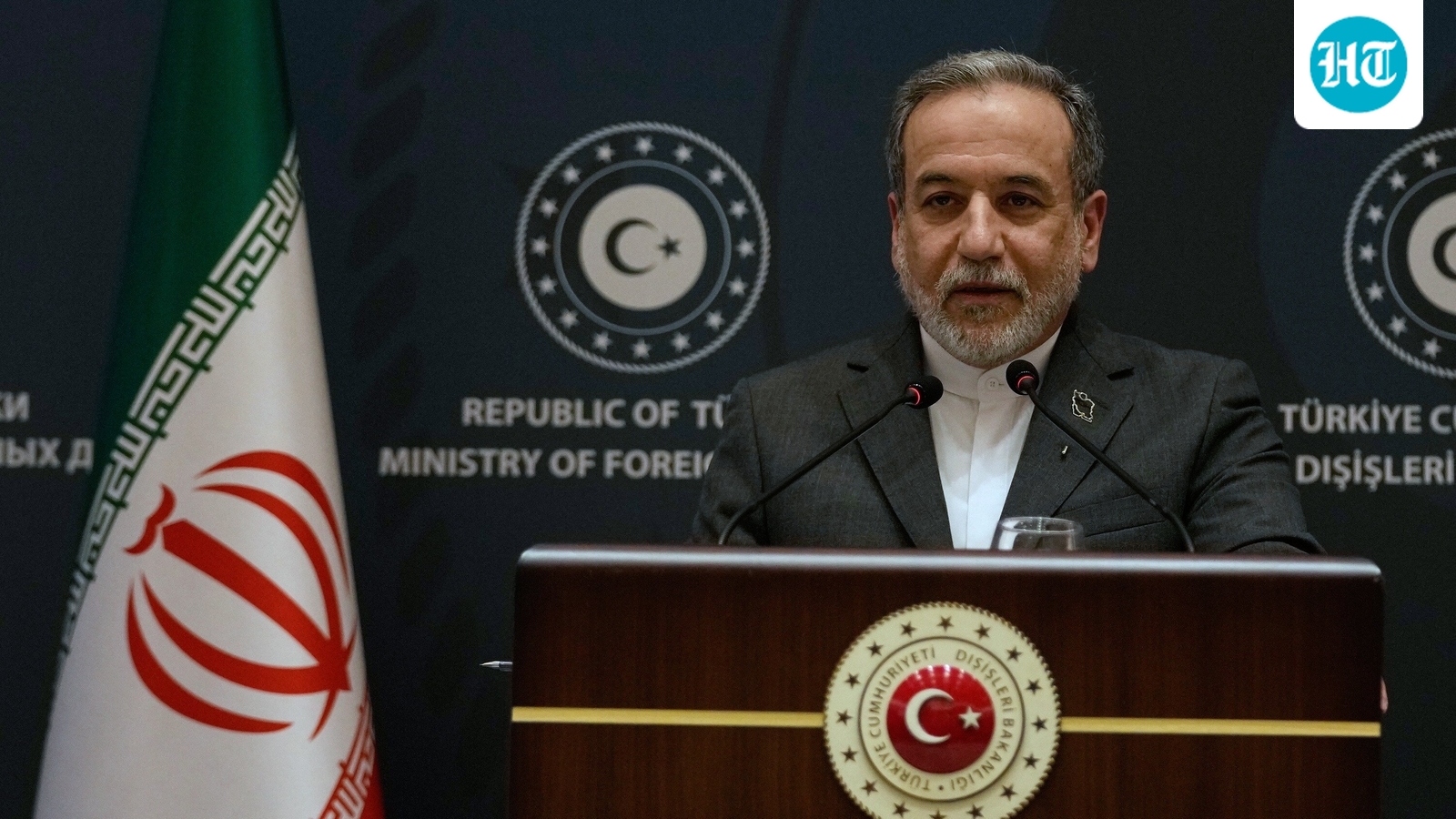
Iranian foreign minister Abbas Araghchi will visit Muscat on Tuesday to hold talks with his Omani counterpart. Araghchi said the continuation of diplomatic engagement would hinge on Washington's "political rationality." He recently warned that Iran would respond forcefully if the United States launched fresh military action against the country.
Iranian foreign minister Abbas Araghchi is set to visit Oman's Muscat on Tuesday. He will hold talks with his Omani counterpart, Iranian state news agency IRNA reported, citing foreign ministry spokesperson Esmail Baghae.
Araghchi had earlier described the indirect negotiations between Iran and the United States, facilitated by Qatar, as "very intense", The Jerusalem Post reported. However, the discussions, which continued over several days, failed to produce any major breakthrough or bring the two sides closer to an agreement.
Speaking to IRNA, the Iranian foreign minister said the continuation of diplomatic engagement would hinge on Washington's "political rationality". He also cautioned that Iran would respond forcefully if the US launched fresh military action against the country.
Last week, Araghchi gave an interview with state media where he put pressure on the US to accept Tehran's demands in the ongoing peace talks.
He followed it up with a post on X saying that their proposal to reopen the Strait of Hormuz within two days, if the US ends the conflict "on all fronts," still stands. He reiterated the adverse impact of the Iran war on the Republicans midterm results and urged the White House to accept its proposals. If not, Araghchi warned Iran will "rain down hell."
"American voters have made their choice," Abbas Araghchi wrote. "Time for the White House to make its own. Our 2-day proposal stands: meet the requirements, including end to war on all fronts, and you will see results.
"Or choose war, and see our alert and battle-hardened Warriors rain down hell."
Abbas Araghchi earlier told state media IRNA that there has been no progress made by mediators trying to negotiate a deal between Washington and Tehran since the results of the midterm elections came out.
"We now have to see how long it will take for them to digest these (election) results, in order to determine how we are going to move forward," Abbas Araghchi said. "For the past few days, there has been no more travel (by mediators), and the reason for this is the shock that the election results in the United States have caused to everyone," he added.
Araghchi further explained in the interview that the deal depends on "how much political rationality prevails on the American side and whether there is a will to take the wise path of diplomacy or, as in previous instances, to drag the situation toward aggression and military operations."
The top diplomat added that Iran is not ruling out "any possibility regarding the outbreak of war, and we are prepared for all scenarios."
"We have upgraded our weaponry, addressed our vulnerabilities, and tested new arms; our forces are at the highest level of readiness," Araghchi said.