
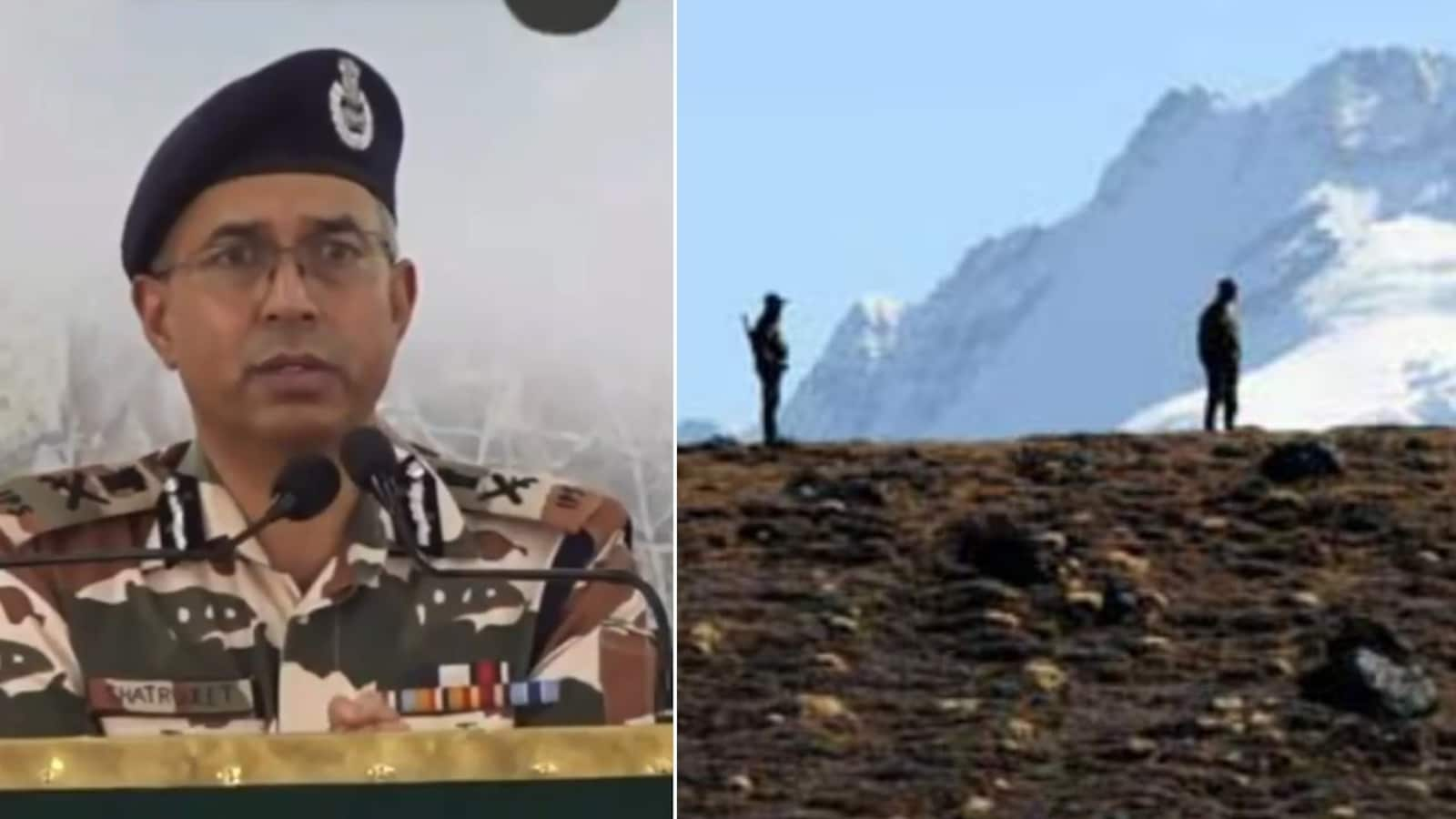
Indo-Tibetan Border Police director general Shatrujeet Kapur said Thursday that face-offs with China continue at several locations in Arunachal Pradesh. "In the past few-days, a situation arose where face-off happened at several locations in Arunachal and it still continues," Kapur said. The force also raised new Shaurya commandos for border security.
New Delhi:
Face-offs have happened with China at several locations along the border in Arunachal Pradesh in the past few days, and they still continue, the Indo-Tibetan Border Police (ITBP) director general Shatrujeet Kapur said Thursday.
"In the past few-days, a situation arose where face-off happened at several locations in Arunachal and it still continues," Kapur, who is set to retire at the end of this month, told his troops at a force base in Rajasthan's Alwar.
The ITBP chief added that a new combat team, the Shaurya commandos, has been raised. This team displayed its skills during the "ongoing" faceoff with the Chinese PLA troops at multiple places in Arunachal Pradesh, he said.
These commandos, the top officer said, will be in every border battalion and will give the force a distinct identity.
Sources say the ITBP chief's statement on China was made in the context of routine force deployment and preparedness along the India-China border, and was not in reference to any specific incident or event.
The Indo-Tibetan Border Police (ITBP), raised in 1962, guards the 3,488-km-long Line of Actual Control (LAC) with China.
The statement comes even as Chief of Defence Staff, General NS Raja Subramani, speaking at NDTV Defence Summit last month, said the situation along the Line of Actual Control (LAC) with China is currently stable and there is no cause for concern.
READ | "Situation On China Border Stable, No Cause For Concern": Chief Of Defence Staff To NDTV
"I think the border situation at the moment is stable. You have also seen recently the meeting that was held between President Xi Jinping and Prime Minister Narendra Modi. Dialogue is the best methodology for defending as well as ensuring peace," General Subramani told NDTV in September.
"As far as the border situation is concerned, we have contacts at the ground level. Border Personnel Meetings are going on from time to time, and I do not see instability. The situation on the border is at the moment quite stable, and I don't think there's any cause for concern," he had said.
Just last week, External Affairs Minister S Jaishankar said peace and tranquillity in the border areas were essential to normalising India-China relations, stressing that any disturbance along the border would have consequences.
READ | "Boundary Has To Be Stable": S Jaishankar Sets Out India's Stand On China Ties
"If you asked me, compared to where you were in 2025, is the relationship better today? I would say yes. Compared to 2024, even more so," Jaishankar said at the Bloomberg New Economy Forum in Delhi.
The ITBP chief said the China front was our "most difficult" border, and China was a "powerful" neighbour and India's "biggest adversary," requiring enhanced capabilities to "counter" it.
"Drones have become a major challenge and an opportunity also. It will be difficult to compete with China using traditional methods. They have modernised and invested heavily in their PLA but drones are such that a small country can give a befitting contest to a bigger nation," he said.
"The role of traditional armies has changed since the drones arrived, and we must embrace drone and anti-drone systems in a big way," he said.
He informed the troops that a new course named 'Strike' has been developed to train ITBP personnel, which will enhance their capabilities to face Galwan-like situations. The entire force will undergo this training by the end of 2027.