
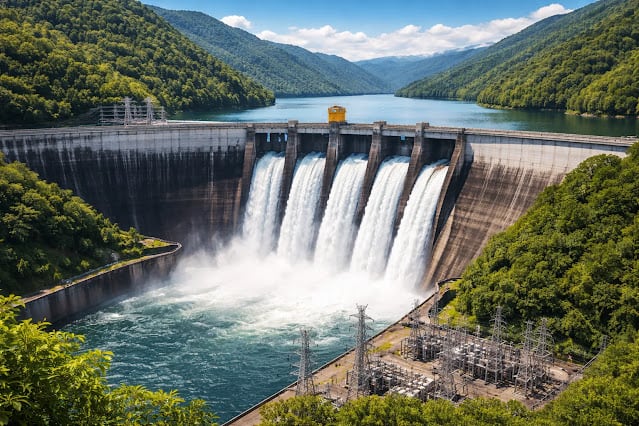
Violent protests against the proposed 11,200-megawatt Siang Upper Multipurpose Project in Arunachal Pradesh escalated over the weekend. Locals fear the dam will submerge 27 villages and displace many people. The government said the ongoing feasibility study is supposed to assess whether the proposed dam can be built in the region.
Market Mastery
Webinar by Vishal Malkan
Find the weak links
in your portfolio by Vishal Malkan
Violent protests against the proposed 11,200-megawatt (MW) Siang Upper Multipurpose Project in Arunachal Pradesh escalated over the weekend, with protesters setting fire to an NHPC office and a police station in Pasighat. The Centre has deployed around 250 Rapid Action Force personnel in the state following clashes that reportedly injured around 40 police personnel. Protesters are demanding a halt to survey work and the withdrawal of security forces.
At the heart of the unrest is a conflict between the government's push for a project it considers crucial to India's water security and hydropower capacity, and local communities' fears that the dam could submerge villages, displace residents and disrupt livelihoods and cultural heritage.
The project has gained strategic significance amid China's plans for a 60,000 MW hydropower project in Tibet, which has a proposed capacity around 5.4 times that of India's Upper Siang project.
What is the Upper Siang project?
The Siang Upper Multipurpose Project (SUMP), being developed by state-run NHPC, is a proposed 11,200 MW hydropower and water-storage project on the Siang river in Arunachal Pradesh.
Plans for dams on the river date back to 1982, and the Centre declared the Upper Siang project a National Project in 2008. If built at the proposed scale, it would be India's largest hydropower project.
The Siang is the Indian stretch of the Yarlung Tsangpo, which originates in Tibet and flows into Arunachal Pradesh before entering Assam and becoming part of the Brahmaputra river system.
The project is envisaged as a combination of electricity generation and large-scale water storage. Its final design, reservoir size and potential impact on local communities will be assessed through technical, geological and hydrological studies.
Why are locals opposing it?
The main concern is the potential loss of homes, farmland and ancestral land. The Siang Indigenous Farmers’ Forum has estimated that the proposed reservoir could submerge 27 villages and displace between 1 lakh and 1.5 lakh indigenous people.Residents also fear the loss of cultural heritage and disruption to livelihoods.
The region’s seismic risk has added to local concerns. Arunachal Pradesh falls in Seismic Zone V, a high-risk earthquake zone. Chief Minister Pema Khandu has said the ongoing feasibility study is supposed to assess whether the proposed dam can be technically built in the region.
The government says the ongoing preliminary feasibility report (PFR) is meant to establish whether the project can be built at all and does not amount to final approval. Locals, however, argue that allowing surveys to proceed risks advancing a project they oppose.
Why does the government want to build it?
China's plans for a 60,000 MW hydropower project in Tibet have added strategic urgency to India's proposed hydropower project on the Siang River.
The Indian government estimates that China's proposed dam could divert up to 40 billion cubic metres (BCM) of water, equivalent to 40 lakh crore litres—enough to meet the annual domestic water needs of around 81 crore people, assuming daily use of 135 litres per person.
The concern is particularly acute during the dry season, broadly December to March, when river flows are lower, and any reduction could have a greater impact on water availability downstream.
Arunachal Pradesh Deputy Chief Minister Chowna Mein has cited an estimated live storage capacity of about 9.2 BCM for the proposed Indian project. Live storage refers to the portion of a reservoir that can be used to regulate water releases.
Yet, a 9.2 BCM reservoir does not guarantee India’s dam can fully offset the impact of China’s project. Its effectiveness would depend on how it is operated and how much water flows into the river.
The project could also add substantial hydropower capacity. At 11,200 MW, it would be a major addition to India's installed electricity generation capacity. Hydropower can also provide flexibility to the electricity system, although actual generation would depend on water availability and the project's eventual operating arrangements.
“The project is expected to help with flood moderation, infrastructure development and local employment,” an official from the power ministry said.
Above all, Arunachal Pradesh accounts for about 38% of India’s total exploitable hydropower potential of 1,33,410 MW. Of the state’s 50,394 MW potential, only 1,115 MW, or around 2.2%, is operational.
NHPC had not responded to Moneycontrol’s queries by the time of publication.