
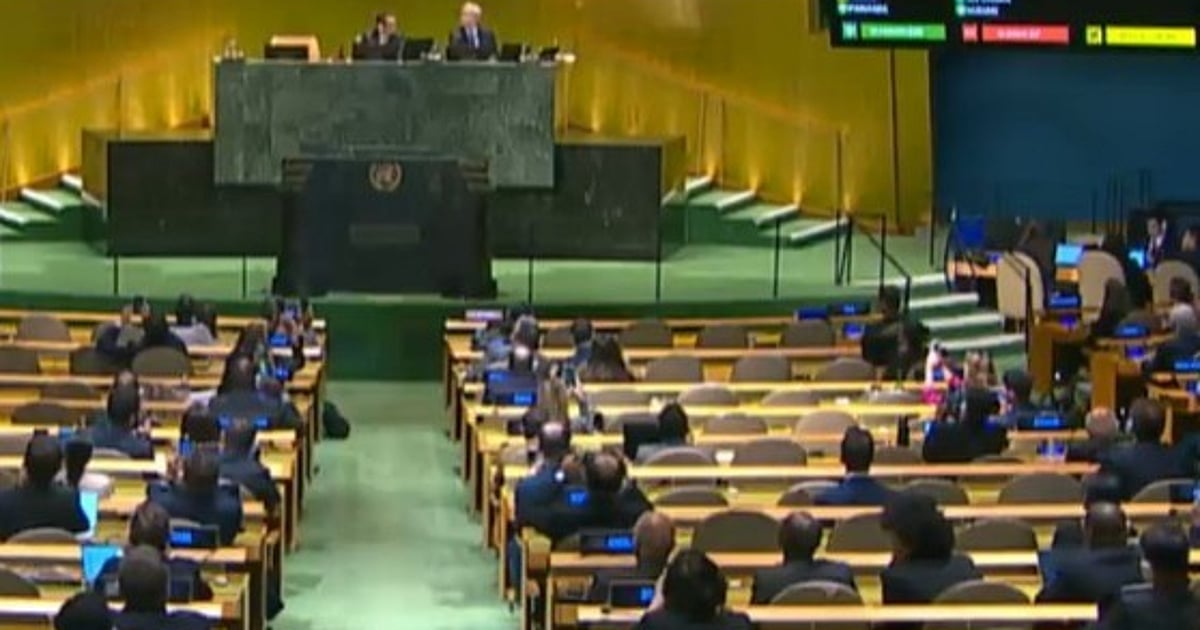
India backed a UN resolution on Wednesday urging an end to the US embargo on Cuba. The measure passed with 130 votes in favour. India said the restrictions should be lifted to support development, noting that food production fell by over half and many essential medicines are in short supply.
India backs a UN General Assembly resolution urging an end to the US embargo on Cuba
The resolution passes with 130 votes in favour, 17 against and 25 abstentions
New Delhi highlights medicine shortages and disruption to essential services as US and Cuban diplomats clash at the UN
India has voted in favour of a UN General Assembly resolution calling for an end to the United States' economic, commercial and financial embargo on Cuba , saying the restrictions should be lifted to support the island nation's development.
The 193-member Assembly adopted the resolution on Wednesday with 130 countries supporting it, 17 voting against and 25 abstaining. The vote reiterates the UN body's longstanding opposition to the embargo, although the resolution is not legally binding.
Presenting India's position, Soumya Nair, counsellor at its Permanent Mission to the UN, opposed measures whose effects extend beyond national borders and undermine other countries' sovereignty and development.
She urged countries to withdraw such laws and restrictions in keeping with their obligations under the UN Charter and international law. India's support for multilateralism, she said, reflected its belief that dialogue and diplomacy offered the best means of addressing international challenges.
.UN to vote on resolution condemning US embargo on Cuba amid escalating tensions. India flags shortages and disruption
Nair called for the embargo to be lifted promptly so that Cubans could engage more fully in international cooperation and pursue their development goals.
Citing a report by the UN Secretary-General, she said Cuba faced shortages affecting more than 60 per cent of essential medicines, while food production had fallen by over half during the past five years.
Restrictions on fuel exports had compounded the country's energy crisis, she added, disrupting healthcare, education, water supplies, food distribution and transport.
The embargo is rooted in the decades-long confrontation between Washington and Havana following Fidel Castro's overthrow of a US-backed government in 1959 and Cuba's subsequent alignment with the Soviet Union.
Washington has used economic restrictions to pressure Cuba's communist government. Havana maintains that the measures have severely damaged its economy and contributed to shortages and blackouts.
Diplomatic confrontation precedes vote
The vote followed a heated confrontation in the Assembly chamber on Tuesday involving US Ambassador Mike Waltz and Cuban Foreign Minister Bruno Rodríguez Parrilla.
Rodríguez Parrilla and other Cuban diplomats approached the podium while Waltz was speaking, prompting the American envoy to demand that they step back. Assembly President Khalilur Rahman suspended proceedings as the exchange escalated.
Waltz later accused Cuba's leadership of enjoying personal wealth while ordinary citizens endured hardship. He also alleged that an American diplomat had been assaulted during the confrontation and said the Cuban diplomat concerned would be sent back to Havana.
The supplied account did not include a Cuban response to the assault allegation.
During the debate, Waltz rejected the argument that US restrictions were responsible for Cuba's economic distress, blaming its government's management of resources. Rodríguez Parrilla, in turn, accused Washington of damaging Cuba's health system and demanded an end to the embargo.