
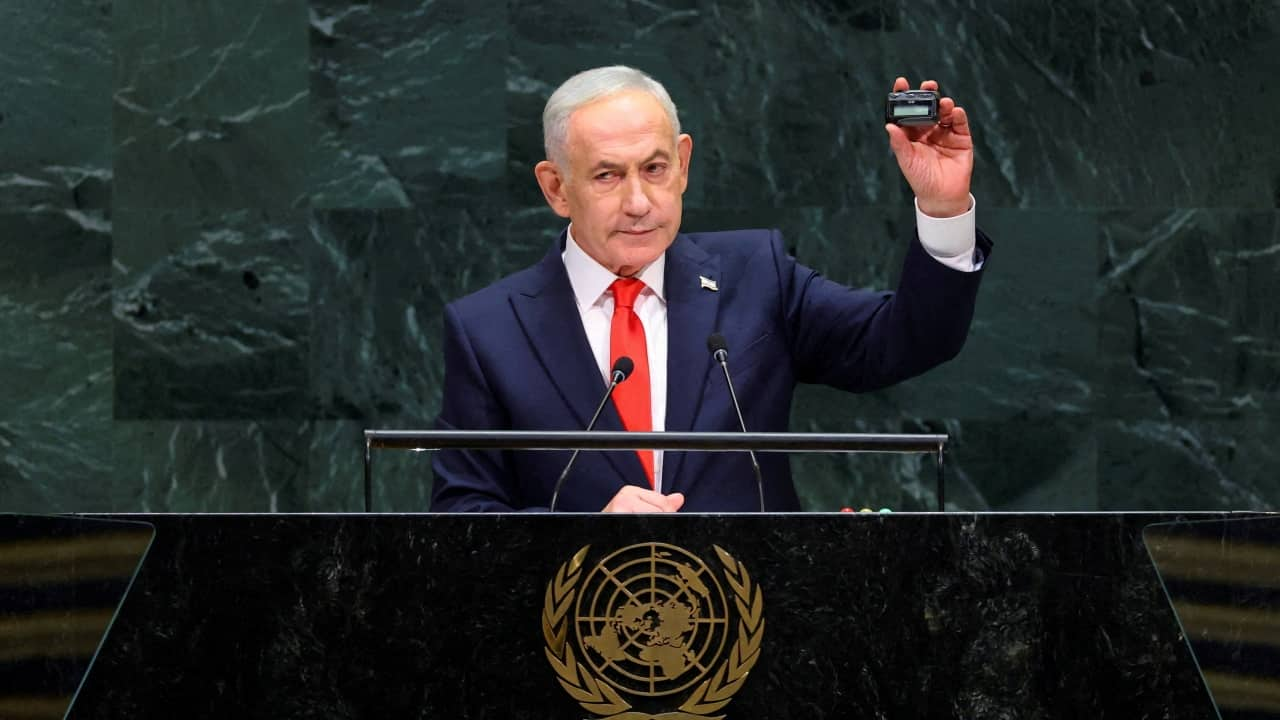
Israeli Prime Minister Benjamin Netanyahu identified India as a major global power while planning for potential shifts in American policy. He said, "India is not a small country, and there are many others." Netanyahu wants to build new international partnerships to protect Israel if future US leaders become hostile.
Israeli Prime Minister Benjamin Netanyahu has called for a broader network of international partnerships, identifying India and countries in Latin America as important allies as Israel prepares for possible changes in US policy. Presenting a new security doctrine ahead of Israel's October 27 election, Netanyahu warned that a future American administration could take a markedly different approach towards his country. Netanyahu said Israel must make the most of the remaining two years of US President Donald Trump's current term while preparing for a political shift in Washington. He argued that Israel could not assume that future American leaders would maintain the same level of support. "In two years, a President, man or woman, could come to power who is very hostile to Israel," Netanyahu warned while speaking at a security event. His remarks come against the backdrop of strained relations with previous Democratic administrations led by Barack Obama and Joe Biden. Netanyahu has often presented those disagreements as examples of his willingness to challenge Washington when he believes Israeli interests are at stake. Netanyahu looks to India to diversify Israel's alliances A central element of Netanyahu's proposed strategy is to deepen Israel's ties with countries beyond the United States, with India featuring prominently in his plans. "The second thing is to create other alliances... India is not a small country, and there are many others," Netanyahu said, highlighting the importance of expanding Israel's international partnerships. He described India as a "major global power" and has repeatedly emphasised the close relationship between the two countries. According to Netanyahu, stronger ties with New Delhi could help Israel navigate a changing international environment and counter efforts to isolate or delegitimise it. The Israeli prime minister has also frequently referred to his personal rapport with Indian Prime Minister Narendra Modi and the support Israel enjoys among sections of the Indian public. "In India, there is an absolutely crazy love for Israel -- truly crazy," Netanyahu has said previously, adding that he believed he might have more social media followers in India than anywhere else. His latest remarks place India within a broader effort to strengthen Israel's diplomatic relationships and reduce its vulnerability to changes in US foreign policy. Latin America also features in Israel's outreach Netanyahu's proposed expansion of alliances extends beyond Asia. He also pointed to political developments in Latin America, suggesting that potential changes in leadership in countries such as Brazil could create opportunities for Israel to build new partnerships. The strategy reflects his stated intention to widen Israel's diplomatic reach and establish relationships with governments that could support its interests amid shifting global alignments. While the United States remains a central partner for Israel, Netanyahu's warning about a potentially hostile future president suggests that his government wants to prepare for the possibility of a less supportive administration in Washington. Gadi Eisenkot dismisses plan as election-time rhetoric Netanyahu's security doctrine has drawn criticism from his domestic political opponents, with the debate unfolding just days before Israelis head to the polls. Gadi Eisenkot, a former chief of staff of the Israel Defence Forces and one of Netanyahu's principal electoral rivals, criticised the presentation, questioning whether it offered a substantive strategy for Israel's security. Eisenkot dismissed the proposal as "two hollow pages full of slogans," accusing Netanyahu of using election-time rhetoric to influence public perceptions and capitalise on security concerns. The criticism has placed the proposed doctrine at the centre of a domestic political dispute, with Netanyahu presenting a wider network of international alliances as a strategic necessity and his rival questioning the substance behind the plan. The October 27 election will take place against this backdrop, as Israel's political leadership debates how best to safeguard the country's security and diplomatic interests in an uncertain international environment.