
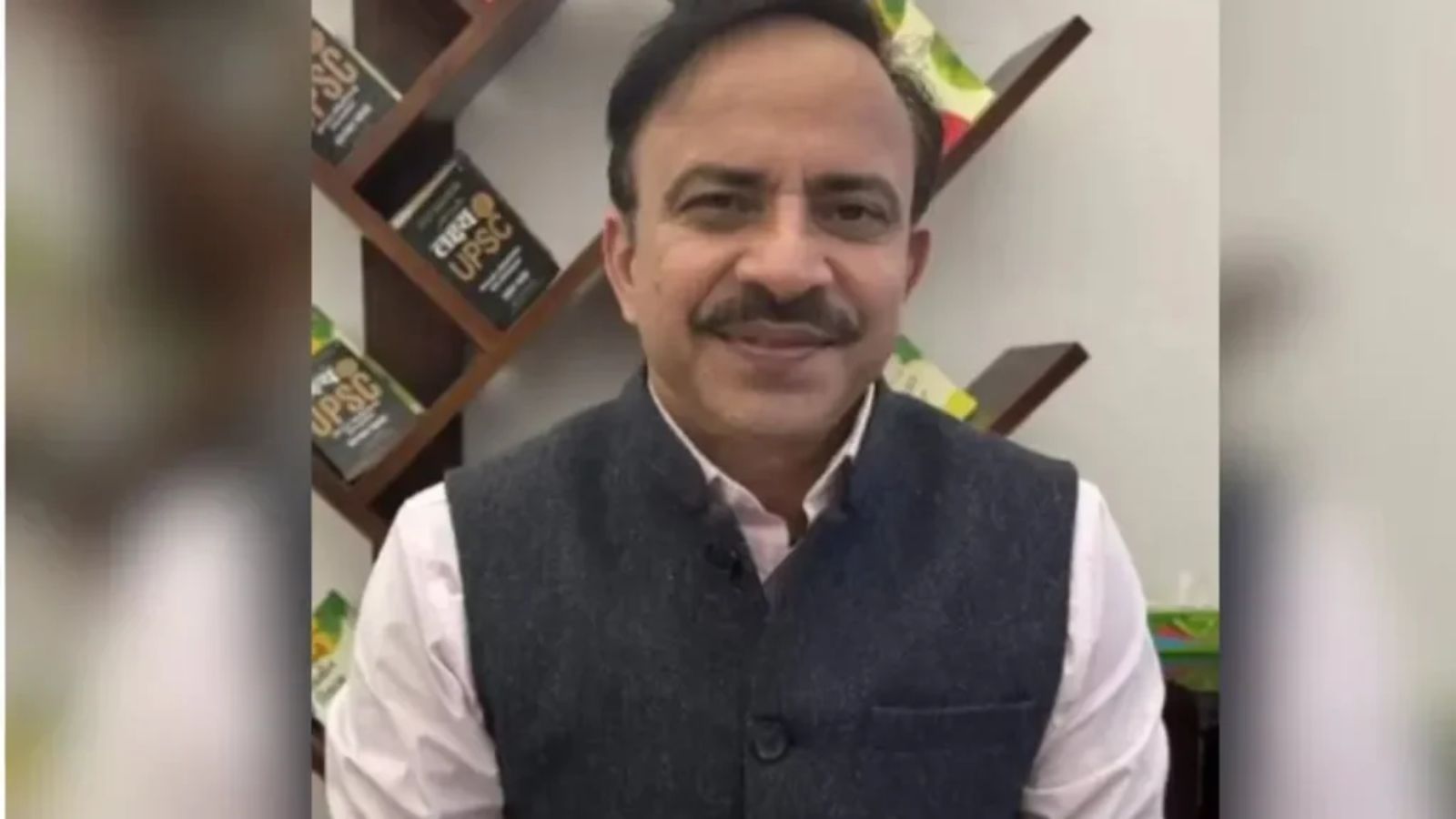
Sajjan Singh Yadav will take charge as the J&K Chief Secretary on November 1. His new team includes four IAS officers who are his seniors and two who are his peers. This unusual situation follows the retirement of 1989-batch officer Atal Dulloo, who currently leads the administration in the region.
Retiring CS Atal Dulloo is a 1989-batch IAS officer and almost every officer in J&K is junior to him. Official sources said two 1992-batch IAS officers, both Additional CS rank and working in J&K, will now be senior to his successor Sajjan Singh Yadav by three years
While the Jammu & Kashmir Chief Minister is fully occupied with the long-awaited cabinet expansion, the Lieutenant Governor finds himself equally in a tight spot.
With Sajjan Singh Yadav set to take charge as the J&K Chief Secretary (CS) next month, at least half-a-dozen bureaucrats at top echelons of the Union Territory's administration will be faced with a peculiar situation. Reason: They happen to be either senior or batchmates of the 1995-batch AGMUT-cadre IAS officer, who will succeed outgoing CS Atal Dulloo.
Apart from them, three more AGMUT (Arunachal Pradesh, Goa, Mizoram, and Union Territories) cadre IAS officers are either senior or from the same batch as Yadav but currently posted outside J&K.
Of these nine officers, six happen to be from the erstwhile J&K cadre, which got merged with the AGMUT cadre after the state was bifurcated into two UTs in 2019.
Yadav's posting will likely take effect on November 1.
Retiring CS Dulloo is a 1989-batch IAS officer and almost every officer posted in J&K is junior to him. Official sources point out that two 1992-batch IAS officers, both Additional CS rank and working in J&K, will now be senior to Yadav by three years.
These include Shaleen Kabra, Financial Commissioner, Jal Shakti Department, who also holds the additional charge of Financial Commissioner, Revenue, besides Administrative Secretary, Estates and Revenue. Ashwani Kumar, Financial Commissioner, Power Development Department, also holds additional charge of Administrative Secretary, Mining.
Another 1992-batch AGMUT cadre IAS officer from the UT, Vipul Pathak, is already on Central deputation.
Posted as Additional CS to CM Omar Abdullah, Dheeraj Gupta from the 1993 batch is senior to Yadav by two years.
Navin Choudhary, a 1994-batch officer, is a year senior to Yadav. However, he is presently posted in Delhi.
Apart from them, Shailendra Kumar, Financial Commissioner, Finance, and Anil Kumar Singh, Financial Commissioner, PWD (R&B), are Yadav's peers from the 1995 batch. Both the Additional CS rank officers are posted in J&K.
Rohit Kansal is another 1995-batch IAS officer. However, he is currently posted as Secretary, Rural Development Department, at the Centre.
Kabra, Pathak, Gupta, Choudhary, Kumar, and Kansal earlier belonged to the J&K state cadre, which got merged into AGMUT cadre after August 2019.
Sources in the administration admitted that the presence of such a large number of bureaucrats in J&K, who are either senior or happen to be from the same batch as Yadav, could create an issue of coordination within the functioning of UT administration as also between the UT and the Centre.
Technically speaking, all these officers, including Yadav, are at the same level and it is always the Central government's choice as to who will be the Chief Secretary in the UT, an official said. The selection of the new CS in J&K, though, is certainly bound to create a piquant situation for those senior to him, the official said, referring to Gupta who is the only one in J&K empanelled as Secretary by the Central government.
Few options
Sources say these officers have few options. As per tradition, the government agrees to shift the officer out to any other territory under AGMUT, especially where the head of the administration is senior to them. But here the problem is that the only place where the CS is senior -- a 1992-batch officer - is Delhi, said an official. There are seven senior officers who have already been accommodated in Delhi and there may not be any vacancies there, he added.
The other option would be to accommodate these senior officers in positions where they don't have to report to the new CS. There are few such slots. Continuing the officers in their current positions, sources said, may not be an option even for the government because it will cause avoidable issues for the new CS leading a team where several officers are his seniors or batchmates in the IAS.
The administration would also prefer to post out these senior officers because that way, new AGMUT cadre officers, junior to the new CS in the services, can be posted to J&K. This way, there won't be a dearth of IAS officers to run the administration.
Official sources attributed the situation to the Central government's approach towards selection of bureaucrats for the top slot in the UTs and some states, keeping in mind their suitability instead of seniority as per civil service norms. They have empanelled nearly half a dozen 1992-batch officers as Secretaries at the Centre, but are not posting them, they added.